"A British mine clearing
organisation, the HALO Trust has begun a five year project in the Jaffna peninsula, Sri
Lankan state media reported Thursday. Halo’s activities will begin with a six month
survey of northern Sri Lanka, the charity said... 'We have requested the assistance of the
Security Forces and discussed the operation plans with the Defence Ministry,' said
Boulter. The initial program will cost four million US dollars. The BBC says HALO is
partly funded by the UK Government.... The Daily News said HALO has teams in Afghanistan,
Cambodia, Mozambique, Angola, Eritrea, Somalia and Georgia and has almost completed
operations in Kosovo and has conducted assessment missions in Bosnia, Vietnam, Laos, South
Sudan, Tajikistan and South Lebanon. Last August
Russian intelligence accused the HALO Trust of spying against Russia and aiding rebel
fighters in Chechnya, British media reports said. FSB, Russia’s domestic intelligence
service, also alleged that several HALO Trust employees were undercover British
intelligence agents or army officers, The Guardian newspaper said. 'Under cover of
mine-clearing operations, [the HALO Trust] ..... carried out full-scale topographic
surveillance of Chechnya, fixing Chechen villages to the NATO frame of reference. ...
Representatives of HALO collected intelligence of a military-political character, and with
these aims maintained close contacts with Chechen leaders and established a many-pronged
network of informers from the local population,' the FSB alleged. The British charity's director, Guy Willoughby, a former British Army
Coldstream Guards officer, flatly dismissed the Russian charges."
Veteran British mine clearers in Jaffna
TamilNet, 21 June 2002
"The Federal Security Service on
Thursday accused a British nonprofit mine-clearing agency of spying on Russian forces in Chechnya and training
rebels in the breakaway republic."
FSB: English Mine Clearers Are Spies
Associated Press, 11
August 2000
"Russia's federal security service,
the FSB, accused the Halo Trust - the world's biggest mine-clearing charity, which was
supported by Diana, Princess of Wales - of spying on Russia since 1998....the FSB claimed that Halo had not only trained its Chechen staff
to clear mines, but also to plant them..... The
trust opened its office in Chechnya in 1997 with the help of Chechnya's President, Aslan
Maskhadov, and without permission of Russian authorities, the FSB said. 'People trained by
high-level Halo Trust officials weakened Russian positions, which in turn permitted
Chechen rebels to attack federal troops,' Kremlin spokesman Sergei Yastrzembsky
said....The Foreign Office said it did not comment on intelligence matters but it has
raised its concern with Moscow."
Mine charity rejects spy charges
BBC Online, 11 August 2000
"Andrew
Fulton, once MI6's man in Washington, has become the
first high-profile former spy to join a listed UK company. Mr Fulton, 62, is to join Armor
Group, the security company where the MP Sir Malcolm Rifkind is non-executive chairman. He
has been hired as a 'corporate strategy adviser' at its security consulting arm. While at
the Foreign Office, Mr Fulton was posted to Vietnam, Rome, East Berlin and Oslo. He was
seconded to the United Nations in 1992 before taking the Washington job. Seven years ago,
he was forced to quit his diplomatic post when he was exposed on a website by renegade
agent Richard Tomlinson. He also had to step down
from the Lockerbie Trial Briefing Unit, set up to offer independent legal opinion on the
Pan Am air crash. Armor, which also offers training in removing mines, has recently opened a secure 'office' in Kabul. Since standing down, Mr
Fulton has taken on a portfolio of roles. He is chairman of the corporate private eye GPW,
established by former Kroll employees."
'Spy in Washington' takes security role
Daily
Telegraph, 21 August 2006
"The London-based Islamic cleric Abu
Qatada, accused by America of being a key member of Osama bin Laden's network, claims
British security services offered him a chance to escape to Afghanistan. Abu Qatada, whose
Bolton bank account was frozen last week when he was named on a US list of suspected
terrorists, told The Observer that MI5 approached
intermediaries to offer him a passport and an Iranian visa so he could leave the country....Intelligence sources in Pakistan claim.... to have proof that Abu
Qatada is consulted by al-Qaeda. They allege that a pamphlet he wrote on 'holy war' was
commissioned by them to help resolve a dispute with another extreme terror group,
Takfir-wal-Hirja."
MI5 wanted me to escape, claims cleric
Observer,
21 October 2001
"A senior al-Qaeda leader is
reportedly being looked after by British intelligence at a safe house in northern England
- but security sources are denying the claim. Abu Qatada is accused by the United States,
Spain, France and Algeria of being a key influence in the 11 September attacks on the
US.... senior European intelligence officials have
reportedly told Time Magazine that Mr Qatada and his family are being lodged, fed and
clothed by British intelligence services. 'The deal
is that Abu Qatada is deprived of contact with extremists in London and Europe but can't
be arrested or expelled because no one officially knows where he is,' says the source,
whose claims were corroborated by French authorities according to the magazine....
Baltasar Garzon, a Spanish National High Court judge charged with leading Spain's al-Qaeda
crackdown, called the Muslim cleric the 'spiritual head of the mujahideen in Britain'.
Judge Garzon, who questioned al-Qaeda suspects in Madrid last year, said Mr Qatada was the
most important British contact of Spain-based terror suspect Abu Dahdah. Dahdah, whose
real name is Imad Eddin Barakat Yarbas, was one of eight suspected members of a group
charged with preparing and carrying out the 11 September attacks. Judge Garzon added that
Mr Qatada had links with terror suspects in Germany, France, Italy, Belgium, Britain and
Spain. Following the judge's comments, Mr Qatada told BBC Radio 4's Today programme Bin
Laden 'had a point' in his desire to rid his home country, Saudi Arabia, of any American
influence. 'I believe in Jihad,' he said. 'And I believe in the necessity of liberating
our nation and freeing it from bondage.'"
Britain 'sheltering al-Qaeda leader'
BBC Online, 8 July 2002
"Abu Qatada is one of the ten men that the Government
is now struggling to deport. If he reveals as part of his appeal that MI5 tried to recruit
him, the service will be highly embarrassed. And he may not be the only one to do so. The whispers are that several of
these characters have as much on the intelligence services as they have on them. In the 1990s Britain made a fatal
decision, against the advice of other governments, to try to use these people rather than
shut them down."
Lack-of-intelligence services
London Times, 18
August 2005
Moscow Publicly Continues Accusations In 2001
"Russia's FSB domestic security
service on Thursday accused a British anti-landmine charity of teaching Chechen rebels explosives techniques and of spying on
Moscow's military. The allegations, which came two
days after a bomb killed eight people in a Moscow underpass, were denied by the Halo Trust
mine clearance agency, which dubbed them a smear campaign. Some officials have blamed the
Moscow bomb on Chechen rebels. The FSB, a successor body to the Soviet-era KGB, said in a
statement: 'The FSB has reliable information about the training of mine and explosives
experts for armed groups of international terrorists fighting in Chechnya. 'One group
which is secretly carrying out such operations inside Russia is the international
non-governmental organisation, the Halo Trust.' The FSB said the Halo Trust held courses
to train 'specialists in mines and explosives' inside rebel Chechnya on Russia's southern
rim and harboured British secret agents.... The FSB said it had found 15 Halo Trust
workers inside Chechnya last November when searching for rebels as part of its now
11-month-old war against separatist guerrillas in the region. 'We have information that
most of them are members of various British military structures and the leader, Matthew
Middlemiss, is a staff military spy,' the FSB said, adding that it was holding an
unspecified number of the charity's workers.... The Halo Trust started working in Chechnya
after the 1994-96 war which ended in a Russian rout and left much of the land scattered
with deadly anti-personnel mines. The charity said it was not working in Chechnya now and
only did so with proper Russian visas and documentation. It said it had trained 150
Chechens to clear mines. The FSB said 100 had been trained as specialists in mines and
explosives."
UK charity teaching Chechens to make bombs, say Russians
Reuters, 1 January
2001
And In 2004
"As the intelligence newsletter Stratfor -- which Time
magazine ranked as the nation's top intelligence site in 2003, and which Barron's
described as 'a private quasi-CIA' -- pointed out a few months ago, with Ukraine now
firmly in the West's orbit, America, with NATO and the EU, has managed to succeed exactly
where Hitler and Napoleon failed: it has dismantled the Russian empire, leaving the rump
state exposed, weakened and essentially at the West's mercy.... The threat of Russia's disintegration is real. It is losing territory
and power just as Bolotnikovo lost its lake. In the process, the Kremlin has become
increasingly paranoid, reflecting not so much inherent Soviet evil as fear and
desperation. This leads to the most important, and dangerous, question: is Russia simply
disintegrating, or is America breaking it apart? In
the wake of the Beslan massacre in September, 2004, in which hundreds of children were
killed during a Chechen separatist seizure of a school in southern Russia, President Putin
went on television and blamed certain foreign powers for supporting the terrorists with
the aim of defanging Russia for good, breaking it apart, and seizing its valuable
resources. He did not name the United States, but it was clear whom he meant. Shortly after Putin's speech, the state-run TV media picked up where he
left off, with some of the most famous news personalities specifically accusing the US of
being behind the Chechen raid. Mikhail Leontyev, the pseudo-scruffy state Channel One
commentator and noted Kremlin waterboy, starkly noted, 'It is time to name that power
which is trying to break Russia apart. It has a name, and that name is the United States.'
Stratfor, whose politics could be described as
something between patriotic-American and realpolitik, agreed. According to its Kremlin
sources, Putin specifically named the U.S. and Great Britain during private meetings. And
as Stratfor noted in its April report, there is plenty of evidence to support the
Kremlin's claim. In the first place, while Muslim separatist militants from other conflict
zones are shunned and even violently pursued by the U.S., the Chechen separatist
representatives are routinely given haven and official voice in both the U.K. and America.
Ilyas Akhmadov, the separatist group's 'ambassador'
to the U.S., was granted asylum just last year, while Akhmed Zakayev was given asylum in
the U.K. in late 2003. While the U.S. has moved to crack down on militant Islamic
charities that are linked to other areas of the world, it has allowed several foundations
to operate in the U.S. which are believed to funnel money to Chechen rebels, including the
American Committee for Chechnya, Chechen Relief Expenses, International Relief Association
and others. This is part of the policy shift ushered in by the Bush Administration, when,
in February 2001, a ranking State Department official, John Beyrle, met with Akhmadov, the
highest ranking U.S. official to ever receive a Chechen separatist. It was deliberate, and
the Russians reacted furiously.... As Stratfor notes,
the British connection to the Chechen separatists goes farther back. 'During the first
Chechen war -- from 1994 to 1996 -- retired U.K. special forces officers trained British
Muslim recruits in British territory to fight in Chechnya,' Stratfor claims, echoing
reports out of Russia. 'Some militants who attended that training and were later captured
told the Russian government.' After Chechnya gained de facto independence, a scandal
apparently erupted in Russia-U.K. relations when de-mining instructors from a private
security firm, which included American ex-military personnel, were caught 'training
Chechen militants how to launch mine and bombing attacks against Russian troops,'
according to Stratfor. It was through humanitarian
assistance that Fred Cuny, the famous 'swashbuckling' American aid worker, became a key
figure, and later a martyr, in the first Chechen War. Cuny was killed in Chechnya in 1995.
When Russian reports labeled him a spy, it was dismissed in the US media as 'conspiracy
theory' and 'paranoia.' But as it turned out, Cuny did indeed have both military and
intelligence connections. Stratfor, along with many in the Kremlin and the Russian elite,
believe that the U.S. and Britain have supported Chechen separatism precisely because it
weakens Russia, advances U.S. power in the vital Caspian Sea region, and cripples a
potential future rival. As Stratfor notes, since Bush's re-election, the West has
increased pressure on Putin to come to a peace agreement. Such an agreement, leading to
the withdrawal from Chechnya, would represent 'complete defeat in Chechnya and the
Caucasus.' Meanwhile, the U.S. has massively increased its own military presence in both
the Caucuses and Central Asia ... but more on that later. Sympathy for the Chechen cause
in America has, to say the least, very suspicious motives. The main lobbying group pushing
for Chechen independence in the U.S. is a group called The American Committee for Peace in
Chechnya (ACPC), which describes itself as 'The only private, nongovernmental organization
in North America exclusively dedicated to promoting the peaceful resolution of the
Russo-Chechen war.' That might sound fuzzy and warm, until you look at who sits on its
board. It is a Who's Who list of right-wing imperialist warmongers, including Richard
Perle, architect of the recent Iraq war; Elliot Abrams, who engineered Reagan's bloodbath
in Central America and who served in Bush's National Security Council; and former Carter
National Security Advisor Zbigniew Brzezinski, a leading American imperialist hawk who
needs no introduction in Russia. Normally, these guys hate Islamic militants; but for some
strange reason, their maternal instincts suddenly light up for the Chechen cause. This
might be excused as a rare case of ogres showing humanity, unless you consider their
motives. Many of the ACPC's members also served on the Project
for the New American Century, which had also pushed
for militant American global hegemony, rolling back Russia and invading Iraq.... What
drives Brzezinski, what drives the support of regime change on Russia's borders, and
within its borders, isn't just Old School Russophobia. It's oilophilia. The Caspian Sea
basin holds the world's biggest untapped fossil fuel resources. Estimates range from 85 to
190 billion barrels of oil, worth up to $5 trillion. Azerbaijan and Kazakhstan alone might
hold over 130 billion barrels, more than three times the US reserves. As Vice President
Dick Cheney said in a speech in 1998, when he was CEO of Halliburton, 'I cannot think of a
time when we have had a region emerge as suddenly to become as strategically significant
as the Caspian.' In 2001, Cheney, who sat on the Kazakhstan's Oil Advisory Board, advised
President Bush to 'deepen [our] commercial dialogue with Kazakhstan, Azerbaijan and other
Caspian states.'... While it's true that Russia's state-controlled television is filled
with paranoid anti-American conspiracy theories and ranting, the depressing fact is that
much of the parnoia is grounded in fact. The current power-mad American elite saw an
opportunity as the Soviet Union teetered, and it seized it. They wanted oil, and hegemony,
and the only thing standing in the way of it was Russia -- both the current crippled
Russia, and the future possibility of a resurgent Russia. The prize is the oil and gas
reserves in the Caspian Sea. In order to control the oil, Russia had to be diverted,
particularly after the less-friendly Putin came to power. This is why normally
bloodthirsty, anti-Islamic hawks like Richard Perle, Elliot Abrams and Zbigniew Brzezinski
all found time to squirt a few for the Chechen cause. It has served as the perfect
crippling diversion while America gained control over the Caspian Sea oil, and at the same
time, having Russia bogged down in Chechnya allowed the West to pry away key states,
particularly Ukraine, from Russia's orbit, ensuring that it will likely never challenge
America's position -- or its dominance of Caspian oil -- in our lifetime. This is what
Stratfor meant when it said that America succeeded where Hitler and Stalin had failed. The
only question is, how long will the strategy work, and how will it eventually end
up."
Dividing Russia
AlterNet, 29 June 2005
"Russia summoned Washington's envoy on Friday to protest a U.S.
television network's airing of an interview with a Chechen rebel leader that threatened to
add to strains between the two countries. In the interview, broadcast by ABC on Thursday
night, warlord Shamil Basayev accused Russia of killing thousands of civilians and
defended his own raids -- the bloodiest of the 10-year Chechen war -- as part of a
struggle for independence. 'We invited the deputy chief of mission to express our views
over the broadcasting of an interview with a terrorist. ... We expressed our strong
indignation,' a Foreign Ministry spokesman said. 'The TV channel has shown outrageous
neglect of the standards of responsible journalism and general human values.' The United
States condemned Basayev as a terrorist but said it could not dictate what interviews U.S.
networks aired. 'This is a constitutional right of an American media outlet to broadcast
an interview, and we did not have any role to play in the decision to air the interview,'
State Department spokesman Sean McCormack told reporters. Washington has criticized some
Arab media for interviews with militants and, after the Sept. 11, 2001, attacks, asked
U.S. networks to consider whether statements by al Qaeda leaders contained hidden messages
before broadcasting them..... Basayev organized the attack on a school in Beslan in
September, when 330 hostages -- more than half of them children -- died after a three-day
siege. The warlord, who has spearheaded Chechen resistance for a decade and has a $10
million price on his head, has also sent hostage-takers and suicide bombers into Moscow
and other Russian towns in operations that have killed hundreds. Russia accuses him of
links to al Qaeda and says the Chechen war is part of the global struggle against
terrorism. It is quick to criticize any Western sympathy for the Chechen cause as proof of
'double standards' in the fight, and has previously slammed the United States and Britain
for refusing to extradite rebels. 'These notorious double standards and double approaches
continue to exist. ... Undoubtedly, this sours our cooperation (with the United States)
and gives a boost to terrorist activists,' Anatoly Safonov, President Vladimir Putin's
special representative for the war against terrorism, told Interfax news agency....
Basayev happily admitted he was a terrorist in the ABC interview, but said the Russians
were worse. 'If they are the keepers of constitutional order, if they are anti-terrorists
then I spit on all these agreements and nice words,' he said."
Russia summons U.S. envoy over Basayev interview
Reuters,
29 July 2005
Drugs, ISI, Oil, And Covert Sponsor
Western Sponsorship
Of Islamic Terrorism In Chechnya
"During the Soviet occupation of Afghanistan in the 1980s, the US
funded large numbers of jihadists through Pakistan's
secret intelligence service, the ISI. Later the US
wanted to raise another jihadi corps, again using proxies, to help Bosnian Muslims fight
to weaken the Serb government's hold on Yugoslavia. Those they turned to included
Pakistanis in Britain. According to a recent report by the Delhi-based Observer Research
Foundation, a contingent was also sent by the Pakistani government, then led by Benazir
Bhutto, at the request of the Clinton administration. This contingent was formed from the
Harkat-ul- Ansar (HUA) terrorist group and trained by the ISI. The report estimates that
about 200 Pakistani Muslims living in the UK went to Pakistan, trained in HUA camps and
joined the HUA's contingent in Bosnia. Most
significantly, this was 'with the full knowledge and complicity of the British and
American intelligence agencies'. As the 2002 Dutch
government report on Bosnia makes clear, the US provided a green light to groups on the
state department list of terrorist organisations, including the Lebanese-based Hizbullah,
to operate in Bosnia - an episode that calls into question the credibility of the
subsequent 'war on terror'. For nearly a decade the
US helped Islamist insurgents linked to Chechnya, Iran and Saudi Arabia destabilise
the former Yugoslavia. The insurgents were also
allowed to move further east to Kosovo. By the end of the fighting in Bosnia there were
tens of thousands of Islamist insurgents in Bosnia, Croatia and Kosovo; many then moved
west to Austria, Germany and Switzerland. Less well known is evidence of the British
government's relationship with a wider Islamist terrorist network. During an interview on
Fox TV this summer, the former US federal prosecutor John Loftus reported that British
intelligence had used the al-Muhajiroun group in London to recruit Islamist militants with
British passports for the war against the Serbs in Kosovo. Since July Scotland Yard has
been interested in an alleged member of al-Muhajiroun, Haroon Rashid Aswat, who some
sources have suggested could have been behind the London bombings. According to Loftus,
Aswat was detained in Pakistan after leaving Britain, but was released after 24 hours. He
was subsequently returned to Britain from Zambia, but has been detained solely for
extradition to the US, not for questioning about the London bombings. Loftus claimed that
Aswat is a British-backed double agent, pursued by the police but protected by MI6."
Michael Meacher, former UK Environment Minister
Britain now faces its own blowback
Guardian, 10
September 2005
'Chechnya: The
Mujahideen Factor'
Joseph Bodansky, Director of the Task Force on Terrorism and Unconventional
Warfare of the U.S. Congress
Special Strategic Studies
Supplement, Freeman Centre For Strategic Studies, Houston, Texas, January 1998
[Extracts]
.... Islamabad became directly involved in the active
support for the Chechen Jihad already in the spring of 1994. At that time, the
ISI-sponsored Taliban offensive endangered the flow of Heroin from Afghanistan
which served to finance the Chechen revolt. Islamabad intervened to ensure the continued
flow of drugs, as well as capitalize on the relationship between the Chechens and
ISI-sponsored Afghans, then maintained via Gulbaddin Hekmatyar's Hizb-i-Islami as
a front, in order to expand the ISI's direct relations with the Chechen leadership.
Consequently, between April and June 1994, a high-level Chechen delegation headed by a
lieutenant of Dudayev's named Shamil Basayev visited the ISI-sponsored terrorist training
infrastructure in both Pakistan and Afghanistan. In Afghanistan, the Chechens visited the
ISI's training facilities in the Khowst area, then run under the banner of Gulbaddin
Hekmatyar's Hizb-i-Islami. In Pakistan, the Chechens had a series of high level
meetings with the Pakistani leadership -- particularly with Gen. Babar, Defense Minister
Gen. Aftab Shahban Mirani, and General Javid Ashraf of the ISI (who was presented as the
head of the ISI branch in charge of support for, and sponsorship of, Islamist causes).
These three officials became the patrons of the Chechen Jihad, arranging for the
establishment of a comprehensive training and arming program for the Chechens in Pakistan
and Afghanistan. The Chechens also met with former ISI Chief, General Hamid Gul, and an
aid of his named Col. Imam, who would assist the Chechens in arranging for local
connections and contacts for their drugs and weapons smuggling operations. Moreover, Gen.
Babar intervened with the Taliban leadership already in early 1994 to ensure the
uninterrupted flow of Heroin from the Helmand valley. However, the Heroin was now shipped
northwards to the airfield near Chitral from where the drugs, as well as a growing number
of Chechens and 'Afghan' volunteers, were flown to Chechnya.
The training of the Chechens began immediately. The first
hundred or so Chechens were added to the ISI-run training camps near Khowst where between
two and three hundred Uzbeks and Tajiks were already being trained in guerrilla warfare
and prepared for the export of the Islamist revolution into their homelands. Most
important were the advanced sabotage and guerrilla warfare courses provided to a select
few Chechens in the Markaz-i-Dawar center in Pakistan. In the Fall of 1994, in
order to expedite the flow of expertise to Chechnya, the ISI organized mixed detachments
made of recently trained Chechens and veteran Pakistani operatives, most of them with long
combat experience in the ranks of the Mujahedin in Afghanistan. These forces
brought with them large quantities of weapons and ammunition. In addition, fighters from
an ISI battalion of Afghan Mujahedin stationed in Pakistan were also dispatched
to Chechnya in late 1994 to bolster the Pakistani-Chechen detachments. These Pakistani-led
detachments saw combat already around the first of 1995. Significantly, the ISI retained
combat and tactical control over these detachments. The Pakistani commanders maintained
radio communications with their HQ in Pakistan, not dissimilar to communications
maintained between the Islamist forces in Kashmir and their rear bases in Pakistan.
................
By now, however, Dudayev was most alarmed by the rise of
the Islamist factor. In the Spring of 1995, his earlier call for an anti-Russian Jihad
was being increasingly answered as Pakistan and Iran began sponsoring the Chechen revolt.
Their active support was reinforced with arrival of growing numbers of volunteers,
including Arab 'Afghans' and Islamist educators, weapons supplies, and funds. The
elite forces of the Chechens were now becoming increasingly Islamist. The Islamist message
of all-Caucasian Jihad, as distinct from a Chechen national liberation struggle,
was increasingly popular. ................
Thus, by mid 1996, the war in Chechnya was fully
integrated into the global struggle strategy, and not only of the Islamic Bloc, but of the
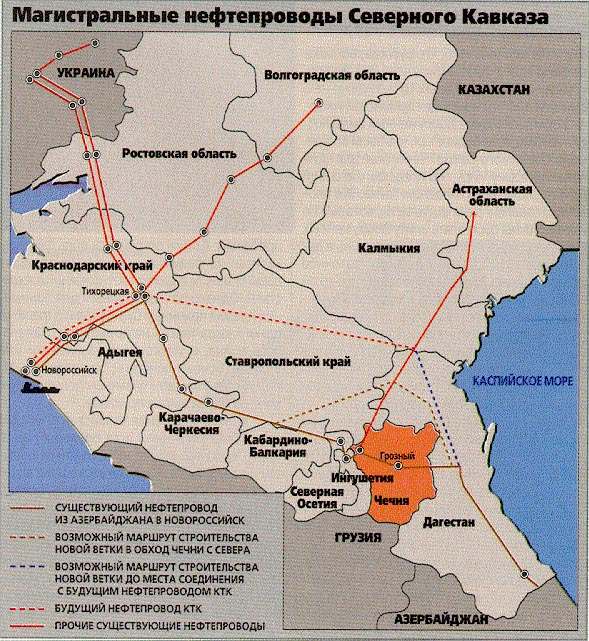
Trans-Asian Axis as well. Grozny is the oil pipeline juncture for transporting Caspian Sea
oil to European Russia and for export via Novorossiysk. The disconnection of this oil
pipeline will expedite the transferring of this oil to the proposed Trans-Caspian pipeline
and its export eastwards in the PRC's Pan-Asia Continental Oil Bridge. Militarily, a
marked escalation in the fighting in Chechnya will serve more than just a containment of
Russia -- a drain on manpower, supplies and resources. Politically, a prolonged unpopular
war will make Moscow reluctant to confront, let alone intervene in, other conflicts in the
near abroad so that the Islamists' escalation in Central Asia can take place with a lesser
risk of Russian intervention.
Meanwhile, the integration of the Chechen revolt into the
state-sponsored Islamist struggle continues to evolve and expand. This development is best
reflected in the flow of Mujahedin from Afghanistan and Pakistan, Bosnia and the Middle
East, in the further increase in the training of Chechens in Afghanistan, Pakistan, Iran,
and Turkey (Northern Cyprus). The allocation of drugs from the Golden Crescent for funding
the Chechen war, as well as the laundering and handling of Chechen funds by Islamist front
companies and financial institutions in the West, are other expressions of support by the
Islamist leadership. Moreover, the international support functions, especially in the US
and Western Europe, are being run by the main Islamist organizations controlled by Iran,
Pakistan, and their proteges.
The magnitude of the Chechen drug smuggling and other
organized crime activities is immense. By the mid 1990s, the network of smuggling routes
used by the Islamists to deliver Mujahedin and weapons into Chechnya were also
used for the smuggling of drugs out of Chechnya in order to finance the Jihad and
enrich its commanders.
For example, the "Abkhaz route" that is
operating since late 1993 under the control of the brothers Shamil and Shirvan Basayev.
Shamil Basayev was the leader of the Chechen volunteers in Abkhazia and established
excellent relations with the Muslim rebels there. Using Mi-6 helicopters, the Basayev
brothers are shipping drugs acquired in Pakistan and Afghanistan from the Vedenskiy Rayon
of Chechnya to the heliport in New Athens, using bases set up in Dzheyrakh Gorge in
Kabardino-Balkariya as their intermediate landing points. Then, from New Athens, Abkhaz
smugglers deliver the drugs by truck to Port Sukhumi on the Black Sea. From there, the
drugs are carried by Turkish ships to the port of Famagusta in Northern Cyprus where local
drug dealers take over. On the return routes, the ships, truck and helicopters carry arms
and munitions acquired by Turkish intelligence for Basayev's forces. .........
The marked increase in the Chechen's aerial activities has
taken place since early 1995. Back in early December 1994, Usman Imayev -- a close aide of
Dudayev, who was the head of the National Bank of Ichkeriya as well as Chechnya's minister
of justice and prosecutor general -- reached an agreement with representatives of the
Turkish intelligence on the supply of weapons to Dudayev's forces from and via Turkey, the
latter mainly from Pakistan. The ISI agreed to provide the Chechens with stockpiles dating
back to the days of the Afghan Jihad. The Turks purchased large quantities of
Soviet-era weapons and ammunition from Germany, from the ex-DDR arsenals, and transferred
some of them to the Chechens. ....
By the Fall of 1997, several hundreds of Chechens were
being trained in ISI-sponsored camps near Warsaj (Takhar), Jabal ol-Saraj (Parwan), Khowst
(Paktia), and other smaller sites. Some 250 Chechens were undergoing clandestine training
in a camp near Peshawar by ISI operatives and expert terrorists from Egypt and Sudan. Some
100 Chechens were being trained by the ISI in the Lahore area in sophisticated terrorism
and urban warfare. A VEVAK-run terrorism training base in Ziarat Jah (Herat) was
transferred to Gorgan (Mazandaran, Iran) in the Fall of 1995 because of the fighting.
Chechens now attend other Islamist higher terrorism schools in Iran under the control of al-Quds
forces. Several hundreds Mujahedin, mainly Afghans and Chechens, were being trained by
Iranian intelligence and the HizbAllah in Sudan. Moreover, in the spring of 1996, in
anticipation for a marked escalation, about 400 Chechens were sent to HizbAllah
training camps in the Biqaa, Lebanon, to undergo the six-month advance courses run by
Iranian Pasdaran instructors. These training programs still continue in early
1998, with new classes made of young Chechens replacing the graduates that returned
Chechnya. Ultimately, the mere presence of Chechens in these terrorism schools is
indicative of Tehran's and Islamabad's trust.
Meanwhile, the intelligence services of Iran, Pakistan and
Turkey also continue to prepare, train and ship foreign volunteers to Chechnya. In
Afghanistan, Shaykh Muhammad Ali Akhund organized a Taliban force for deployment to
Chechnya. Most important are the Islamist commanders and instructors from Afghanistan,
Pakistan and numerous Arab states -- all of them veteran 'Afghans' and 'Balkans', as well
as Middle East terrorists -- who build a new generation of Chechen Mujahedin. They also
constitute the core of the elite terrorist and special operations units of the Chechens.
As well, they train cadres from other Caucasian states and nationalities. If the current
build-up continues, Chechnya will become a center for Islamist regional and international
terrorism comparable to Afghanistan or Lebanon.
Ultimately, given the Islamists' headway in Tajikistan,
and Central Asia as a whole, one can foresee the emergence of an Islamist radical belt
stretching from Afghanistan to Chechnya. Such a belt will be controlled and sponsored by
Iran and Pakistan. Both will use it for furthering their global and regional aspirations.
The availability of weapons of mass destruction in the former Soviet Union makes this
prospect all the more harrowing. ....
Meanwhile, the specifics of the impending escalation in
Chechnya were decided upon back in late August in the summit of the senior commanders of
the HizbAllah International, held in Mogadishu, Somalia. Among the participants were
Usamah bin-Ladin and the Iranian Commander of the al-Quds Forces based in Sudan,
Ethiopia, Somalia and Yemen. The summit decided to deploy between 500 and 700 'Afghan'
Mujahedin (Arabs, Pakistanis, Afghans, etc.) to Chechnya during the fall. These Mujahedin
would come mainly from camps in Afghanistan (particularly ISI-run camps under the nominal
supervision of Abdul Rasul Sayyaf), as well as Sudan (mainly Arab 'Afghans') and Lebanon
(a combination of the recently-trained Chechen-HizbAllah, and HizbAllah veterans
from Persian Gulf states and Bosnia). The ISI was also directly responsible for the
transportation, logistics and the transfer of "special means" (or "special
weapons") to Chechnya. General Ashraf of the ISI -- who was presented to Shamil
Basayev in the Spring of 1994 as the head of the ISI branch in charge of support for, and
sponsorship of, Islamist causes, and who has been involved in supporting the Chechens
since then -- is personally in charge of the Pakistani part of this operation. Additional
funds were moved to Chechnya from Saudi Arabia and Persian Gulf states via Western Europe.
Follow up decisions on the accelerated implementation of these designs were reached in
late September in the follow-up summit of the senior commanders of the HizbAllah
International that was also held in Magadishu, Somalia.
The implementation of these resolutions began immediately.
In mid October 1966, at least 200 of the Mujahedin were already deployed to Chechnya from
camps in Pakistan and Afghanistan. The Pakistani Minister of Interior, Maj.Gen. (ret.)
Naserullah Khan Babar, personally arranged for safe-conduct for these Mujahedin through
both the Taliban and Ahmad Shah Massud lines, as part of the Pakistani mediation effort in
Afghanistan. From north-eastern Afghanistan, these Mujahedin were transported eastward on
the supply route established for the sustaining of the Afghan Mujahedin during the 1980s.
The Chechnya bound Mujahedin were taken to camps near Chitral. They were flown to Chechnya
from a nearby airport already used by the ISI for traffic in and out of the Commonwealth
of Independent States. Meanwhile, the organization a force of over 100 Arab 'Afghans' from
bases in Sudan and Yemen was near completion. These Mujahedin reached Chechnya via Iran or
Afghanistan in the first half of November. Further more, the first class of Chechen-HizbAllah
completed its six-month advance training in the Pasdaran-run HizbAllah
camps in the Biqaa in mid November 1996, and its members returned to Chechnya in the early
days of 1997. Altogether, some 400 Chechen graduates were dispatched from the Biqaa by the
early Spring of 1997. Significantly, by early 1998, the flow of foreign Mujahedin
and Chechen graduates of terrorist schools along these routes still continues.
By the Fall of 1996, the leadership of Chechnya was openly
advocating the themes raised by the Islamist leadership, particularly the possibility of
resumption of fighting. Thus, Chechen leader Zelimkhan Yandarbiyev declares that he
"cannot affirm that the war has really ended." Chechen Commander Shamil Basayev
concurs that the war "is suspended." Because "Russia has proved that it
does not keep its promises," Basayev believes that "the possibility of the war
being resumed remains on the cards." ......
By now, Moscow and Grozny were negotiating the fixing of
the major oil pipeline crossing Chechnya and the resumption of shipping oil from the
Caspian Sea to Russia. In early June, as the pace of the oil negotiations was growing,
Maskhadov sought to stress the Islamic identity of Chechnya in order to gain political
support from the oil producing states of the Middle East. Hence, Maskhadov dissolved
Chechnya's secular courts and left only Islamic tribunals, based on the Sharia,
as the legitimate elements of the country's legal system.....
Since late August, 1997, two trends have dominated events
in Chechnya: (1) Moscow is increasingly apprehensive about a growing penetration of the US
into the Caucasus, in quest for oil and challenging Russia's vital interests. Moreover,
the US is using conservative Arab regimes as conduits. (2) Official Grozny is
demonstrating unprecedented self-confidence and affluence, including Maskhadov's early
September declaration about the building of a new Capital city -- Dzhokar -- rather than
attempting to rebuild the devastated Grozny without explaining the source of the funds.
Moscow estimates that the money came from the Muslim World under US influence. These
trends cast a long shadow over the negotiations on a permanent settlement scheduled to
begin in Moscow in late September. Maskhadov was very optimistic about his ability to
convince Yeltsin to sign a treaty acceptable to Grozny -- that is, an inter-state treaty
recognizing Chechnya's independence......
Again, unfolding activities suggest confidence in the
Muslim World in the near term realization of this scenario. Even before the formal
political decision on the future of the region, several states have jointly embarked on
active economic maneuvering with outright political ramifications. Most important is the
effort, blessed by the US and the UK, to create a so-called Caucasian common market that
will concentrate on energy development while excluding Russia from its activities. This
effort is developing since the Fall of 1997, and is supported by all the states of the
Transcaucasus region except Armenia, by major Western oil corporations, and by
organizations lobbying their interests, both in the United States and Britain. Moscow is
most alarmed by the establishment of a Caucasian-American chamber of commerce because it
is led by Khozh-Akhmed Nukhayev -- a leader of a Chechen criminal grouping in Moscow in
the early 1990s and subsequently First Deputy Prime Minister in Zelimkhan Yandarbiyev's
Government in Chechnya.
Moscow also learned that back in October 1997, a group of
prominent businessmen and politicians from Britain, Pakistan, and Hong Kong, signed a
protocol of intent regarding the establishment of a Transcaucasian energy company with
Aslan Maskhadov as if he was the President of a sovereign state. According to the
agreement Chechnya would participate in the project by providing the emerging consortium
with a right to rent part of the Baku-Grozny-Novorosiisk oil pipeline with attached
enterprises and infrastructure.
Concurrently, aspirant regional powers are making moves in
the security and oil realm suggesting confidence in the imminent implementations of their
designs. Pakistan is reinforcing the ISI-controlled Afghan security detachments in
Azerbaijan. Already in late 1993 and early 1994, the ISI deployed several hundreds strong Hizb-i-Islami
forces to Azerbaijan to help fight the Armenians and guard the oil pipelines. Meanwhile,
Turkey is planning on taking over parts of the US Air Base at Incirlik that is being
evacuated. The new Turkish forces will provide the security of the Baku-Ceyhan oil
pipeline through both stationary and mobile forces.
Thus, Moscow believes, and not without reason, that all of
these activities and preparations make sense only in case Russian influence and presence
in the Caucasus is drastically reduced. A flare-up of Islamist terrorism and subversion is
a prime instrument to achieve this end.
And Moscow has very good reasons to be apprehensive. On
January 6, 1998, Pyotr Marchenko, a plenipotentiary representative of the Russian
President in Adygei, Dagestan, Kabardin-Balkaria and Karachai-Circassia and also in
Stavropol Territory, noted that the Russian security services have accumulated evidence
that "the Northern Caucasus is a region of special and enhanced interest for foreign
secret services" as well as the terrorist organizations they sponsor. He disclosed
that the security services " had detained and were investigating cases of a number of
citizens from the West and the Middle East, who took part in reconnaissance and sabotage
operations. These operations are aimed at destabilising the situation and, in particular
in Dagestan, at kindling internecine strife." The intelligence operatives exposed did
not limit themselves to collection of data about Russia or other regional activities.
"Overseas secret services," Marchenko stressed, "all but openly organize,
train and equip militants at semi-clandestine centers, which is not always actively
resisted in the localities." According to Marchenko, the late December 1997 terrorist
strike in Buinaksk "had been provoked by precisely such militants." .....
Meanwhile, Moscow is determined to resolutely fight the
escalation and intensification of Islamist terrorism in the Caucasus. Hence, resolving the
Chechen crisis thus becomes a major challenge and urgent necessity. Given the growing
economic and strategic importance of the Caucasus, the future of Chechnya is more than a
bilateral issue. Thus, a new struggle for the control of the Caucasus and their rich oil
reserves is escalating. And as the Moscow-Grozny negotiations over oil and political
issues become even more crucial, given their ramifications for Russia's own vital
interests, the expediency of using Islamist terrorism, violence and subversion in order to
exert additional pressure on Moscow will only increase. Determined to consolidate their
control over the strategically and economically crucial Caucasus, the Islamists and their
sponsoring states have already resolved to escalate their terroristic Jihad to
achieve what no negotiations can deliver. And herein lies the quintessence of the grim
prospects for the Caucasus."..... |
"When you land on
Khodinka military airfield in Moscow, you see a glass office tower, surrounded by a
windowless three-storey fort, overlooking the runway. This glass tower houses the
eyes, ears and once feared long arms of the Russian army - the Chief Intelligence
Directorate of the General Staff of the Russian army, known by the abbreviation GRU.
During the Cold War these eyes and ears were focused on another glass and concrete
fortress - the Pentagon. But now the Russian army is facing a very different threat and
the GRU has found a new enemy. The GRU's new nemesis dwells in a grayish concrete office
block on the outskirts of Rawalpindi, a bustling Pakistani city near Islamabad. It is the headquarters of the Inter Services
Intelligence (ISI), Pakistan's main security service and the
grand puppet master behind a host of Islamic insurgent movements all over the world: from
Harakat ul-Ansar in Kashmir, Tajikistan, Bosnia, the Taliban in Afghanistan, to Shamil
Basayev's forces in Chechnya. GRU's first battle
with the ISI was 20 years ago. An elite team of 'spetznaz' (special purpose)
commandos boarded a military transport plane on Khodinka airfield and lit an inferno 3,369
kilometres southeast of Moscow by storming the presidential palace in Kabul and
assassinating Afghani President Hafezullah Amin. For all nine years and 50 days of the
Soviet occupation of Afghanistan, the ISI, teamed up with the CIA, armed, trained and
sheltered different factions of Afghan mujaheddin - most of them radical Islamic groups. When the Soviets finally departed, Pakistan was left with an
explosive motley of thousands of armed and zealous men with a lot of time on their hands
and who knew nothing but how to fight. Sending these restless young men to die for Islamic
causes in faraway lands became at once a practical necessity and a means of achieving the
geopolitical objectives of Pakistani leadership: creation of a trans-Asian axis stretching
from its eastern border with China through Afghanistan, the former Soviet republics of
central Asia to the oil- and gas-rich shores of the Caspian Sea. To do that, Pakistan
would have to control all of Afghanistan and drive out of central Asia the last remnants
of Russian influence. Russia, however, has designs
of its own for central Asia and has done everything in its power to create a buffer
between pro-Pakistani Taliban forces and former Soviet republics of central Asia,
bordering Afghanistan from the north. By some strange twist of fate, the role of this
buffer fell on a man the GRU hunted unsuccessfully for nine years - Uzbek warlord Ahmed
Shah Massoud, whose forces now control a narrow strip of land along Afghanistan's northern
frontier with Turkmenistan, Uzbekistan and Tajikistan. If it weren't for the military help
Shah Massoud is getting from Russian forces stationed in Tajikistan, he would have never
survived the Taliban onslaught. To stop the flow of arms to Ahmed Shah Massoud, Pakistanis
needed a diversion that would have forced Russians to switch their attention and resources
away from central Asia. That diversion soon presented
itself in the form of a brewing conflict between Moscow and its rebel Autonomous Republic
of Chechnya, which wanted full independence from Russia. It was a perfect opportunity for the Pakistani intelligence. In 1994,
Shamil Basayev, a young Chechen field commander, who a year earlier had distinguished
himself in Abkhazia - a breakaway republic of the former Soviet Georgia - caught the
attention of Pakistani intelligence stationed in the neighbouring oil-rich Azerbaijan,
where about 1,500 Afghan mujaheddin under the command of Pakistani officers were fighting
Armenians to reclaim for Azeris the rebel Armenian enclave of Nagorno Karabakh. In April 1994, the Pakistani Inter Services Intelligence arranged
for Basayev and his trusted lieutenants to undergo intensive Islamic indoctrination and
training in guerrilla warfare in the Khost province of Afghanistan at Amir Muawia camp,
set up in the early 1980s by the CIA and ISI and run by famous Afghani warlord Gulbuddin
Hekmatyar. In July 1994, upon graduating from Amir
Muawia, Basayev was transfered to Markaz-i-Dawar camp in Pakistan to undergo training in
advanced guerrilla tactics. In Pakistan, Basayev met the highest ranking Pakistani
military and intelligence officers: Minister of Defence General Aftab Shahban Mirani,
Minister of Interior General Naserullah Babar, and the
head of the ISI branch in charge
of supporting Islamic causes, General Javed Ashraf,
(all now retired). High-level connections soon proved very useful to Basayev. That same
summer, the Pakistan-backed Taliban offensive against the government of the Iranian-
backed president of Afghanistan, Burhanuddin Rabbani (later expelled), threatened to cut
the Chechen drug trade. The Taliban had taken Amir Muawia and other Khost-area camps,
disrupting plans to train hundreds of Chechen fighters there. After personal intervention
of General Babar, Taliban and government forces allowed shipments of Chechen drugs through
their lines while they were slitting each other's throats. The training of Chechen
fighters also went as scheduled in Khost-area camps now controlled by one of the largest
Kashmiri terrorist groups, the Harkat ul-Ansar. Pakistani intelligence also sent
experienced and battle-hardened officers to train Chechen fighters on site. One of the
most prominent Pakistani nationals is Abu Abdulla Jafa, who along with Basayev and
Jordanian-born Afghan veteran Khattab (he goes by the one name) has organized a 'terrorist
academy' in Chechnya, according to U.S. and Russian sources. Russians also suspect that
Abu Abdulla Jafa is a career officer of Pakistan's elite Northern Light Infantry Brigade,
and the tactical mastermind behind Basayev's August invasions into Dagestan. Russian
security services also suspect that Pakistan supplies Chechens with deadly
shoulder-launched Stinger anti-aircraft missiles - leftovers of the Afghan war. Meeting in
Mogadishu The Russian air force has already lost at least three SU-25 ground attack planes
and a half dozen helicopters to Stingers. But
Pakistan's involvement in the Chechen conflict goes far beyond supplying Chechens with
weapons and expertise: the ISI and its radical Islamic
proxies are actually calling the shots in this war. According to a renowned terrorism expert, Yossef Bodansky, director of
the U.S. Congress's Task Force on Terrorism and Unconventional Warfare, the master plan
for the latest flare-up in Kashmir and in the Caucuses was prepared in August and
September 1996, during a secret summit of HizbAllah International in Mogadishu, Somalia.
The summit, according to U.S. anti- terrorism experts, was attended by now infamous Osama
bin Ladin and high- ranking Iranian and Pakistani intelligence officers. Pakistani ISI
General Javed Ashraf was charged with organizing the logistics of transporting Afghan
mudjahedeen and Chechen fighters and their weapons from training camps in Pakistan,
Afghanistan, Sudan and Lebanon. Saudi terrorist-billionaire bin Ladin undertook the
financing of the whole operation. Russian intelligence analysts estimate that the current
campaign in Chechnya and Dagestan has cost bin Ladin $25 million. That is one of the
reasons that Russian Prime Minister Vladimir Putin has so far refused to negotiate with
Chechen President Aslan Maskhadov: he knows that the decision to stop fighting is not in
the hands of Maskhadov, who one day vows to hand in Basayev and Khattab, but the next day
appoints him commander of the eastern front. Russian officials are certain that for the
war to stop in Chechnya, the decision must be taken in the gray building in Rawalpindi, by
the new military government of General Pervaiz Musharraf."
Who's calling the shots?: Chechen conflict finds Islamic roots in Afghanistan and Pakistan
The
Gazette (Montreal), 26 October 1999
(Above article by Levon Sevunts. Since 1990, Levon Sevunts
has covered wars and ethnic conflicts in the Caucasus as a freelance war correspondent and
reporter with the Armenian TV news program Haylur. In 1992, he moved to Montreal where he
is a freelance journalist, writing in English, Russian and Armenian. Sevunts replaces
David Manicom in the rotation of Gazette foreign-issues columnists. Manicom, a Canadian
foreign-service worker, is on assignment in Beijing.)
"U.S.
post-Cold War era foreign policy has designated Central Asia and the Caucasus as a
'strategic area.' Yet this policy no longer consists of containing the 'spread of
communism', but rather in preventing Russia and China from becoming competing capitalist powers . In this regard, the
U.S. has increased its military presence along the entire 40th parallel, extending from
Bosnia and Kosovo to the former Soviet republics of Georgia, Azerbaijan, Turkmenistan and
Uzbekistan, all of which have entered into bilateral military agreements with Washington.
The 1999 war in Yugoslavia and the subsequent outbreak of war in Chechnya in September
1999 was a crucial turning point in Russian-American relations. It also marked a
rapprochement between Moscow and Beijing, and the signing of several military cooperation
agreements between Russia
and China. U.S.
covert support to the two main Chechen rebel groups (through Pakistan’s ISI) was known to the Russian government and
military. (For further details, see Chapter II.) However, it had previously never been
made public or raised at the diplomatic level. In November 1999, the Russian Defence
Minister, Igor
Sergueyev, formally accused Washington of supporting the Chechen rebels. Following a meeting held behind closed
doors with Russia’s military high command, Sergueyev declared that: 'The national
interests of the United States require that the military conflict in the Caucasus
[Chechnya] be a fire, provoked as a result of outside forces', while adding that 'the
West’s policy constitutes a challenge launched to Russia with the ultimate aim of
weakening her international position and of excluding her from geo-strategic areas'. In the wake of the 1999 Chechen war, a new 'National Security
Doctrine' was formulated and signed into law by Acting President Vladimir Putin, in early
2000. Barely acknowledged by the international media, a critical shift in East-West
relations had occurred. The document reasserted the building of a strong Russian State,
the concurrent growth of the Military, as well as the reintroduction of State controls
over foreign capital. The document carefully spelled out what it described as '
fundamental threats' to Russia’s national security and sovereignty. More
specifically, it referred to 'the strengthening of military-political blocs and alliances'
[namely GUUAM], as well as to 'NATO’s eastward expansion' while underscoring 'the
possible emergence of foreign military bases and major military presences in the immediate
proximity of Russian borders.' The document confirms that 'international terrorism is
waging an open campaign to destabilize Russia.' While not referring explicitly to CIA
covert activities in support of armed terrorist groups, such as the Chechen rebels, it
nonetheless calls for appropriate 'actions to avert and intercept intelligence and
subversive activities by foreign states against the Russian Federation.' The cornerstone
of U.S. foreign policy has been to encourage — under the disguise of 'peace-keeping'
and so-called 'conflict resolution' — the formation of small pro-U.S. States which
lie strategically at the hub of the Caspian Sea basin, which contains vast oil and gas
reserves...."
The Anglo-American Military Axis
Centre For Research On
Globalisation, 10 March 2003
"Russia's main pipeline route transits
through Chechnya and Dagestan. Despite Washington's perfunctory condemnation of Islamic
terrorism, the indirect beneficiaries of the Chechen war are the Anglo-American oil
conglomerates which are vying for control over oil resources and pipeline corridors out of
the Caspian Sea basin. The two main Chechen rebel armies (respectively led by Commander
Shamil Basayev and Emir Khattab) estimated at 35,000 strong were supported by Pakistan's ISI, which also
played a key role in organizing and training the Chechen rebel army......Following his
training and indoctrination stint, Basayev was assigned to lead the assault against
Russian federal troops in the first Chechen war in 1995. His organization had also
developed extensive links to criminal syndicates in Moscow as well as ties to Albanian
organized crime and the Kosovo Liberation Army (KLA). In 1997-98, according to Russia's
Federal Security Service (FSB) 'Chechen warlords started buying up real estate in
Kosovo... through several real estate firms registered as a cover in Yugoslavia'.Basayev's
organisation has also been involved in a number of rackets including narcotics, illegal
tapping and sabotage of Russia's oil pipelines, kidnapping, prostitution, trade in
counterfeit dollars and the smuggling of nuclear materials..."
Who Is Osama Bin Laden?
Centre for Research on
Globalisation, 12 September 2001
"Hundreds
of Arab nationals of Chechen ancestry had joined the 6,000 plus jihadi mercenary force
raised by the CIA through the ISI in the 1980s for fighting against Soviet troops and had
fought in Afghanistan under Osama bin Laden.
They maintained their links with bin Laden after the withdrawal of the Soviet troops from
Afghanistan in 1988. Some of them were taken by bin Laden into his Al Qaeda and IIF and
they used to work as instructors in the training camps in Afghan territory. They were also
used by the ISI for training the Taliban army after 1994 and for assisting the
Taliban in its fight against the Northern Alliance. Many others were sent to Chechnya by
bin Laden after 1994 to assist the indigenous Chechen groups in their fight for an Islamic
Caliphate."
Chechnya Continues To Bleed
South Asia Analysis Group, 30 December
2002
Chechnya And The Role Of Abu Qatada
The Al Qaeda Leader Whom The Authorities Refuse To Put On Trial In Britain

|
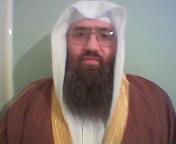
Abu
Qatada |
Despite being described as the most dangerous
jihadi ideologue to have operated from Britain, and detained under 'control orders', Abu
Qatada was never put on trail for terrorism offences by the UK authorities. They
merely arranged, after a lengthy legal battle lasting years, for his deportation to Jordan.
The question is why?
Known to be an advocate of 'jihad' in Chechnya the French have
accused British intelligence of protecting Qatada.
nlpwessex.org |
"If there’s one thing that
exposes the hypocrisy of the Tories as the so-called party of law and order, it’s
human rights. Last Monday it briefed that it would consider temporarily leaving the
European Convention of Human Rights – an international treaty which has protected our
rights and freedoms for more than 65 years. The reason? Home Secretary Theresa May still
can’t deport Abu Qatada to Jordan because he may be tried with evidence obtained
under torture....If Abu
Qatada is such a dangerous threat why can’t we prosecute
him in the UK courts? Is it because any evidence would involve our intelligence services?
Maybe this is why the Government now wants to speed ahead to secret courts."
John Prescott - Former British Deputy Prime Minister
Mirror,
28 April 2013
"....'control orders'...These orders were dreamt up by officials in 2005 and allow terror suspects
to be placed under house arrest for ever without any
semblance of criminal charge or trial. Apart from being profoundly unfair and un-British (the term 'control
order' comes from apartheid South Africa), this scheme is profoundly unsafe. A number of
its targets have disappeared, and one former 'controlee' had a habit of turning up,
complete with plastic tag, at large public meetings attended by members of the present and
past Cabinets. Like house arrest, deportation is no substitute for fair criminal
trials."
Will Theresa be caught by the securocrats?
London
Times, 19 May 2010
"Abu Qatada is one of the ten men that the Government
is now struggling to deport. If he reveals as part of his appeal that MI5 tried to recruit
him, the service will be highly embarrassed. And he may not be the only one to do so. The whispers are that several of
these characters have as much on the intelligence services as they have on them. In the 1990s Britain made a fatal decision, against the advice of other
governments, to try to use these people rather than shut them down."
Lack-of-intelligence services
London Times, 18
August 2005
"Qatada is .... a man 'heavily
involved, indeed ... at the centre in the UK of terrorist activities associated with al
Qaeda,' according to Mr Justice Collins, chairman of the Special Immigration Appeals
Commission. But if that actually is the case, there are plenty of remedies entirely
compatible with liberalism and democracy. One might
expect Qatada to have been, well, charged. If you
can get done under anti-terror laws for photographing a policeman, there must surely be
some scope for dragging an 'al Qaeda kingpin' before a jury. The problem, I imagine, is
that some of the evidence the jurors would have to
hear involves the workings of the intelligence agencies, specifically their contacts with
Qatada in the days when they encouraged him and thought him a man they could do business
with. That might be embarrassing."
Andrew Gilligan - Better pay out to Qatada than lose our freedoms
Evening
Standard, 23 February 2009
"... senior
European intelligence officials tell TIME that Abu
Qatada is tucked away in a safe house in the north of England, where he and his family are
being lodged, fed and clothed by British intelligence services... British security services officials declined to comment."
Sheltering A Puppet Master?
Time
Magazine, 7 July 2002
"European security chiefs
still regard Britain as a safe haven for al-Qaeda
units..."
British 911 Response Abysmal
London Times,
19 Dec 2002
"Abu
Qatada, 48, who returned to jail [without trial] in
December after spending six months free on bail, is regarded as the most dangerous jihadi ideologue to have operated from Britain and is classified as a high-risk Category A prisoner....Abu Qatada’s
influence has extended from Mujahidin groups in Algeria and Chechnya in the past, to Iraq and Afghanistan more recently. As long ago as 1999 he was said to be on the al-Qaeda leadership’s religious affairs
committee. He arrived in Britain on a false passport in 1993 and was allowed to continue promoting jihadi ideology
worldwide from his West London home and at study circles....Despite being monitored by MI5, he went into hiding after the September 11 attacks and was eventually
detained under emergency antiterror laws in October 2002."
Hate cleric, Abu Qatada, issues rallying cry from prison
London Times,
4 April 2009
"He
came to the UK in 1993, arriving on false documents
and claiming asylum. Sometimes people fleeing unpleasant regimes have no choice but to
travel under another name, but once in the country Qatada began using it as a base to call
for the murder of non-Muslims. According to the Special Immigration Appeals Commission, he
is a 'truly dangerous individual' who is 'heavily involved, indeed at the centre, of
terrorist activities associated with al-Qa’ida'.....he’s been described by
Baltasar Garzon, the Spanish judge who tried to extradite General Pinochet, as Osama bin
Laden’s right-hand man in Europe. The extent of his influence can be gauged from the
fact that tapes of his sermons were found in the
Hamburg flat of Mohammed Atta, the 9/11 ringleader.....The
truth is that Qatada has been a guest of the UK for many years, and he has exploited this
country’s long-standing tradition of tolerance to spew out hate-filled rants. He
should have been put on trial long ago for offences such as supporting and funding
terrorism – huge amounts of cash were found in his house, some of it allegedly
destined for Islamic extremists in Chechnya – and soliciting
murder. Other extreme clerics such as Abu Hamza have been convicted and jailed for
preaching similar things; the fact that Qatada
hasn’t been charged is puzzling..."
Joan Smith: Beyond the psychotic drivel, Qatada is serious about jihad
Indpendent
On Sunday, 22 February 2009
"European
security chiefs have repeatedly named Abu Qatada as 'al-Qaeda’s spiritual ambassador
in Europe' and are waiting for David Blunkett, the Home Secretary, to allow them to visit
Belmarsh prison where he is held. Britain has refused to acknowledge it has
captured him.
Investigators such as the Spanish judge, Balthazar Garzon, say London is the hub for logistics and communication and where
terrorist groups get much of their money and fake documentation."
Al-Qaeda revenge plot 'for arrests in Britain'
London Times, 18
November 2002
"Qatada is .... a man 'heavily
involved, indeed ... at the centre in the UK of terrorist activities associated with al
Qaeda,' according to Mr Justice Collins, chairman of the Special Immigration Appeals
Commission. But if that actually is the case, there are plenty of remedies entirely
compatible with liberalism and democracy. One might
expect Qatada to have been, well, charged. If you
can get done under anti-terror laws for photographing a policeman, there must surely be
some scope for dragging an 'al Qaeda kingpin' before a jury. The problem, I imagine, is
that some of the evidence the jurors would have to
hear involves the workings of the intelligence agencies, specifically their contacts with
Qatada in the days when they encouraged him and thought him a man they could do business
with. That might be embarrassing."
Andrew Gilligan - Better pay out to Qatada than lose our freedoms
Evening
Standard, 23 February 2009
"One of al-Qaeda’s most dangerous
figures has been revealed as a double agent working
for MI5, raising criticism from European
governments, which repeatedly called for his arrest. Britain ignored warnings — which
began before the September 11 attacks — from half a dozen friendly governments about
Abu Qatada’s links with terrorist groups and refused
to arrest him.... while
all along he was setting up a haven for his terror organisation in Britain... He pledged to MI5 that he would
not 'bite the hand that fed him'. ..... he was recruiting for al-Qaeda training camps.... Indignant French officials
accused MI5 of helping the cleric to abscond. "
Al-Qaeda cleric exposed as an MI5 double agent
London Times,
25 March 2004
"Back
in the 90s and even after the 9/11 attacks, Britain allowed radical preachers such as Omar Bakri
Muhammad, Abu
Hamza and Abu
Qatada to promote global jihad. The warnings that community leaders gave at the time largely fell on deaf
ears; and we British Muslims failed to stop the growth of this radical fringe, which was
galvanised by the tragedy of Bosnia."
Yahya Birt - Don't repeat this mistake
Guardian,
14 September 2009
"Abu
Qatada and Abu Hamza, two preachers who lived off state benefits after claiming asylum, are
identified by the American authorities as the key recruiters responsible for sending
dozens of extremists from throughout the world to Pakistan and Afghanistan via London
mosques. The leaked WikiLeaks documents, written by senior US military commanders at
Guantánamo Bay, illustrate how, for two decades, Britain effectively became a crucible of terrorism, with dozens of
extremists, home-grown and from abroad, radicalised here. Finsbury Park mosque, in north London, is described as a 'haven' for
extremists. United States intelligence officials concluded the mosque served as 'an attack
planning and propaganda production base'. The
files will raise questions over why the Government and security services failed to take
action sooner to tackle the capital’s reputation as a staging post for terrorism,
which became so established that the city was termed 'Londonistan'. The documents show that at least
35 detainees at Guantánamo had passed through Britain before being sent to fight against
Allied forces in Afghanistan. This is thought to be more than from any other Western
nation....Qatada, who was paid compensation under human rights laws for being 'unfairly
detained', is described as 'the most successful recruiter in Europe' and a 'focal point
for extremist fundraising [and] recruitment'. Hamza is accused of encouraging 'his
followers to murder non-Muslims'. Four mosques in London and an Islamic centre are
highlighted as places where young Muslim men were radicalised and turned into potential
terrorists. Finsbury Park mosque 'served to facilitate and training of recruits,' note the
files, adding that it was 'a haven for Islamic extremists from Morocco and Algeria.'...
Extremist preachers radicalised the men at London mosques, showing them videos of
atrocities committed against Muslims in Bosnia and Chechnya. According to one document, Finsbury
Park mosque was 'a key transit facility for the movement of North African and other
extremists in London to and from al-Qaeda training camps in Afghanistan'."
WikiLeaks: Guantánamo Bay terrorists radicalised in London to attack Western targets
Telegraph,
29 April 2011
"Anti-terrorist police are carrying
out a new investigation into the radical cleric Abu Qatada after uncovering evidence
that may show he could be spreading extremism across the world. Detectives from the
counter terrorism command of the Metropolitan police have seized a vast amount of material
– including internet and traditional publications – from Qatada's home in north
London, it was revealed on Thursday. Deputy assistant commissioner Stuart Osborne –
who is senior national coordinator for counter terrorism in the UK — said officers
were going through the material, which was in several languages. He said it included many
different publications and was a large mass of material. The investigation is examining
whether it crosses the criminal threshold to enable a
prosecution to be brought against Qatada in Britain for the first time since he was
detained in the UK 10years ago.... Abu Qatada, whose
real name is Mohammed Othman, has waged a decade long battle against his deportation. He
came to the UK seeking asylum more than 20 years ago. Despite
the statements made against him he has never been prosecuted or charged with offences in
Britain. He has been accused in Siac hearings of not
only providing a 'religious justification for acts of violence and terror', but also of
being a 'significant international terrorist, with extensive extremist contacts', engaging
'in conduct which facilitates and give[s] encouragement to the commission, preparation and
instigation of acts of terrorism', and 'raising funds for terrorist groups'. MI5 has said
in evidence to Siac that it has been difficult to prosecute Abu Qatada as he has been
careful to disguise his support for terrorist attacks here and abroad, and that he is not
'formally' a member of al-Qaida."
Police investigate publications found in Abu Qatada's home
Guardian,
21 March 2013
Dirty Oil Games In The Caucasus
The Role Of NATO's Covert Operations In The Ukrainian Elections Of 2004
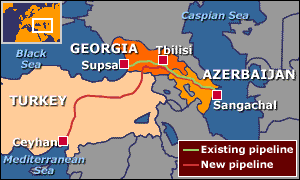
Find Out How Dirty Games Are Being Played In The Caucacus
As The Oil Makes Its Way From The Caspian To The Coast Of Former Yugoslavia
Via The Black Sea Region
Click Here
The Role Of The
Ukraine
Western control of Ukraine offers the prospect of
securing an additional transit link between western Europe and the oil and gas
reserves of the Caspian Sea region. The Ukrainian landmass lies to the north of the Black
Sea reaching as far east as that part of the Caucasus region which forms the
southern tip of the Russian Federation. That region includes Chechnya
which NATO member states have been trying to covertly destabilise in order to engineer its
breakaway from the Federation. A breakaway would result in Chechnya's entry into an
growing US zone of influence comprising a wide range of former Soviet 'Newly Independent
States' in the Caspian Sea region.
The US gained firm control of
Chechnya's neighbour Georgia in 2004 by backing the opposition movement lead by
Mikhail Saakashvili which
challenged rigged elections. The US was not pleased with previous President Eduard
Shevardnaze increasingly looking towards Russia on energy matters. By stark contrast the
US did not challenge fraudulent elections in next-door Azerbaijan where its dictatorial
and brutal regime was already committed to US exploration and pipeline ambitions.
In order to secure as much as possible of the
northern Black Sea-Caspian Sea transit corridor the US and EU (which needs alternatives to
Russian/Arabian oil and gas as much as the US) are unlikely to welcome any moves towards
the partitioning of the Ukraine as seemed possible following the disputed election of 2004.
The long term objective of the west to bring
the whole of the Ukraine within its own orbit.
nlpwessex.org |
"U.S. Secretary of State Colin Powell
said on Monday that Ukraine should remain intact and not succumb to pressure to break
apart following its disputed presidential election."
U.S. Secretary of State Powell Urges Ukraine to Remain Intact
The Moscow News, 30
November 2004
|
Subterfuge In The Ukraine
The Role Of NATO Covert Operations In The Elections Of 2004
"On the day of Viktor Yushchenko's
inauguration [as President of Ukraine], Tom
Mangold reveals the extraordinary story of his
rivals' plot to deny him power.... And only now are the astonishing truths of Mr
Yushchenko's fight for the leadership he had earned being revealed.....[there] was a
series of extraordinary co-ordinated intelligence operations. Those operations involved a breakaway faction of
Ukraine's Secret Service, the SBU, Ukraine's military intelligence, with CIA and MI6 officers. They helped by running their own special operations to frustrate corrupt
politicians and gangsters who tried to seize power from the newly elected leader. American and British agents used spy
satellites, intercept technology and old-fashioned dirty
tricks against President Leonid Kuchma, the departing leader,
and his allies and cronies. In the end, Mr Kuchma's
power and authority simply hemorrhaged away and he was left unable to exercise his
authority.... If the Kremlin did have a hand in the
events in Ukraine, as most observers now believe, they unwittingly came across a series of Western intelligence operations that simply outsmarted them. By November, an important section of the SBU had veered away from Mr
Kuchma's tyrannies and believed the future lay with modernist reformers like Mr
Yushchenko. Some of this may have been self-serving, but it was realistic and was
encouraged by small teams of CIA and MI6 officers sent to back up their respective stations in Kiev for the most important elections in 20 years.
An intelligence net involving Mr Yushchenko's youthful and energetic chief of staff, Oleg
Rybachuk, an important faction of the SBU, Ukrainian military intelligence and British and US ambassadors was established. When Mr Rybachuk received SBU warnings of attempts to disrupt the
elections or threats to Mr Yushchenko, he reported these to both ambassadors. Spy satellites maintained round-the-clock vigilance and Western teams inside Ukraine established an
enormous communications intercept. Slowly it became
clear that a substantial number of Mr Kuchma's players were deserting his team.... Western
intelligence officers had one overriding aim - to ensure that the thousands of protesters
would not be provoked into violence. They believed that if the young people held, the
country would hold..... Western intelligence officers had recommended constant music and rock concerts to distract the huge
crowd, which virtually owned the heart of Kiev. My
conversations with PORA leaders reveal that some of them attended a seminar in the Crimea
funded by the American Freedom House Foundation - whose chairman is former CIA chief James
Woolsey, and USAID, where these techniques were taught."
The man who survived Russia's poison chalice
The
Age (Australia), 23 January 2005
The
Spectator, 5 March 2005 |
One
for oil and oil for one
Michael Meacher
says that the fuss over Ukraine was about the geopolitics of oil, and the growing conflict
between the US and China |
| Yes, our man (Yushchenko) and our system (democracy) won
in Ukraine, and once again good triumphed over bad. Yet this presentation, so
characteristic of the Western media, misses the point about what the struggle is really
about. If the issue was fair elections,
there would have been an equal furore about the grossly rigged elections by which Ilham
Aliyev assumed the presidency of Azerbaijan in 2003 from his father, a ruthless KGB
hardman in the former Soviet state. In fact the West turned a blind eye, in order to
maintain access to Azerbaijan’s oil supplies after a $13 billion contract had been
signed with BP in 1998. Equally, there would have been uproar when the pro-Russian
Shevardnadze was ousted as President of Georgia in 2003 and the West’s favoured
candidate won 96 per cent of the vote to replace him. But nobody raised any complaint.
If the issue was legitimate government, much more
attention would have been focused on Yushchenko’s aides and the tenor of his
administration. His closest aide, Julia Timoshenko, known as Ukraine’s ‘gas
princess’, and now appointed Prime Minister, has been widely accused by both the
Russian and Ukrainian authorities of bribery and embezzlement. Another aide admits that
‘the key people in the Yushchenko team are from the same oligarchic mould as our
opponents’. Economic interests, not political principle, pitted them against the
Yanukovich camp. Many fear that turning over state power to entrenched oligarchs like
these will make Yushchenko’s government little different from its predecessor.
What is really at stake is something quite different,
almost entirely unmentioned in the Western media. It is rather more prosaic than a
‘people power’ revolution. It is primarily a battle over oil transit routes from
the second largest remaining oil deposits in the world, and, more long term, a US attempt
to pre-empt Chinese designs on the key strategic space round the southern rim of the old
Soviet Union.
In May 2000 an oilfield containing 20–50 billion
barrels of oil was discovered in the Caspian Sea off the Kazakhstan coast, probably the
biggest hitherto untapped reserve in the world. But, with major exploration only now
getting under way, early seismic studies suggest vast resources of hydrocarbons ranging
from 70–200 billion barrels of oil and some 250 trillion cubic feet of gas —
less than in the Middle East but much more than in the US and Europe.
The geopolitical problem, however, centres on the fact
that the Caspian Sea is landlocked, so that oil and gas have to be transported by pipeline
to a terminal on the open sea. One relatively short route runs through Iran, but that is
not acceptable to the US. Another plan, from the US oil company Unocal, was to extend
Turkmenistan’s existing route through Afghanistan and Pakistan on to the Arabian Sea,
and this was a consideration behind launching the war against Afghanistan in 2001. A third
alternative is a pipeline westwards from the Caspian port of Baku through Georgia to the
Turkish port of Ceyhan on the Mediterranean; but this has been heavily opposed on grounds
of environmental destruction. A fourth option is a pipeline from Kazakh to the Black Sea,
but this has the severe drawback of tanker congestion in the Bosphorus.
Against this background, Ukraine’s geographical
location makes it an ideal corridor for oil and natural gas from the Caspian region to
Western markets. The most suitable conduit is the Odessa–Brody
pipeline which was completed in 2001 and runs north from Ukraine’s Black Sea port
to the city of Brody, and is thence extended to the refinery at Plotsk in Poland and a
further link to the Baltic port of Gdansk. However, this has been blocked hitherto by
Moscow’s stubborn insistence on operating the pipeline in the reverse direction, to
move oil from Russia southwards to tankers in the Black Sea for onward shipping to world
markets. Moscow has also tried to drag Ukraine into a customs or even an economic union in
the framework of its so-called Integrated Economic Zone. By depriving Ukraine of its
European prospects and hence of its opportunity to become more independent economically,
the Kremlin has been trying to pull Kiev back into Moscow’s orbit.
What has been at stake in Ukraine is less a fight over
democracy than a struggle over the geopolitics of oil and military reach. If Ukraine is
absorbed into the Nato orbit, Russia will be deprived of access to its naval bases in the
Crimea, and Russian oil and gas exports will be squeezed by a new US straitjacket.
But the significance of the Ukrainian
confrontation goes even wider. China remains the sole long-term challenger to US
hegemony, and while the Chinese economy has been expanding at a phenomenal rate, its
weakness continues to be its energy supply. Once oil-independent, China has over the last
decade become increasingly reliant on imports, which now account for 60 per cent of its
oil consumption, compared with only 6 per cent in 1993. Within the next five years,
according to Beijing, China will be importing 50 million tons of oil and 50 billion cubic
metres of gas annually.
Chinese petro-diplomacy already extends worldwide,
including Africa, and it is busily establishing surveillance stations, naval facilities
and airstrips to safeguard the oil route from the Gulf to the South China Sea. But its
main goal in escaping dependence on maritime oil supplies is access to Russian and central
Asian oil. Another facet, therefore, of intense US pressure on Ukraine is to forestall any
Chinese encroachment on this oil-strategic area in the soft underbelly of the former
Soviet Union. Ukraine is in reality a key flashpoint in the new Great Game being played
out by the US, not so much with Russia, still a declining force, but with China, the
emerging long-term threat. |
"Twenty years ago, the United States
had little interest in relations with Russia, and certainly not with resetting them. The
Soviet Union had collapsed, the Russian Federation was in ruins and it was not taken
seriously by the United States -- or anywhere else for that matter. The Russians recall this period with bitterness. In their view,
under the guise of teaching the Russians how to create a constitutional democracy and
fostering human rights, the United States and Europe had engaged in exploitative business
practices and supported non-governmental organizations that wanted to destabilize Russia. The breaking point came during the Kosovo crisis. Slobodan Milosevic, leader of what was left of Yugoslavia, was a
Russian ally. Russia had a historic relationship with Serbia, and it did not want to see
Serbia dismembered, with Kosovo made independent. There were three reasons for this. First, the Russians
denied that there was a massacre of Albanians in Kosovo. There had been a massacre by Serbians in Bosnia; the evidence of a
massacre in Kosovo was not clear and is still far from clear. Second, the Russians did not want European borders to change. There had
been a general agreement that forced changes in borders should not happen in Europe, given
its history, and the Russians were concerned that restive parts of the Russian Federation,
from Chechnya to Karelia to Pacific Russia, might use the forced separation of Serbia and Kosovo as a precedent for dismembering
Russia. In fact, they suspected that was the point of Kosovo. Third, and most important, they
felt that an attack without U.N. approval and without Russian support should not be
undertaken both under international law and out of respect for Russia. President Bill
Clinton and some NATO allies went to war nevertheless.... When
many former Soviet countries experienced revolutions in the 1990s that created governments
that were somewhat more democratic but certainly more pro-Western and pro-American, Russia
saw the West closing in. The turning point came in Ukraine, where the Orange Revolution generated what seemed to Putin a pro-Western government in 2004. Ukraine
was the one country that, if it joined NATO, would make Russia indefensible and would control many of its pipelines
to Europe. In Putin's view, the non-governmental organizations helped engineer this, and
he claimed that U.S. and British intelligence services funded those organizations. To Putin, the actions in Ukraine indicated that the United States in particular was committed to extending
the collapse of the Soviet Union to a collapse of the Russian Federation. Kosovo was an insult from
his point of view. The Orange Revolution was an attack on basic
Russian interests."
Syria, America and Putin's Bluff
Stratfor, 10
September 2013
Meanwhile In Azerbaijan
" 'There
was CIA involvement [in Azerbaijan] through a company called Mega Oil. They were shipping
in arms under the cover of oil tools.' The BP executive was explaining to me how the CIA, MI6 and British
Petroleum engineered a coup d’état, overthrowing a nation’s elected president
who was 'not favorable to BP.' The corporation’s former vice president, Leslie Abrahams, is pictured above, holding
an AK-47 in front of BP’s offices in Baku, Azerbaijan. Like most of the other BP
executives I spoke with, he proudly added that although he was working for BP, he was also
an operative for MI6, British
intelligence. This conversation, which took place in
2010, was far from the weirdest I had in my four-continent investigation of the real story
of the Deepwater Horizon. ... To understand what really happened in the Gulf of Mexico,
and how BP became a corporate creature beyond the reach of the law, British television
network Channel 4 sent me on an investigation through a labyrinthine fun house of bribery,
lap dancing, beatings, WikiLeaks, a coup d’état, arrests and oil-state terror. I
found the cause of the tragedy of the Deepwater Horizon 7,000 miles from the Gulf in the
ancient city of Baku, the Central Asian caravan stop on the Silk Road. ... The literal
source of Soviet power until 1991, Baku has been exporting petroleum for 3,000 years. As
the Soviet Union shattered into pieces that year, BP set its sights on the city. It is now
the capital of the new nation of Azerbaijan, which sits atop the biggest untapped oil
field in the world, right beneath the Caspian Sea. In
1992, then-BP Chairman Lord Browne flew into Baku as soon as the young state elected its
first president, Abulfaz Elchibey. Former British Prime Minister Margaret Thatcher joined
him via the 'Iron Lady,' a plane the corporation outfitted especially for her. At a state
dinner, Browne handed Abrahams, a BP vice president at the time, a briefcase and showed
him the contents: a check for $30 million. Browne then gave the check to the president of
Azerbaijan. Still, the new president remained 'not favorable' to BP’s demand for
control of the Caspian oil, so MI6, the CIA and the corporation went into action. The spy
agencies armed and empowered former Soviet KGB chief Heydar Aliyev, who in 1993 overthrew
Azerbaijan’s elected government. Once he became dictator, Aliyev named himself
president for life and within four months signed a no-bid deal to give the reserves to BP.
BP and MI6 man Abrahams was instructed, he told me, to 'smooth the way' for the deal by
taking Azeri officials to London in Browne’s jet for weekends of lap dancing and
other entertainment. By Abrahams’ own estimation, he paid over $3 million in
additional cash bribes to make certain BP would have no trouble. I should note that
Abrahams broke no law: Bribery by a British subject was legal then. BP executives did not
deny the payoffs when I questioned them directly, and MI6
officers proudly confirmed the coup’s purpose of locking in the offshore deal for BP.... Robert Ebel, former chief of oil analysis for the CIA, estimates that
at least $140 million in payments by BP for Azeri oil has gone
unaccounted for. Where did it go? Notably, the Aliyev ruling family lives like pashas
despite the president’s official salary of $100 a month.... "
Greg Palast - Lap Dancers, the CIA, Payoffs and BP’s Deepwater Horizon
Truthdig,
18 April 2014
Rogue
State Britain
MI6 As Agent For Big Oil
The Hidden Powers Behind British Foreign Policy
John Scarlett's Evil Empire
www.nlpwessex.org/docs/watscarlett.htm
New Allegations Emerge About Post
Cold-War
MI6-BP Sponsored Coup D'Etat In Azerbaijan |
"Luxury cars cruise down 'Oilman
Avenue' past five-star hotels and exclusive boutiques in the capital of Azerbaijan,
where President Ilham Aliyev looks sure to be re-elected on Wednesday. While residents of
cramped apartments in drab Soviet-era blocks on the outskirts of Baku, may feel excluded
from the oil boom that has transformed smarter parts of town, opponents of Aliyev, 51, say
controls on dissent mean they have little chance of stopping him winning a third five-year
term. That will extend a dynastic rule under which he and his father, former Communist
leader Heydar Aliyev, have ruled the mainly Muslim state since 1969, except for a period
from 1982 to 1993. Opinion polls show him clearly in the lead. Located between Iran
and Russia, Azerbaijan is a vital energy supplier to Europe and
a transit route for U.S. troops in Afghanistan. Critics say this has made the West turn a blind eye to shrinking
freedoms since Aliyev came to power in 2003. A new
generation of Internet users, inspired by the 'Arab Spring' uprisings, sees no chance of
ousting Aliyev next week, but problems are growing that they hope he will have to address
in his next term - and might one day unseat him. As
oil output peaks, discontent is growing over the gap
between rich and poor and tensions are rising with neighbouring Armenia in a territorial
dispute that caused a war in the 1990s. 'I don't believe change will come to this country
through the election as there is no real election in Azerbaijan,' said Adnan Hajizade, a
30-year-old blogger who fell foul of the authorities, sipping ginger tea in a busy Baku
cafe.... economic growth has slowed since 2003-2007 when the economy
expanded by an average 21 percent per year. The main reason is a slowdown in oil
production, raising concerns and prompting Aliyev to accuse operator BP of making 'false
promises'."
Azerbaijan's leader set to keep power but problems loom
Reuters,
4 October 2013
"Something
funny happened the day before Azerbaijan's presidential election: The election commission announced the winner. On Tuesday, a day before the voting began, the smartphone app of the
Central Election Commission released results showing President Ilham Aliyev, whose family
has been at the helm of the Caspian Sea nation for four decades, winning 73 per cent of
the vote. On Wednesday, the commission said Aliyev had won 85 per cent of the vote. His
closest contender, Jamil Hasanli, trailed with six per cent, it said. The commission
apologized for the early result on Thursday, saying it was only a test at one polling
station conducted by the software developer. It expressed 'deep regret' for the
'misunderstanding.' International monitors said Thursday that the vote that kept the
dynasty in power was marred by violations."
Azerbaijan announces election winner 1 day before vote
Associated
Press, 10 October 2013
"The Foreign and Commonwealth Office
paid for the SAS to train Azerbaijan's special forces in an effort to gain influence with
the hardline ex-Soviet regime. According to a leaked document seen by The Sunday Times,
members of the UK's elite fighting force taught their counterpart sniper skills and how to storm buildings as part of a
six-week training mission. The paper says one of the aims of the deployment in 2006 -
codenamed Operation Lanark - was to 'enhance' the FCO's standing in the central Asian republic.
Western politicians have long been keen to court Azerbaijan and Ilham Aliyev, its
president, because of the vast oil and gas reserves
beneath the Caspian Seas. But human rights groups
have accused Aliyev's government of seeking to silence
opposition by arresting and imprisoning dozens of political activists on bogus charges. The SAS briefing document, drawn up in November 2005, reveals how
Azerbaijani special forces were to be taught 'basic room combat', 'multiple room combat,'
and 'enhanced shooting capabilities'. .... Special
forces sources accused the Foreign Office of 'pimping out' the SAS. 'Operations like this are basically Foreign Office wheeler dealing,' one
said.... Britain has significant commercial interests
in Azerbaijan. BP, its biggest foreign investor, has signed a deal on a gasfield which
could be worth up to £62bn over 25 years."
SAS hired out to woo tyrant of Azerbaijan
Sunday Times, 20 October 2013, Print Edition, P9
Additional News Updates
After The Ukrainian Elections Of 2004
"Another option to ease congestion in
Turkish waters would be to extend Ukraine’s Odessa-Brody
pipeline to Poland’s Baltic port of Gdansk.
Last week, Ukraine’s President Viktor Yushchenko said his country was ready to
proceed with the extension and had set up joint structures with Poland and Kazakhstan to
work out a plan to complete construction, launching the project in 2006. Kazakhstan has
expressed interest in the $600 million plan and the European Union has invested in a
feasibility study, which should be ready by the end of the year."
Black Sea Pipelines Look to Bypass Straits
Reuters, 28 November 2005
"Russia's
Federal Security Service, or FSB, director Nikolai Patrushev has officially confirmed the
death of Saudi national Muhammad bin Abdullah bin Saif Al-Jaabir Al Buayneen Al-Tamimi,
also known as Abu Omar as-Seif. The FSB Public Relations Center said in a press release, 'In November, the main representative of al-Qaida in North Caucasus,
international terrorism ideologist Abu Omar as-Seif was killed in Dagestan.' The FSB statement confirms the announcement of As-Seif's death as
reported on Dec. 1 by the Shura Military Council of Chechnya on the Arabic Web site
Qoqaz.com. As-Seif reportedly took over command of
foreign mujahideen Chechnya after Saudi national Abd
al-Aziz al-Ghamdi, also known as Abu al-Walid, died in an encounter with Russian forces in
Vedeno province in April 2004. The Shura statement noted
of as-Seif, 'One of the most notable Jihad leaders in
Chechnya, the Islamic consultant in the Majlis Ash-Shura Council of the Mujahideen, and
the Religious and Sharia source of the Mujahideen in Chechnya, the Sheikh died in a
confrontation with Allah's enemies, the Russians.' Russian
officials also claimed that they recovered al-Qaida documents after killing as-Seif
outlining his group's plan for 'global jihad.' Regnum news agency reported that according
to the FSB Osama bin Laden sent
as-Seif to the northern Caucasus about 10 years ago.
Grani.ru reported that as-Seif financed the September 2004 attack on the school in Beslan
in North Ossetia."
UPI Intelligence Watch
United Press
International, 21 December 2005
"Ukrainian Prime
Minister Yuri Yekhanurov and his Polish counterpart Kazimerz Marcinkiwicz signed in Warsaw
on Thursday a declaration on finishing the
construction of the oil pipeline 'Odessa-Brody' to Plock (Poland), the press
service of the Ukrainian prime minister reported on Friday. 'We want to implement this
project to the end,' Marcinkiwicz told journalists after the signing of the declaration,
the economic news agency PRIME-TASS reports. According to the Polish premier, during the
coming three months, profile ministries will prepare specific proposals, including data on
the project self-repayment. As he added, the issue of providing lands for the construction
of the section Brody-Plock is a technical one and won’t complicate the implementation
of the project. Yekhanurov, in his turn, assured that within 90 days, the Ukrainian side
could begin using the oil pipeline Odessa-Brody, which is now used for pumping Russian
oil, according to the direct destination."
Uraine, Poland PMs sign declaration on oil pipeline
Itar-Tass,
17 February 2006
"Prime Minister
Kazimierz Marcinkiewicz said Thursday that work on the extension of the Odessa-Brody
Ukrainian oil pipeline to Plock in central Poland would be speeded up... The new pipeline
would transport crude from the Caspian Sea oilfields
to Ukraine, Poland and possibly western Europe, thus
allowing greater diversification of supply sources and making Poland less dependent on
Russian supplies."
Work on Odessa-Brody-Plock oil pipeline to pick up speed
EuroPap,
16 February 2006
"Hizb-ut-Tahrir was established in the
United Kingdom by Sheikh Omar Bakri Mohammed,
who joined the party as a teenager in Lebanon during the early 1970s. He also created
another organization that aims to create a global Islamic Caliphate, Al Muhajiroun ('The
Emigrants,' a name he has said 'refers to the early followers of the Prophet Muhammad.'),
which he has led from an office in London. Al Muhajiroun, the Sheikh has said, was
established in Mecca but launched publicly in Jeddah, Saudi Arabia, with 40 founding
members on March 3, 1983, a date chosen because it was 'the 59th anniversary of the
destruction of the Ottoman Caliphate.' Expelled from Saudi Arabia for radical political
activity, the Sheikh arrived in Great Britain on January 14, 1986. He soon began to
establish both Al Muhajiroun and Hizb ut-Tahrir on fertile British soil.... The Sheikh in
1999 became chief sponsor in Great Britain for the International Islamic Front (IIF),
a group persuading and assisting young British Muslims to undergo 'guns and live
ammunition' combat training and then go overseas to fight Jihad ('Holy War) in Chechnya and the
Balkans."
Islamists Down Under
FrontPage
Magazine, 24 April 2006
"Media freedom in Russia came under
scrutiny yesterday when it emerged that the Government had forced scores of radio stations
to stop broadcasting news from the Voice of America
and Radio Free Europe/Radio Liberty.... Radio
Liberty is thought to have angered the Kremlin last year after it interviewed Shamil
Basayev, the Chechen warlord who claimed responsibility for the Beslan school siege."
Voice of America bulletins are forced off the air
London Times, 8 July
2006
"There
is now growing acknowledgement in the international intelligence community that Britain
has operated within the framework of a 'Covenant of Security' with these networks.... But
even this doesn’t fully explain the phenomenon at stake.... The failure of the authorities to act can only be explained in
light of the fact these extremist networks were not only tolerated, but were actively
protected due to their utility to British foreign policy objectives in the Balkans and
elsewhere. "
Nafeez Mosaddeq Ahmed
7/7: The British Terror Paradigm
Media Monitors Network, 14
July 2006
"Aswat, who used to be Osama
bin Laden’s bodyguard, was believed by both British and US investigators to have been
the key senior al-Qaeda operative who masterminded
the London bombings..... Khan and his
colleagues were reportedly members of al-Muhajiroun.... Why is the [British] government
downplaying these issues? ...... American and French intelligence
officials confirm that Aswat and his colleagues, Abu Hamza and Omar Bakri, were all used
in an MI6 operation to recruit British Muslims to fight in Kosovo in the 1990s... The
failure of the authorities to act can only be explained in light of the fact these
extremist networks were not only tolerated, but were actively protected due to their
utility to British foreign policy objectives in the Balkans and elsewhere. The danger is that the government’s overwhelming imperative
to conceal these policies from the public are compromising the integrity of the [7/7]
criminal investigation. Many of these networks in the UK remain intact. People associated
with Bakri and other UK-based operatives linked to terrorism whom I identify in my
writing, and who by their own admission have undergone terrorist training and are willing
to carry out attacks inside the UK, have not been pursued.... These
networks are closely associated with the UK-based operatives linked to the London
bombings. For example, in the summer of 2000, Yousef
Bodanksy, former Director of the [US] Congressional Task Force on Terrorism, reported that
US and British intelligence had held a formal meeting hosted by Azerbaijan to discuss the
supply of arms and funds to al-Qaeda mercenaries in the Caucasus, Central Asia and the
Middle East. "
Nafeez Mosaddeq Ahmed
7/7: The British Terror Paradigm
Media Monitors Network, 14
July 2006
Nafeez Mosaddeq Ahmed is Executive Director of the Institute for Policy Research &
Development, London, United Kingdom. He teaches courses in political theory,
international relations and contemporary history at the School of Social Sciences and
Cultural Studies, University of Sussex, Brighton, United Kingdom. He is the author of 'The
London Bombings: An Independent Inquiry'
"The modus operandi, as illustrated in
the lives of the London bombers, is simple. Young Muslims fall out of mainstream society
and become alienated from their parents and 'stuffy' Islamic culture. Often they turn to
petty crime, as did Hussain and Tanweer. Though neither served prison sentences, it is
often there, or by associating with low-level criminals, that they get in touch with
extremists. Indeed, it was in prison that Richard Reid, the British shoe bomber, met
Islamic terrorists, converting to their faith as he did his time. Websites and satellite
television channels supply images and incendiary rhetoric from any location on Earth where Muslims are fighting non-Muslims. Once Chechnya was the battlefield of choice for armchair viewing; now Iraq is the
focus. Some of these radicals come into contact with veterans of wars or of the Afghan
camps, and it is under their influence that fanaticism becomes terrorism.... It was in the
maze of red-brick back-to-backs of Beeston, a short drive from Leeds city centre, that
Hussain, Tanweer and Khan all became connected. The two younger men were childhood friends
who later fell heavily under Khan's influence. But it was in a backstreet bookshop that
the trio 'turned religious' about four years ago, says one friend. Their conversion, he
claims, coincided with the opening of Iqra, an Islamic bookshop, in Beeston. 'I think the
shop is innocent,' the friend says, 'but I think it sold under-the-counter stuff, videos of what was happening in Bosnia, Iraq and Chechnya. Stuff the television could not show. Rapes, murders, mutilation, all
saying: 'Look what is happening to your Muslim brothers and sisters.' You see that and you
start to get angry. That was the beginning.' The 29-year-old, who refused to give his
name, added: 'From that, you feel you want to learn more about religion, about your Muslim
brothers and sisters around the world getting murdered.'"
The path to mass murder
Daily
Telegraph, 17 July 2006
"The only man convicted in
connection with the 9/11 terrorist attacks began plotting the downfall of western society
from the austere surroundings of the British Library. Newly released court papers reveal
the most detailed account yet of the life of Zacarias Moussaoui, who was once dubbed the
'20th hijacker', during his nine years in London.... The evidence, some of which has been
declassified for the first time, also confirms that Ramzi Binalshibh, one of the planners
of the 9/11 atrocity, flew to London from Germany in December 2000 to meet
Moussaoui....Another document, written by an FBI agent before the attacks on New York and
Washington, accuses Omar Bakri Mohammed, the radical preacher now barred from Britain, of sending his Al-Muhajiroun supporters to
flight training schools in America..... The library confirmed this weekend that Moussaoui
was issued with a five-year pass in 1994 after he had enrolled on a master’s degree
course in international business at South Bank University. Although Special Branch
officers are believed to have made inquiries about his dealings with the library, the
books he read there remain a mystery. What is certain, however, is that by the time
Moussaoui’s pass expired in July 1999 he was a hardened extremist who had already
travelled to Afghanistan and Chechnya to fight with
the mujaheddin..... ”
British Library quest of 9/11 plotter
Sunday Times, 6
August 2006
"The Ukrainian and Polish premiers
said Wednesday that Ukraine's Odessa-Brody pipeline should be extended to the Polish city
of Plock and carry Caspian Sea oil to Poland and Europe, a move that could help lessen the
continent's reliance on Russian oil. 'One of the most important projects is to construct
the Odessa-Brody-Plock pipeline. We see how to do it and we have the intention to work
together in this direction,' Ukraine's Prime Minister Viktor Yanukovych said at a joint
news conference with his Polish counterpart Jaroslaw Kaczynski. Ukraine has been debating
how to use the pipeline for years, with Russia lobbying for it to pump Russian oil in the opposite direction
— to the Black Sea port of Odessa for further transport to western markets through
Turkey's Bosporus. Western-leaning Ukrainian
President Viktor Yushchenko and the United States have favored using it to pump Caspian
oil from other ex-Soviet republics. Kaczynski, who
arrived in Kiev for a two-day visit, echoed Yanukovych and said there is sufficient
financial support to complete the project... During Kaczynski's meeting with Yushchenko
later Wednesday, they called for a quick extension of Odessa-Brody pipeline to Plock,
saying it should be a priority in bilateral relations.Yanukovych, who lost to Yushchenko
in a 2004 presidential vote following the Orange Revolution but returned to the country's
No. 2 job in August, has made improving frayed ties with Moscow a priority."
Ukrainian, Polish premiers urge extension of Odessa-Brody pipeline to Poland
Associated
Press, 15 November 2006
What is the significance of the
Odessa-Brody-Plock pipeline? - Click Here
"The presidents of Poland and
Ukraine have announced plans to build a pipeline which would reduce their dependency on
Russian oil. Speaking after talks with Viktor Yushchenko, Poland's Lech Kaczynski said
both nations were committed to the extension of the Odessa-Brody pipeline. The pair said
they hoped to hold an energy summit in May, with Azerbaijan, Kazakhstan and Georgia
joining in. Both Poland and Ukraine are heavily dependent on Russian oil imports. Mr
Yushchenko expressed hopes that the European Union would co-finance the project, but said
he counted mostly on the backing of international oil companies. He also voiced his
support for the creation of a pipeline energy corridor connecting Asia and Europe. If the
plans go ahead, the Odessa-Brody pipeline, currently 670km (410 miles) long, would be
extended to Plock, which is home to Poland's main refinery, PKN Orlen. Orlen currently
relies entirely on Russian oil supplies. The extension of the Odessa-Brody pipeline could
help bring Caspian oil to Poland, thus bypassing the Russian supplier."
Poland and Ukraine make oil plans
BBC Online, 7 March 2007
"The
conflict that has erupted in the Caucasus has set alarm bells ringing because of Georgia's
pivotal role in the global energy market. Georgia
has no significant oil or gas reserves of its own but it is a key transit point for oil
from the Caspian and central Asia destined for Europe and the US. Crucially, it is the
only practical route from this increasingly important producer region that avoids both
Russia and Iran. The 1,770km (1,100 miles) Baku-Tbilisi-Ceyhan pipeline, which entered
service only last year, pumps up to 1 million barrels of oil per day from Baku in
Azerbaijan to Yumurtalik, Turkey, where it is loaded on to supertankers for delivery to
Europe and the US. Around 249km of the route passes through Georgia, with parts running
only 55km from South Ossetia. The security of the BTC pipeline, depicted in the James Bond
film The World is Not Enough, has been a primary concern since before its construction.
The first major attack on the pipeline took place only last week - not in Georgia but in
Turkey where part of it was destroyed by PKK separatist rebels. Output from the pipeline, which is 30 per cent owned by BP and
carries more than 1 per cent of the world's supply,
is likely to be on hold for several weeks while the fire is extinguished and the damage
repaired. But the threat of another attack by separatists in Georgia itself is very real.
Only a few days before the Turkish explosion, Georgian separatists threatened to sabotage
the pipeline if hostilities continued. The latest eruption of violence could easily spur
fresh attacks. The BTC pipeline, which is buried throughout most of its length to make
sabotage more difficult, was a politically highly charged project. It was firmly opposed
by Russia, which views the Caucasus as its own sphere of influence and wants central Asian
oil to be exported via its own territory. Russia also backs the South Ossetian and
Abkhazian separatists in Georgia and relations between Moscow and Tbilisi have curdled
into outright hostility in recent months. The BTC pipeline, which cost $3 billion to
build, is a key plank of US foreign policy because it reduces Western reliance on oil from
both the Middle East and Russia."
Energy pipeline that supplies West threatened by war Georgia conflict
London
Times, 8 August 2008
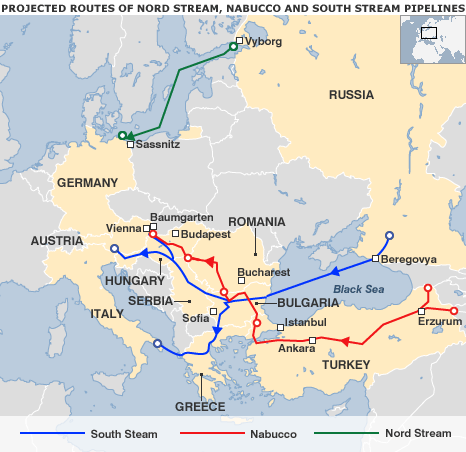
"The
giant Russian energy company, Gazprom, which controls the world's largest reserves of
natural gas, has issued a stark warning to the European Union saying it must decide if it
wants to continue receiving supplies of Russian gas. Speaking in an interview for the
BBC's Newsnight programme, Gazprom deputy chairman Alexander Medvedev warned that Europe
was now at a crossroads. 'Only three countries can be suppliers of pipeline gas in the
long-term - Russia, Iran and Qatar. So there is no other choice than to deal with these
suppliers,' he said. 'Europe should decide how to handle this situation… and if
Europe doesn't need our gas, then we will find a way of selling it differently.' The threat comes as the EU scrambles to find alternative energy suppliers
following the crisis in January, when Russia shut down the main pipeline into Europe for
two weeks in a price dispute with the key transit country, Ukraine. The EU currently relies on Russia for a quarter of its total gas
supplies. Of the bloc's 27 member states, seven are almost totally dependent on Russian
gas....But is it already too late for Bulgaria and
Europe as a whole to escape the addiction to Russian gas? It is now a vital issue
for the EU and it is leading to increasing friction with Moscow in what being described as
a new 'Great Game' between Russia and the West over energy supplies. Gazprom is already
manoeuvring cleverly in this game, pushing ahead with highly ambitious plans which would
strengthen its hold over Europe. Despite the sharp fall in oil and gas prices which have
hit Gazprom hard, the company is determined to build two new pipelines to Europe at a
total cost of at least $20bn (£12.5bn)....The first
pipeline, called Nord Stream, would go from western Russia under the Baltic Sea to
Germany, while the second, called South Stream, would go from Russia's south coast under
the Black Sea to Bulgaria, eventually ending up in Italy. Gazprom wants to pump gas under
the sea directly to Europe so it can avoid transit countries such as Ukraine which lie
along the existing land routes. It argues this will
improve Europe's energy security. But it will also give Russia the ability to pump much
more gas to Europe. Mr Medvedev of Gazprom believes
that by 2020, Russia's share of the European gas market will increase from 26% to 33%
'because local production is going down and demand is increasing'...While the Commission seems unconcerned by the long-term implications of
Nord Stream, there is real worry about Gazprom's other big pipeline project, South Stream.
No construction work has begun on it yet, but Gazprom insists feasibility studies will be
completed this year and the pipeline will be built across the Black Sea to Bulgaria and
into the heart of Europe by 2015. For Europe this could spell disaster. It could kill off
one of its most important schemes for breaking away from its dependency on Russia. For five years, the EU has been pushing for a pipeline to be
built from the Caspian region to Austria which would carry gas from Central Asia, the
Caucasus and Middle East. Crucially, the pipeline called Nabucco would not go across any
Russian territory. But like South Stream it would
enter Europe via Bulgaria and possibly use several of the same European transit countries.
There are serious doubts that both Nabucco and South Stream are viable. One European
Commission official told the BBC that there was now a 'war of gas pipelines' going on with
Russia, with 'harsh competition as each side tries to gather support for its plans'....And Moscow itself is now openly saying that competition for energy
supplies in areas including Central Asia and the Caspian Sea could lead to military
conflicts along its borders over the next decade. A
security strategy document, published in May, was signed by the Russian President Dmitry
Medvedev."
Energy fuels new 'Great Game' in Europe
BBC Online, 9 June 2009
"On one side are Muslim extremists who
want to break away from Moscow’s rule and set up an Islamic state. On the other are
the Kremlin-backed forces hell-bent on stopping them. Caught in the middle are countless
civilians. It is unreported in Russia and virtually
unnoticed by the rest of the world. Yet just five months after the long war in Chechnya
was officially declared to be at an end, the northern Caucasus has seen a big upsurge in
violence. Five hundred people have been killed so
far this year, double last year’s toll. It has become the Kremlin’s most
pressing problem after the economic crisis....In Dagestan, home to more than 50 ethnic
groups, clan warfare and bitter political rivalries have compounded internal conflict. The
interior minister responsible for security, Adilgerei Magomedtagirov, was killed by a
sniper as he attended a wedding in June. Two dozen policemen have been murdered in the
past year. Russian special forces carry out almost daily raids against those they suspect
of being Islamic terrorists."
Dirty war rages on Russia's doorstep
Sunday
Times, 20 September 2009
"The
controversial Kremlin-backed president of Chechnya claims that militants in the
violence-plagued Russian province are backed by U.S. and British intelligence agencies. Ramzan Kadyrov's remark was probably the bluntest claim by a Russian
official that insurgents in the restive North Caucasus have Western support. Western
officials have dismissed such assertions as nonsense. A statement from Kadyrov's office
Wednesday quoted him as suggesting that Western-backed mercenaries are fighting the
government in Chechnya. It quotes him as saying, 'We
are fighting in the mountains with the American and English special services.' Russian Prime Minister Vladimir Putin suggested during his presidency
that the West was encouraging unrest in the North Caucasus."
Chechen Leader Claims US, Britain Back Rebels
Associated
Press, 23 September 2009
"The
Kremlin-backed chief of Russia's turbulent Chechnya region said his forces were fighting
U.S. and British intelligence services who want to split the country apart, according to
an interview published on Thursday. Former
rebel-turned-Moscow-ally Ramzan Kadyrov said in comments to Zavtra newspaper reprinted on
his official website that he had seen the U.S. driving licence of a CIA operative who was
killed in a security operation he led. Chechen authorities have previously said insurgents
following the radical Wahabist form of Islam receive support from international Islamist
groups sympathetic to al-Qaeda, but have not accused the West of instigating violence.
'We're fighting in the mountains with the American and English intelligence agencies. They
are fighting not against Kadyrov, not against traditional Islam, they are fighting against
the sovereign Russian state,' he said. The West sought to attack both Russian Prime
Minister Vladimir Putin and the country as a whole by targeting the country's weakest
regions, Kadyrov said in the comments republished prominently on www.chechnya.gov.ru. Kadyrov was appointed by Moscow
as a bulwark against separatist rebels in the mainly Muslim province, but rights activists
say he flouts federal laws and is himself responsible for much of the violence that has
grown in recent months. 'The West is interested to cut off the Caucasus from Russia. The
Caucasus - a strategic frontier of Russia. If they take away the Caucasus from Russia,
it's like taking away half of Russia.' Many Chechens have emigrated to Europe, Turkey, and
Georgia and some have been recruited as insurgents, said Kadyrov. 'Now they strike a blow
against Putin and Russia. Chechnya, Dagestan are weak, vulnerable parts of the Russian
state,' Kadyrov said, referring to the neighbouring region, which has also been rocked by
violence. Asked if he was saying there were signs of CIA and MI6 participation in the
violence, he said 'Of course', he had seen evidence of their direct involvement in an
operation he led. 'There was a terrorist Chitigov, he worked for the CIA. He had U.S.
citizenship...When we killed him, I was in charge of the operation and we found a U.S.
driving licence and all the other documents were also American,' he said."
Russia's Chechen chief blames CIA for violence
Reuters, 24 September
2009
"Asked by the interviewer, Zavtra
editor in chief Alexander Prokhanov, why the security situation in the North Caucasus has
worsened lately, Kadyrov said that the security bodies in Ingushetia and Dagestan have not
been operating effectively. He also said that rebels in the region are 'given narcotics
tablets,' turned into zombies, after which they go 'to blow themselves up,' and that 'the
hand of the West' is behind all of this. Kadyrov
insisted that the rebels in the North Caucasus receive little aid from the 'Muslim world'
and that all of their weapons come from Soviet stockpiles in Georgia and Azerbaijan. 'The
West is interested in severing the Caucasus from Russia,' Kadyrov told Prokhanov. 'The
Caucasus is Russia's strategic frontier. If they take away the Caucasus from Russia it's
like taking away half of Russia. In their time, the Americans created Bin Laden, taught
him the art of terrorism. Now they are blanketing us with groups of foreigners. These are
not ‘freedom fighters' - these are brilliantly trained terrorists. We are fighting in
the mountains with the American and English special services. They are fighting not
against Kadyrov, not against traditional Islam; they are fighting against the sovereign
Russian state. Putin united Russia, pulled it out of
chaos, sent off [the Russia tycoons] Berezovsky, Gusinsky, Khodorkovsky. He took away
everything from them. Do you think they forgave him? Now a new blow is being struck
against Putin, against Russia. Chechnya, Dagestan -they are weak, vulnerable links in the
Russian state.' Kadyrov noted that many Chechens emigrated to Europe, Turkey and Georgia.
'It is precisely from these [people] that terrorists are being recruited [and] being sent
to us,' he said, adding that they will not succeed and that only a month or a month and a
half more is needed to 'smash' the rebels. 'We will not give our territory to the
Americans,' Kadyrov said. Asked by Prokhanov if he meant that he had found 'traces' of the
CIA and MI6, Kadyrov answered: 'Of course.' The Chechen president added: 'There was a
terrorist Chitigov, he worked for the CIA. He had U.S. citizenship. He was a brigadier
general under Khattab [the late Arab commander of Chechen rebel forces-EDM]. When we
killed him -I was in charge of the operation then- we found a U.S. driving license on him
and all the other documents were also American' (www.zavtra.ru, September 23)."
Kadyrov: the West is Behind the North Caucasus Insurgency
Eurasia
Daily Monitor Volume: 6 Issue: 176
"Almost every month for the past two
years, Chechen suicide bombers have struck. Their targets can be anything from Russian soldiers to
Chechen police officers to the innocent civilians who were killed on the subway in Moscow
this week. We all know the horror that people willing to kill themselves can inflict. But
do we really understand what drives young women and men to strap explosives on their
bodies and deliberately kill themselves in order to murder dozens of people going about
their daily lives? Chechen suicide attackers do not fit popular stereotypes, contrary to
the Russian government’s efforts to pigeonhole them. For years, Moscow has routinely
portrayed Chechen bombers as Islamic extremists, many of them foreign, who want to make
Islam the world’s dominant religion. Yet however much Russia may want to convince the
West that this battle is part of a global war on terrorism, the facts about who becomes a
Chechen suicide attacker — male or female — reveal otherwise. The three of us,
in our work for the Chicago Project on Security and Terrorism, have
analyzed every Chechen suicide attack since they began in 2000, 42 separate incidents
involving 63 people who killed themselves. Many Chechen separatists are Muslim, but few of the suicide bombers profess religious motives. The majority are male, but a huge fraction — over 40 percent —
are women. Although foreign suicide attackers are not unheard of in Chechnya, of the 42
for whom we can determine place of birth, 38 were from the Caucasus. Something is driving
Chechen suicide bombers, but it is hardly global jihad. As
we have discovered in our research on Lebanon, the West Bank, Iraq, Afghanistan, Sri Lanka
and elsewhere, suicide terrorist campaigns are almost always a last resort against foreign
military occupation. Chechnya is a powerful
demonstration of this phenomenon at work. In the 1990s, the rebels kicked out tens of
thousands of Russian troops who had been sent to the region to prevent Chechnya, a
republic within the Russian Federation, from declaring independence. In 1999, the Russians
came back — this time with more than 90,000 troops — and waged a well-documented
scorched-earth campaign, killing an estimated 30,000 to 40,000 civilians out of a
population of about 1 million. Ordinary guerrilla tactics and hostage-taking — the
keys to ousting the Russians the first time — now got the rebels nowhere. New tactics
were employed and women were central from the start. On
June 7, 2000, two Chechen women, Khava Barayeva and
Luiza Magomadova, drove a truck laden with explosives into a Russian special forces
building in Alkhan-Yurt, Chechnya; while the Russians insist only two soldiers were
killed, the Chechen rebel claim of more than two dozen fatalities seems more likely. This was the first Chechen suicide attack and showed the many advantages of female suicide bombers. They were
deadly, as Chechen female attackers generally are, killing an average of 21 people per
attack compared to 13 for males. Perhaps far more important, they could inspire others to
follow in their footsteps, women and men alike. Ms. Barayeva made a martyr video, as many
suicide bombers do before their attacks. While warning Russia that she was attacking for
Chechen independence, she also directed a powerful message clearly meant to provoke men to
make similar sacrifices out of a sense of honor. She pleaded for Chechen men to 'not take
the woman’s role by staying at home'; so far, 32 men have answered her call. Just as
important, Ms. Barayeva is considered responsible for inspiring a movement of 'black
widows' — women who have lost a husband, child or close relative to the 'occupation'
and killed themselves on missions to even the score. In total, 24 Chechen females ranging
in age from 15 to 37 have carried out suicide attacks, including the most deadly —
the coordinated
bombings of two passenger flights in August 2004 that caused 90 deaths and (according
to Russian authorities) the subway
blasts on Monday that killed nearly 40. The bombers’ motives spring directly from
their experiences with Russian troops, according to Abu al-Walid, a rebel leader who was
killed in 2004. 'These women, particularly the wives of the mujahedeen who were martyred,
are being threatened in their homes, their honor [is] being threatened,' he explained in a
video that appeared on Al Jazeera. 'They do not accept being humiliated and living under
occupation.'... Chechen suicide terrorism is strongly motivated by both direct military
occupation by Russia and by indirect military occupation by pro-Russia Chechen security
forces.”
ROBERT A. PAPE, LINDSEY O'ROURKE and JENNA McDERMIT
What Makes Chechen Women So Dangerous?
New
York Times, 31 March 2010
"Russia
achieved an important strategic ambition yesterday by striking a deal to keep its Black
Sea Fleet in Ukraine until the middle of this century. President Medvedev said that the fleet would remain at its port in
Sevastopol for 25 years after its present lease expires in 2017, following talks with
Viktor Yanukovych, his Ukrainian counterpart. The agreement allows a further five-year
extension to 2047. In return, Ukraine will receive a
30 per cent discount on the price of gas imported from Russia. President Yanukovych said that the concession amounted to $40 billion
(£26 billion) in Russian aid over the next decade. The deal is a triumph for the Kremlin
two months after the election of the pro-Russian Mr Yanukovych ended Ukraine’s
Western-leaning Orange revolution. His predecessor, Viktor Yushchenko, had insisted on
closing the base when the lease ended."
Moscow buys sea power with Ukraine gas deal
London
Times, 22 April 2010
"It
is as if the Orange Revolution never happened. In a breathless few weeks since he came to
power, President Yanukovych has undone almost all of the pro-Western policies of his
predecessor, Viktor Yushchenko. The pro-Russian
leader has been love-bombed by President Medvedev and Vladimir Putin, the Prime Minister,
as the Kremlin has taken advantage of American indifference and European Union ineptitude
to restore its dominance in Kiev. Mr Yanukovych had ditched aspirations to join Nato
before handing Russia’s Black Sea Fleet a 30-year extension on its lease that leaves
it secure in Sevastopol until 2047. As opposition wrath filled Ukraine’s parliament
with smoke and smashed eggs, he was at the Council of Europe in Strasbourg renouncing
another key Yushchenko policy. He declared that the famine that killed millions of
Ukrainians in the 1930s was not genocide perpetrated by the Soviet Union but a 'shared
tragedy' with Russia, Belarus and Kazakhstan at the hands of Joseph Stalin. Ukraine
depends entirely on Russia for its gas, which it will now get at a discount, and Mr Putin
has proposed a merger of their nuclear industries into a shared company as well as joint
ventures in shipbuilding and aircraft construction. This is music to the ears of
supporters of Mr Yanukovych’s Party of Regions in his Russian-speaking strongholds in
the east and south of Ukraine. But it confirms the worst fears of nationalists in western
Ukraine, who voted overwhelmingly against him in February’s presidential election.
Opposition moves against Mr Yanukovych’s policies threaten to deepen a geographical
divide that could mean that western Ukraine rejects him as its president. The EU’s vaunted new foreign policy 'reach' is proving
illusory in the rush by individual member states to cut energy deals with Mr Putin. He told a press conference with the Italian Prime Minister Silvio
Berlusconi on Monday that Italian companies had received $2 billion in contracts to build
the Nord Stream
gas pipeline from Russia to Germany, while France’s EDF would have a 20 per cent
stake in the South Stream project that will carry energy to Europe under the Black Sea. Both bypass Ukraine’s pipelines, crushing earnings from
transit fees and making the country even more dependent on Moscow."
Kremlin fills the void left by an indifferent America and inept EU
London
Times, 28 April 2010
"Ukraine
Thursday formally buried pursuit of NATO membership as an aim, its foreign minister declaring the issue had been taken off the policy
agenda. It was the most clear-cut statement by the new leadership of President Viktor
Yanukovich that the issue was a dead letter in Ukraine for the conceivable future.
'Ukraine will continue developing its relations with the alliance, but the question of
membership is now being removed from the agenda,' the foreign minister, Kostyantyn
Gryshchenko, was quoted by Interfax news agency as saying."
Ukraine drops NATO membership aim
Reuters, 27 May 2010
"The
shootings and bombings in Ingushetia and Dagestan this
week rekindled a long-standing, brutal campaign of violence and terrorism in Russia’s
Caucasus region – one that has seen more than its share of terror stretching back to
the Chechen 'rebellion' of the 1990s. .... The
complex network of terrorist organizations that operate under the banners of 'separatism'
and 'independence' for the Caucasus region, has been at the center of the destabilization
of Russia for the last two decades. Within hours of the deadly attacks, the Kavkaz Center
– an organization known to be the propaganda mouthpiece of terrorist leader Doku Umarov
– released an article characterizing the attacks as heroic acts and referring to
the dead as 'Russian puppets.' Though this would seem to be not in keeping with the
Center’s stated mission 'to provide reporting of events…and assistance of
journalistic work in the Caucasus,' this is, in fact, very much par for the course for an
organization that is funded
by the US State Department and Finland’s Foreign Ministry. Kavkaz Center has a
long track record of supporting and legitimizing terrorist actions throughout the region,
rationalizing atrocities committed in the name of 'resistance.' In fact, Kavkaz engages in
perpetual upside-down logic, referring to Russians as 'terrorists' and terrorists as
'heroes.' .... it is essential to note that
Emarat Kavkaz (Umarov’s terrorist organization translated as 'Caucasus Emirate') has
been listed by the United Nations as an organization associated with Al-Qaida. Kavkaz Center has been described by Umarov himself as 'the official
information organ of the Emarat Kavkaz.' This, of course, supports the claims made
repeatedly by Moscow of the connection between Chechen and other extremists in the region
and Al Qaida, a claim which, until recently, Kavkaz Center continued to deny. Despite the
fact that organs such as Kavkaz Center operate in the service of terrorists who advocate
the destruction of Russia, their activity alone is not altogether significant if seen in a
vacuum. Rather, it is the association of these types of individuals and organizations with
the US State Department and US intelligence that makes them particularly insidious. One
such entity that bears scrutiny is the American Committee for Peace in the Caucasus (ACPC),
previously known as the American Committee for Peace in Chechnya. As reported by Right Web at the Institute for Policy
Studies, 'The ACPC was founded in 1999 by Freedom House, a neoconservative organization
that has worked closely with the U.S. government, receiving funds from the National Endowment for Democracy and other U.S.
democratization initiatives.' This intimate relationship between the ACPC and the US State
Department indicates not merely a confluence of interests, but rather a direct
relationship .... The ACPC has taken the lead in championing the cause of separatism and
terrorism directed toward Russia, both tacitly and overtly. After having championed the
cause of former Chechen Foreign Minister Ilyas
Akhmadov in his quest for asylum in the United States – subsequently granted
along with a generous taxpayer-funded stipend – ACPC member Zbigniew Brzezinski went
so far as to write the foreward to Akhmadov’s book The Chechen Struggle."
America's Long-standing Campaign to Destabilize Russia
Global Research,
22 August 2012
"Flanked
by almost 20 men with rifles, Omar Abu al-Chechen kneels on a carpet and delivers a
rousing speech urging fellow Muslims to support the 'jihad' against Syrian President
Bashar al-Assad. Dressed almost entirely in black,
the militant from Russia's Chechnya region declares an Islamist state is within reach.
Fellow fighters from the brigade of foreign militants he leads translate his Russian words
into Arabic. His recently distributed video highlights the role militants from the
volatile North Caucasus region now play in Syria's civil war, fighting a government that
has been backed by Russia and staunchly protected by President Vladimir Putin.... Syrian soldiers and analysts say there are dozens, and possibly 100,
fighters in Syria from the North Caucasus, a region where militants wage daily violence to
establish an Islamic state. The bloodshed there is
rooted in two wars that Moscow fought with Chechen separatists after the Soviet Union's
fall and these fighters could pose a security risk for Russia if they return to the North
Caucasus.... One Syrian opposition source said the Chechens are the second biggest force
of foreigners after Libyans who joined the Syrian uprising after overthrowing and killing
Muammar Gaddafi. A rebel source said 17 fighters from the North Caucasus were killed in
fighting outside Aleppo last month. Foreign fighters were also present in Chechnya's first
war in the mid-1990s."
Militants from Russia's North Caucasus join 'jihad' in Syria
Reuters,
7 March 2013
"While it was speculated and discussed
about what he [Alexander Litvinenko] was actually up to over the time of his death, it now
comes out in public that yes, he was actually working for MI-6 earning something like 2000
pounds per month as a salary. So, he was quite a regular agent working for the Government.
And also it seems he was going to work for the Spanish secret service as well..... Possibly he was involved in some activity involving arms being
sold to Chechen paramilitary groups. Certainly it is
an allegation I think in the UK but it seems there might be some truth in it. And one of
the reasons that seems to be also possible is that just before he died, he converted to
Islam and I believe he was buried under Muslim law.... So, I think you wouldn’t do
that I think if you are about to die unless you had some sort of firm connection with
Islamic culture."
Michael John Smith, former British Soviet spy
Litvinenko converted to Islam and was buried under Muslim law – interview
Voice
of Russia, 29 December 2012
Rogue
State Britain
MI6 As Agent For Big Oil
The Hidden Powers Behind British Foreign Policy
John Scarlett's Evil Empire
www.nlpwessex.org/docs/watscarlett.htm
AdditionalAllegations Emerge About Post
Cold-War
MI6-BP Sponsored Coup D'Etat In Azerbaijan |
"Something
funny happened the day before Azerbaijan's presidential election: The election commission announced the winner. On Tuesday, a day before the voting began, the smartphone app of the
Central Election Commission released results showing President Ilham Aliyev, whose family
has been at the helm of the Caspian Sea nation for four decades, winning 73 per cent of
the vote. On Wednesday, the commission said Aliyev had won 85 per cent of the vote. His
closest contender, Jamil Hasanli, trailed with six per cent, it said. The commission
apologized for the early result on Thursday, saying it was only a test at one polling
station conducted by the software developer. It expressed 'deep regret' for the
'misunderstanding.' International monitors said Thursday that the vote that kept the
dynasty in power was marred by violations."
Azerbaijan announces election winner 1 day before vote
Associated
Press, 10 October 2013