  |
Treason In High Places There has been no coverage of this explosive story by the 'Pravda' style media networks in America. |
 |
Don't
Take the Bait - Fight Smart
ANIMATED 911 SUMMARY -
CLICK HERE
Who is the enemy?
FBI Whistleblower Exposes New
Dimensions To
'Pakistan Connection'
Alleged 9/11 Funder Led Corrupt Scheme
Involving Senior US State Department Official
www.nlpwessex.org/docs/watedmondssundaytimes.htm
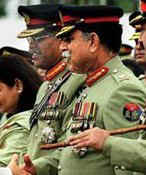
Lt General Mamoud Ahmed
Accused Of Being Secret Pakistani Operation Mastermind
"... there is enough in just this one London Times story to keep an army of investigative reporters busy for years. So why, one has to ask, is this story appearing in a highly respected British newspaper, but not anywhere in the corporate US media?"
Sibel Edmonds, Turkey and the Bomb
Counterpunch, 7 January 2008
|
Treason In High Places There has been no coverage of this explosive story by the 'Pravda' style media networks in America. |
|
"The UK Times story has also been covered in
Pakistan,
India
and Israel. No mention of
this issue reaches US network television audiences at all."
Sibel Edmonds Blows Open the Cover Up
The
People's Voice, 10 January 2008
"Last October, in a BRAD BLOG Exclusive, Edmonds had announced
she was willing to defy her gag order, in order to give the entire story to any American
mainstream broadcast outlet who would allow her to do so. Not
a single media operation in this country [USA] took her up on the offer..... London's Sunday Times then contacted The BRAD BLOG after our series of reports, hoping to
get in touch with Edmonds. They claimed they had some corroboration for elements of her
story that had leaked out previously, and wanted to touch base with her. After putting
them in touch with her, the result was the blockbuster
story two weeks ago ....... 'I have had [American] reporters call me and tell me that
I have 'stumbled on some big time national security, covert
operation',' she continued, explaining that as the
reason given by some for staying away from the story. 'Well, Iran-Contra was a goddamn covert operation too! Even if that's what they're telling
reporters in the U.S., it doesn't make the operation any less illegal. And the cover-up of that is outrageous,' she told us tonight."
UK Sunday Times Scoops US Media Again, Confirms FBI Cover-Up of Documents in Sibel Edmonds
Nuke Secrets Case
Brad Blog, 19 January 2008
Sunday Times 6 January 2008 "A whistleblower has made a series of
extraordinary claims about how corrupt [US] government officials allowed Pakistan and other states to
steal nuclear weapons secrets. Sibel Edmonds, a 37-year-old former Turkish language translator for the FBI, listened into hundreds
of sensitive intercepted conversations while based at the agency’s Washington field
office. She approached The Sunday Times last month after reading about
an Al-Qaeda terrorist who had revealed his role in training some of the 9/11 hijackers
while he was in Turkey.....Among the hours of covert tape recordings, she says she heard
evidence that one well-known senior official in the US State Department was being paid by Turkish agents in Washington who were selling the
information on to black market buyers, including Pakistan. The name of the official – who has held a
series of top government posts – is known to The Sunday
Times. He strongly denies the claims..... She claims
that the FBI was also gathering evidence against senior Pentagon officials –
including household names – who were aiding foreign agents. 'If you made public all
the information that the FBI have on this case, you will see very high-level people going
through criminal trials,' she said.... She has given evidence to closed sessions of
Congress and the 9/11 commission, but many of the key points of her testimony have
remained secret. She has now decided to divulge some of that information after becoming
disillusioned with the US authorities’ failure to act.... A backlog of tapes had
built up, dating back to 1997, which were needed for an FBI investigation into links
between the Turks and Pakistani, Israeli and US targets. Before she left the FBI in 2002
she heard evidence that pointed to money laundering,
drug imports and attempts to acquire nuclear and conventional weapons technology..... Edmonds says there were several transactions of nuclear material
every month, with the Pakistanis being among the eventual buyers.....They were helped, she says, by the high-ranking
State Department official who provided some of their moles
– mainly PhD students – with security clearance to work in sensitive nuclear
research facilities. These included the Los Alamos
nuclear laboratory in New Mexico, which is responsible for the security of the US nuclear
deterrent....The Turks, she says, often acted as a
conduit for the Inter-Services Intelligence (ISI), Pakistan’s spy agency, because
they were less likely to attract suspicion. Venues
such as the American Turkish Council in Washington were used to drop off the cash, which
was picked up by the official. Edmonds said: 'I heard at least three transactions like
this over a period of 2½ years. There are almost certainly more.' The Pakistani operation was led by General
Mahmoud Ahmad, then the ISI chief. Intercepted communications showed Ahmad and his colleagues stationed in
Washington were in constant contact with attachés in the Turkish embassy. Intelligence
analysts say that members of the ISI were close to Al-Qaeda before and after 9/11. Indeed,
Ahmad was accused of sanctioning a $100,000 wire
payment to Mohammed Atta, one of the 9/11 hijackers, immediately before the attacks.....Edmonds was later to see the scope of the Pakistani connections when
it was revealed that one of her fellow translators at the FBI was the daughter of a
Pakistani embassy official who worked for Ahmad. The
translator was given top secret clearance despite protests from FBI investigators. Edmonds
says packages containing nuclear secrets were delivered by Turkish operatives, using their
cover as members of the diplomatic and military community, to contacts at the Pakistani
embassy in Washington. Following 9/11, a number of
the foreign operatives were taken in for questioning by the FBI on suspicion that they
knew about or somehow aided the attacks. Edmonds said the
State Department official once again proved useful. 'A
primary target would call the official and point to names on the list and say, ‘We
need to get them out of the US because we can’t afford for them to spill the
beans’,' she said. 'The official said that he would ‘take care of it’.' The
four suspects on the list were released from interrogation and extradited. Edmonds also claims that a number of senior officials in the Pentagon
had helped Israeli and Turkish agents.....One of the Pentagon figures under investigation
was Lawrence Franklin, a former Pentagon analyst, who was jailed in 2006 for passing US
defence information to lobbyists and sharing classified information with an Israeli
diplomat. 'He was one of the top people providing
information and packages during 2000 and 2001,' she said.... The US attorney-general has
imposed a state secrets privilege order on her, which prevents her revealing more details
of the FBI’s methods and current investigations. Her
allegations were heard in a closed session of Congress, but no action has been taken and
she continues to campaign for a public hearing....The senior official in the State Department no longer works there. Last week he denied all of Edmonds’s allegations: 'If you are
calling me to say somebody said that I took money, that’s outrageous . . . I do not
have anything to say about such stupid ridiculous things as this.'" Sunday Times 20 January 2008 "The FBI has been accused of covering
up a key case file detailing evidence against corrupt government officials and their
dealings with a network stealing nuclear secrets. The
assertion follows allegations made in The Sunday Times two weeks ago by Sibel Edmonds, an FBI whistleblower, who worked on the agency’s investigation of
the network.....One of the documents relating to the case was marked 203A-WF-210023. Last
week, however, the FBI responded to a freedom of information request for a file of exactly
the same number by claiming that it did not exist. But The
Sunday Times has obtained a document signed by an FBI official showing the existence of
the file. Edmonds believes the crucial file is being
deliberately covered up by the FBI because its contents are explosive. She accuses the
agency of an 'outright lie'..... The freedom of information request had not been initiated
by Edmonds. It was made quite separately by an American human rights group called the
Liberty Coalition, acting on a tip-off it received from an anonymous correspondent. The
letter says: 'You may wish to request pertinent audio tapes and documents under FOIA from
the Department of Justice, FBI-HQ and the FBI Washington field office.' It then makes a series of allegations about the contents of the
file – many of which corroborate the information that Edmonds later made public. Edmonds had told this newspaper that members of the Turkish political
and diplomatic community in the US had been actively acquiring nuclear secrets. They often
acted as a conduit, she said, for Inter-Services
Intelligence (ISI), Pakistan’s spy agency,
because they attracted less suspicion. She claimed corrupt government officials helped the
network, and venues such as the American-Turkish Council (ATC) in Washington were used as
drop-off points. The anonymous letter names a
high-level government official who was allegedly
secretly recorded speaking to an official at the Turkish embassy between August and
December 2001. It claims the government official warned a Turkish member of the network
that they should not deal with a company called Brewster Jennings because it was a CIA
front company investigating the nuclear black market. The official’s warning came two
years before Brewster Jennings was publicly outed when one of its staff, Valerie
Plame, was revealed to be a CIA agent in a case that became a cause célèbre in the
US." |
"We’re
not talking only about foreign individuals; we’re talking about our own, about U.S.
officials who have engaged in actions that are against the American public’s best
interests and what we stand for. But the American people still don’t know about this
case, and Congress has done nothing despite the fact that they have been fully briefed and
have gotten full confirmation....when you really go
deep into these cases, you find that these people—these U.S. entities, U.S.
officials—have been misusing and abusing their positions for a while. And we have
been looking the other way. And the mainstream media has been looking the other way. These
are not top-secret issues. All you have to do is take a look at these people. For example,
look at Mr. Marc Grossman. He used to be the U.S. ambassador in Turkey and used his position within
the State Department to secure future higher-level positions while in office—and I would
like to emphasize this—while in office and with several agencies knowing about it.
Some people in these agencies wanted to investigate these cases but they were prevented
from going forward... We’re talking about
people with official positions, whether they were in the State Department or the Pentagon
or the U.S. Congress. The agents did the right thing
again by starting a parallel investigation that targeted individuals who were possibly committing acts of treason...."
Sibel Edmonds
In Gag We Trust? An Interview with FBI Whistleblower Sibel Edmonds
Armenian Weekly, 12 May
2007
"Omar
Sheikh, a British-born
Islamist militant, is waiting to be hanged in Pakistan for a murder he almost
certainly didn't commit - of the Wall Street Journal reporter Daniel Pearl in 2002. Both
the US government and Pearl's wife have since acknowledged that Sheikh was not
responsible. Yet the Pakistani government is refusing to try other suspects newly
implicated in Pearl's kidnap and murder for fear the evidence they produce in court might
acquit Sheikh
and reveal too much. Sheikh is also the man who, on the instructions of General
Mahmoud Ahmed, the then head of Pakistan's
Inter-Services Intelligence (ISI), wired $100,000 before the 9/11 attacks to Mohammed
Atta, the lead hijacker. It is extraordinary that neither Ahmed nor Sheikh have been charged and
brought to trial on this count. Why not? Ahmed, the
paymaster for the hijackers, was actually in Washington on 9/11, and had a series of
pre-9/11 top-level meetings in the White House, the Pentagon, the national security
council, and with George Tenet, then head of the CIA, and Marc Grossman, the
under-secretary of state for political affairs. When
Ahmed was exposed by the Wall Street Journal as having sent the money to the hijackers, he
was forced to 'retire' by President Pervez Musharraf. Why hasn't the US demanded that he
be questioned and tried in court?... Senator Bob Graham, chairman of the Senate select
committee on intelligence, has said: 'I think there is very
compelling evidence that at least some of the terrorists were assisted, not just in
financing ... by a sovereign foreign government.'"
The Pakistan connection
Guardian, 22 July
2004
Lt General Mahmoud Ahmed and Omar
Sheikh - Who Are They And What Was Their Alleged Role In 9/11? |
"A former
translator for the FBI with top-secret security clearance says she has provided information to
the panel investigating the 11 September attacks which proves senior officials knew of
al-Qa'ida's plans to attack the US with aircraft months before the strikes happened. She said the claim by the National
Security Adviser, Condoleezza Rice, that there was no such information was 'an outrageous
lie'. Sibel Edmonds said she spent more than three hours in a
closed session with the commission's investigators
providing information
that was circulating within the FBI in the spring and summer of 2001 suggesting that an attack using aircraft
was just months away and the terrorists were in place. The Bush administration, meanwhile, has sought to silence
her and has obtained a gagging order from a court by citing the rarely used 'state secrets
privilege'. She told
The Independent yesterday: 'I gave [the commission] details of specific investigation
files, the specific dates, specific target information, specific managers in charge of the
investigation. I gave them everything so that they could go back and follow up. This is
not hearsay. These are things that are documented. These things can be established very
easily.'".
'I Saw Papers That Show US Knew
al-Qa'ida Would Attack Cities With Airplanes'
Independent, 2 April 2004
"...we fear that the designation of information as classified in some cases [brought forth by Sibel Edmonds] serves to protect the executive branch against embarrassing revelations and full accountability... "
U.S. Senators Patrick Leahy (D-VT) and Charles Grassley (R-IA), Senate Judiciary Committee
Letter to Attorney General John Ashcroft, 9 July 2004
"I find your report seriously flawed
in its failure to address serious intelligence issues that I am aware of, which have been
confirmed, and which as a witness to the commission, I made you aware of. Thus, I must
assume that other serious issues that I am not aware of were in the same manner omitted from your report."
Sibel Edmonds
Letter To Thomas Kean, Chairman
Of The Official 9/11 Commission, 1 August 2004
| In This Bulletin |
| The Great
American ISI Conspiracy 'Strategic Depth' In Central Asia How American Taxpayers Funded Islamic Jihad And Pakistan's Nuclear Bomb |
| 9/11
Conspiracy Foreknowledge And Lt General Mahmoud Ahmed |
| Sunday
Times For Sale: West’s Deadly Nuclear Secrets |
| Guardian 'The Pakistan Connection' |
| TIME Ex-CIA Agent Robert Baer Calls For Total Transparency On 9/11 |
The Inner Secrets Of 9/11 |
'We'll Let You Have Nukes If You Agree To Do Jihad'
"Behind this desperately
worrying state of affairs lies a grand deception. For three decades, consecutive US administrations, Republican and
Democrat, as well as governments in Britain and other European countries, allowed Pakistan
to acquire highly restricted nuclear technology. Key US agencies were then misdirected and
countermanded in order to disguise how Pakistan had sold it on. Intelligence gathering in
the US was blunted while the departments of state and defence were corralled into backing
the White House agenda and forced to side-step Congress and break federal laws. Officials
who tried to stop the charade were purged. The deceit began under President Jimmy Carter;
but it burgeoned under Ronald Reagan, who used Pakistan as a springboard for American aid
to the antiSoviet jihad in
Afghanistan. US officials converged on Islamabad carrying cash and the message that
America would ignore the growing nuclear programme – while Reagan publicly insisted
that nonproliferation remained a primary policy.....While knowing what was going on, Washington pursued a deception that bloomed into a complex conspiracy. Evidence was destroyed,
criminal files were diverted, and Congress was repeatedly lied to. The obfuscation concealed from the world Pakistan’s 'cold-testing'
of a nuclear bomb in laboratory conditions in 1983 and the intelligence that it had
'hot-tested' – exploded – one in 1984 with the help of China. By the time Reagan’s presidency came to an end in 1989, Pakistan
possessed a deployable and tested nuclear device. Much of the
programme had been funded using hundreds of millions of dollars in US aid diverted by the
Pakistan military.... By the time George W Bush
became president in 2001, there was a mountain of precise intelligence portraying Pakistan
as the epicentre of global instability: a host of and patron for Islamist terrorism, ruled
by a military clique that was raising capital and political influence by selling WMD. Yet
even when American spy satellites photographed missile components being loaded into a
Pakistani C-130 outside Pyong-yang, the North Korean capital – and intelligence
analysts concluded that the cargo was a direct exchange for Pakistani nuclear technology
– Washington did not react. It was in this dangerous condition that Pakistan was
clutched back into the American bosom after the attacks on New York and Washington on
September 11, 2001. And the
deception continued.”
How the West summoned up a nuclear nightmare in Pakistan
Sunday
Times, 2 September 2007
"... neither Ahmed nor Omar appears to
have been sought for questioning by the US about 9/11. Indeed, the official 9/11
Commission Report of July 2004 sought to downplay the role of Pakistan with the comment:
'To date, the US government has not been able to determine the origin of the money used
for the 9/11 attacks. Ultimately the question is of little practical significance' - a
statement of breathtaking disingenuousness. All this highlights the resistance to getting
at the truth about the 9/11 attacks and to an effective crackdown on the forces fomenting
terrorist bombings in the west, including Britain. The extraordinary US forbearance
towards Omar Sheikh, its restraint towards the father of Pakistan's atomic bomb, Dr AQ
Khan, selling nuclear secrets to Iran, Libya and North Korea, the huge US military assistance to
Pakistan and the US decision last year to designate Pakistan as a major non-Nato ally in
south Asia all betoken a deeper strategic set of
goals as the real priority in its relationship with Pakistan. These might be surmised as Pakistan providing sizeable military
contingents for Iraq to replace US troops, or Pakistani troops replacing Nato forces in
Afghanistan. Or it could involve the use of Pakistani military bases for US intervention
in Iran, or strengthening Pakistan as a base in relation to India and China."
Britain now faces its own blowback
Guardian, 10
September 2005
"These are the leading stories in the Turkish press on
Monday..... Former FBI translator Sibel Edmonds says Turkey plays major role in trading nuclear secrets."
Press Digest - Turkey - Jan 7
Reuters,
7 January 2007
| Extracts
From 'A Timeline of Secrecy' American Civil Liberties Union, 26 January 2005 JUNE 2002: Senators Grassley and Leahy write the Justice Department Inspector General a letter asking specific questions about Edmonds' allegations and write that the FBI has confirmed many of her allegations in unclassified briefings. This letter is later retroactively classified in May 2004. JULY 2002: Edmonds files a lawsuit to challenge the FBI's retaliatory actions. AUGUST 2002: Senator Leahy writes Attorney General John Ashcroft a letter asking for a speedy and thorough investigation of Edmonds' case. This letter is later retroactively classified in May 2004. The investigation is not completed for another two years, and then is classified. FEBRUARY 2004: Edmonds testifies to the 9-11 Commission about problems at the FBI. MAY 2004: The Justice Department retroactively classifies Edmonds' briefings to Senators Grassley and Leahy in 2002, as well as FBI briefings regarding her allegations. JUNE 2004: The Project On Government Oversight files suit against the Justice Department and Attorney General Ashcroft, saying the retroactive classification violates the organization's First Amendment rights. JULY 2004: A Justice Department investigation into Edmonds' dismissal is completed but is entirely classified. The report finds that Edmonds' allegations of corruption within the FBI 'were at least a contributing factor' in her dismissal. JULY 2004: Judge Reggie Walton in the U.S. District Court for the District of Columbia dismisses Edmonds' lawsuit, relying on the government's states secrets privilege. |
Who Believes The Official 9/11
Story Any More?
Japanese Prime Minister Questioned On Validity Of Official 9/11 Report
"[In Japan] On January 11th 2008 the
opposition-controlled upper house voted down the bill to restart the mission to refuel
U.S. and other ships patrolling the Indian Ocean. Member of Parliament Yukihisa Fujita, of
the Japan Democratic party, made a 20 minute long statement at the House of Councillors,
the upper house of the Diet (parliament) of Japan, ahead of the voting. He questioned the official version of 9/11 presented to the
japanese government and the public by the US administration in a session of the defence
commission..... He asked the current Prime Minister
Fukuda who was the Chief Cabinet Secretary under Koizumi cabinet in 2001 . 'How could
terrorists attacked the Pentagon?' .... Yukihisa Fujita did question Defense Minister
Shigeru Ishiba and Minister of Finance Fukushiro Nukaga about the way in which the US
government did inform the japanese government about the people responsible for the 9/11
attacks. He concluded that the japanese governments support of the 'war against terror' is
solely based on information provided by the US-administration. He demanded further
investigation in the face of the governments drive to support the war more actively."
Main japanese opposition party questions 9/11 in parliament - broadcasted on public
TV
Global Research, 15 January 2008
"Prime
Minister, you were Chief Cabinet Secretary at the time [of 9/11] and as somebody has
already noted, this was an incident of the sort that humanity had never previously
experienced. Also, there appears to be a lot more
information about this incident coming out now than came out in the months after the
attacks......We need to look at this evidence and
ask ourselves what the war on terrorism really is. I can see the ministers nodding in
agreement but I would like to ask Prime Minister Fukuda..... Do you not think it [9/11]
was strange?" |
 |
Broadcast live nation-wide on NHK
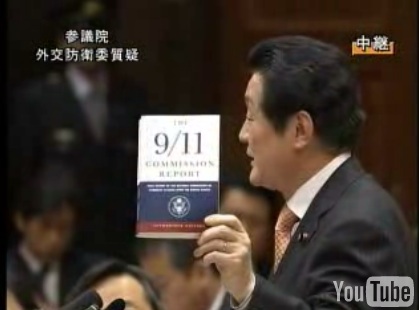
television in Japan on 11 January, MP Yukihisa Fujita (above) displays a copy of the official 9/11
report at a meeting of the Defence
and Foreign Affairs Committee of the Japanese parliament as he challenges the report's completeness
and reliability. Fujita questioned the
Japanese Prime Minister, as well as the Foreign, Defence, and Finance Ministers, on
various unexplained circumstances surrounding 9/11. Fujita reportedly
received many telephone calls of support from other MPs after the session. In addition to the anomalies referred to by Mr Fujita, the official 9/11 report makes no mention of any of the major allegations concerning 9/11 made by Sibel Edmonds even though she gave evidence to the 9/11 Commission itself in a closed session. Edmonds had previously given an extensive briefing to staff at the US Senate Judiciary Committee. That information was later retroactively declared classified by the Bush Administration. Members of Congress who had information on the case posted on their Web sites were forced to remove it. |
| To view Yukihisa Fujita presentation on YouTube complete with sub-titles Click Here |
The 9/11 Pakistan Connection
"On the eve of the publication of its
report, the 9/11 Commission was given a stunning document from Pakistan, claiming that Pakistani intelligence officers knew in advance of the 9/11
attacks.....The document was received by the
Commission this week as its own report was already coming off the presses. The
information was supplied to the Commission on the understanding that the unimpeachable
source would remain anonymous.... [According to the report] ....'The Pakistan Army
consistently denies giving the militants anything more than moral, diplomatic and
political support. The reality is quite different. ISI issues money and directions to
militant groups, specially the Arab hijackers of 9/11
from al-Qaida. ISI was fully involved in devising and helping the entire affair.'"
The real culprit of 9/11?
United Press International, 22 July 2004
"[Pakistan's] ISI Chief Lt-Gen. [Ahmad] Mahmoud's week-long presence [immediately before 911] in Washington has
triggered speculation about the agenda of his mysterious meetings at the Pentagon and
National Security Council. Officially, he is on a routine visit in return to CIA Director
George Tenet's earlier visit to Islamabad. Official sources confirm that he met Tenet this
week. He also held long parleys with unspecified officials at the White House and the Pentagon. But
the most important meeting was with Mark Grossman, US Under Secretary of State for
Political Affairs. What added interest to his visit
is the history of such visits. Last time Ziauddin Butt, Mahmoud's predecessor, was here,
during Nawaz Sharif's government, the domestic politics turned topsy-turvy within days.
That this is not the first visit by Mahmood in the last three months shows the urgency of
the ongoing parleys."
ISI chief's parleys continue in US
The
News (Pakistan), 10 September 2001
| "By his own account he [Louai al-Sakka] is a senior
Al-Qaeda operative who was at the forefront of the insurgency in Iraq, took part in the
beheading of Briton Kenneth Bigley and helped train the 9/11 bombers. He has been jailed
in connection with the bombing of the British consulate in Istanbul..... Paul Thompson, author and 9/11 researcher, said Sakka’s account was credible. 'I
think there is a lot more about the history of the hijackers that needs to be found out
and Sakka’s claim may resume the debate about just how
much was known about them before 9/11,' he
said." Al-Qaeda kingpin: I trained 9/11 hijackers Sunday Times, 25 November 2007 |
'Treasonous Behaviour' American 'war on terror' researcher Paul Thompson has produced a 9/11 'Terror Timeline' which is considerably more comprehensive than that of the official 9/11 commission. Its usefulness is to the point where Richard Clarke, formerly the US government’s head of counterterrorism under the administrations of both Bill Clinton and George W Bush, has put the book derived from Thompson's online work (Terror Timeline, Paul Thompson, Regan Books, 2004) on the recommended reading list for his terrorism class at Harvard's Kennedy School of Government (Clarke is a strong critic of the conduct of the 'war on terror' having warned the Bush administration in July 2001 that a spectacular terrorist attack on the United States homeland "is going to happen here, and it's going to happen soon".) Below are transcripted excerpts from a video recording of a presentation of his research and analysis that Thompson gave at conference in 2004 in the United States which focused on America's relationship with Pakistan, and the role of Pakistan in 9/11. "In my 9/11 timeline, everything that's in the timeline I use only mainstream sources - New York Times, Newsweek, that kind of thing.... everything I am going to be saying is all coming from these types of sources. And if you listen to what I say you might wonder, if you're not familiar with this material, how come I've never heard of any of this stuff before? How come I've never seen these reports? And that's because this material often gets in the mainstream but in [page] 'B17', some sort of small mention in the back of the newspaper..... So we find that a lot of curious connections between some very important governments in the Middle East - Saudis, United Arab Emirates, Pakistan, the Taliban - and we find these strange connections with the CIA. And then we find this [... ] extensive cover up and rewarding of Pakistan [after 9/11], when you'd think that Pakistan would be punished. You know, why are we going after Iraq and attacking Iraq, when we have all this evidence here of Pakistani involvement [in 9/11]? .... And yet we have this very strange behaviour by the Bush Administration. And so I would pose one of two possibilities to consider from all this information I have given you. One is, either that the US was directly involved with Pakistan, and these other countries, in the 9/11 plot, and allowed it to happen or helped make it happen. Or the US government was completely taken for fools, and then afterwards they covered up their foolishness and have actually, instead of punishing these countries and these actors, they've actually rewarded them. And I would argue that - personally I favour the first - but I would argue in either case, this is really treasonous behaviour to deceive the American people in this way, to let the true perpetrators of 9/11 go free, and in either case it should lead to impeachment of President Bush." |
Paul Thompson
On USA, Pakistan, The ISI And 9/11 - Video - Click Here Paul Thompson's 'Complete 9/11 Timeline' - Click Here |
".... I think there is very compelling evidence
that at least some of the terrorists were assisted not just in financing -- although
that was part of it -- by a
sovereign foreign government and that we have been derelict in our duty to track that down, make the further
case, or find the evidence that would indicate that that is not true and we can look for
other reasons why the
terrorists were able to function so effectively in the United States. It will become public at some
point when it's turned over to the archives, but that's 20 or 30 years from now. And, we need to have this information
now because it's relevant to the threat that the people of the United States are facing
today...."
Senator Bob
Graham, Chairman of the Senate Select Committe On Intelligence
Improving Intelligence
PBS
Online, 11 Dec 2002
ISI's Mahmoud More Powerful Than Musharraf - 'I Know The President's Mind'
"It was 10 a.m on September 12 ,
2001, a day after the devastating terrorist attacks on New York's World Trade Center and
Pentagon headquarters in Washington, when Lt. General
Mahmood Ahmed, the then ISI chief, arrived at the State Department for an emergency
meeting with the US Deputy Secretary of State, Richard Armitage. The General, who was on an official visit to Washington, was to leave for
home, but was left stranded, as all airports had been closed. 'General, we require
your country's full support and cooperation,' Armitage told Pakistan's spy master and
member of the triumvirate that ruled the country. 'We want to know whether you are with us
or not, in our fight against terror,' he added. The meeting was adjourned for the next day
after the General had assured Armitage of Pakistan's full support. 'We will tell you
tomorrow what you are required to do,' Armitage said as they left the room.... It was 12
p.m on September 13, when General Mahmood returned to the State Department for the second
meeting. 'This is not negotiable,' said Armitage, as he handed over a single sheet of
paper with seven demands which Bush administration wanted him to accept. The general, who
was known for his hard-line pro-Taliban position, glanced through the paper for a few
seconds and replied: 'They are all acceptable to us.' The swift response took Armitage by
surprise. 'These are very powerful words, General. Do you not want to discuss with your
President?' he asked. 'I know the president's mind,' replied General Mahmood. A visibly elated Armitage asked General Mahmood
to meet with George Tenet, the CIA chief at his headquarters at Langley. 'He is waiting
for you,' said Armitage ....The American demands, to which General Mahmood acceded to, in
next to no time, required Pakistan to abandon its support for the Taliban regime and
provide logistical support to the American forces .... Astonishingly, within a course of a
week, the military government took an about-turn to become a lynchpin in the US-led
military operation in Afghanistan which ousted the Taliban regime. Pakistan was back as
the US's strategic partner in the region and was now involved in a new war against
terrorism. Indubitably, the military government did not have any option, but the
unconditional and the quick about turn surprised even the American authorities .... There
was no consultation with political leaders on the paradigm shift in the strategic
discourse of the nation. President Musharraf took his handpicked cabinet into confidence,
almost three days after his ISI chief had already consented to the US demands.... President Musharraf was also not very happy with Mahmood's arrogant style,
and for not consulting him
before agreeing to Armitage's seven-point demand.
'Though the President would have given his consent, he did not like being bypassed,' maintains a
senior official.... The shift in Pakistan's Afghan policy and the decision to support the
United States brought huge economic and political dividends to President Musharraf's
government. From a pariah state, Pakistan became the centre of focus of the international
community. Never before have so many head of states travelled to Pakistan as they did, in
the few weeks after September 11. Pakistan was, once more, the US's strategic partner. According to senior American sources, the US-led coalition could
not have achieved its swift success in Afghanistan without the ISI's intelligence support." |
"There are reports that US investigators have uncovered evidence of financial transfers linking Osama Bin Laden to the 11 September attacks on America.
According to FBI sources, Mustafa Mohamed Ahmad, a suspected Bin Laden financial operative, transferred money to Mohamed Atta, one of the hijackers, in the days running up to the attacks. Furthermore Atta and two of the other hijackers transferred some $15,000 back to an account under the same name just two days before the attacks. Mr Ahmad, also known as [Omar] Sheikh Saeed, is one of 27 individuals or groups with a known link to Bin Laden who have had their assets in America frozen.... Cash transfers were made to Atta via a money service in Florida on 8 and 9 September from an account in Dubai, under the name of Mustafa Ahmad.""Director General of Pakistan's Inter-
Services Intelligence (ISI) Lt Gen Mahmud Ahmed has been replaced after the FBI investigators established credible links
between him and Umar Sheikh, one of the three militants released in exchange for passengers of the
hijacked Indian Airlines plane in 1999. The FBI team, which had sought adequate inputs
about various terrorists including Sheikh from the intelligence agencies, was working on
the linkages between Sheikh and former ISI chief Gen Mahmud which are believed to have
been substantiated, reports PTI website. Informed sources said there were enough
indications with the US intelligence agencies that it was at Gen
Mahmud's instruction that Sheikh had transferred 100,000 US dollars into the account of
Mohammed Atta, one of the lead terrorists in strikes
at the World Trade Centre on Sept 11, it adds."
Gen Mahmud's exit due to links with Umar Sheikh
Dawn
(Pakistan), 9 October 2001
"A top FBI counter-terrorism
official told the US Senate governmental affairs committee on Thursday that investigators
have 'traced the origin of the funding of 9/11 back to financial accounts in Pakistan.' John S Pistole, deputy assistant director of the FBI’s counter-terrorism division,
however, did not specify how those accounts in Pakistan were funded, or the role of
Pakistani elements. The Times of India first reported on October 10, 2001 that India told
the US that some $100,000 had been wired to the leader of the hijackers, Mahmud Atta, by British-born
terrorist Ahmad Saeed
Umar Sheikh. Indian authorities also told the US that the trail led back from Sheikh to the
then chief of ISI, Lt Gen Mahmud Ahmad
who was subsequently forced to retire by Pakistan
president Pervez Musharraf. The FBI had been provided with the details, including
Sheikh’s mobile numbers. But Pistole’s testimony is silent on these issues....
The FBI has estimated the September 11 attacks cost between $175,000 and $250,000. That
money — which paid for flight training, travel and other expenses — flowed to
the hijackers through associates in Germany and the United Arab Emirates. Those associates
reported to Khalid Shaikh Mohammed, who managed much of the planning for the attacks from Pakistan,
US officials have said. The Bush Administration is being cagey about declassifying 28 secret pages in a recent report on the 9/11 incident which officials say
outline connections between Saudi charities, royal family members and terrorism. US
authorities are silent about the role some Pakistanis may have played in the conspiracy. The role of Sheikh and Lt Gen
Ahmad has
yet to see the light of the day. Sheikh, wanted for kidnapping and terrorist conspiracy in
India, has since been sentenced to death in Pakistan for the murder of Wall Street Journal
reporter Daniel Pearl."
9/11 funds came from Pakistan, says FBI
Times
of India, 1 August 2003
Mahmoud Wanders Free In Pakistan With No Apparent Complaint From America
"Lt General (r) Mahmood Ahmad, who was
Rawalpindi Corps commander when the Nawaz Sharif government was overthrown in a military
coup on October 12, 1999, made his first public appearance here on Wednesday in his
capacity as the managing director (MD) of Fauji Fertilizer Company (FFC) Limited and
observed that no one had 'blessed' him the post of MD except God. Mr Ahmad, who retired at the end of 2001 after being superseded, appeared before a select group of journalists, mainly from the English
newspapers, but refused to answer questions on the 1999 coup or the Taliban regime. 'Let mystery remain a mystery,' he responded when asked about events
in Pakistan and Afghanistan before the war to displace the Taliban regime.... He also refused to talk about
rumours of his detention
following his being superseded, and instead tried to
steer the discussion to the financial achievements of the FFC. He said the company was one
of the top three in the Karachi Stock Exchange thanks to the hard work and dedication of a
couple of expert officials and efficient management. 'We have made the country
self-sufficient in Urea production and nuclear
technology,' he said."
Lt-Gen Mahmood made MD of FFC
Daily Times,
1 May 2003
'Partners
In Crime' |
"The Central Intelligence Agency (CIA) worked in tandem with Pakistan
to create the 'monster' that is today Afghanistan's ruling Taliban, a leading US expert on
South Asia said here [in London]. ...... [Selig] Harrison, who has written five
books on Asian affairs and US relations with Asia, has had extensive contact with the CIA
and political leaders in South Asia. Harrison was a senior associate of the Carnegie
Endowment for International Peace between 1974 and 1996. Harrison who is now senior fellow
with The Century Foundation recalled a conversation he had with the late Gen Zia-ul Haq of
Pakistan. 'Gen Zia spoke to me about expanding
Pakistan's sphere of influence to control Afghanistan, then
Uzbekistan and Tajikstan and then Iran and Turkey,' Harrison said. That design continues, he said. Gen.Mohammed Aziz who was involved in that Zia plan has been
elevated now to a key position by Chief Executive, Gen. Pervez Musharraf, Harrison said.
The old associations between the intelligence agencies continue, Harrison said. 'The CIA still has close links with the ISI (Pakistan's
Inter-Services Intelligence).'" "The
attainment of 'strategic depth' has been a prime objective of Pakistan's Afghan policy
since the days of General Ziaul Haq. In recent years
the Taliban replaced Gulbadin Hikmatyar as the instrument of its attainment.... The
Taliban will certainly be assisted by Islamabad to consolidate their precarious
conquests..... Afghanistan's reconstruction cost is conservatively estimated at some $40
billion. We cannot muster such amounts even for ourselves, so who will keep the Taliban in
business? The strategic dreamers of Islamabad dream of dollar-laden Saudi princes, Emirate
sheikhs and American oil tycoons laying trans-national
pipelines from Turkmenistan to Karachi." "The truth about the 'good war' [in
Afghanistan] is to be found in compelling evidence that the 2001 invasion, widely supported in the west as a
justifiable response to the 11 September attacks, was actually planned two months prior to
9/11 and that the most pressing problem for Washington was not the Taliban's links with
Osama Bin Laden, but the prospect of the Taliban mullahs losing control of Afghanistan to
less reliable mujahedin factions, led by warlords who had been funded and armed by the CIA
to fight America's proxy war against the Soviet occupiers in the 1980s. Known as the Northern Alliance, these mujahedin had been largely a
creation of Washington, which believed the 'jihadi card' could be used to bring down the
Soviet Union. The Taliban were a product of this and, during the Clinton years, they were
admired for their 'discipline'. Or, as the Wall Street Journal put it, '[the
Taliban] are the players most capable of achieving peace in Afghanistan at this moment in
history'. The 'moment in history' was a secret
memorandum of understanding the mullahs had signed with the Clinton administration on the
pipeline deal. However, by the late 1990s, the Northern Alliance had encroached further
and further on territory controlled by the Taliban, whom, as a result, were deemed in
Washington to lack the 'stability' required of such an important client. It was the consistency of this client relationship that had been a
prerequisite of US support, regardless of the Taliban's aversion to human rights. (Asked
about this, a state department briefer had predicted that 'the Taliban will develop like
the Saudis did', with a pro-American economy, no democracy and 'lots of sharia law', which
meant the legalised persecution of women. 'We can live with that, he said.) By early 2001,
convinced it was the presence of Osama Bin Laden that was souring their relationship with
Washington, the Taliban tried to get rid of him. Under a deal negotiated by the leaders of
Pakistan's two Islamic parties, Bin Laden was to be held under house arrest in Peshawar. A
tribunal of clerics would then hear evidence against him and decide whether to try him or
hand him over to the Americans. Whether or not this would have happened, Pakistan's Pervez Musharraf vetoed the plan. According to the then
Pakistani foreign minister, Niaz Naik, a senior US diplomat told him on 21 July 2001 that
it had been decided to dispense with the Taliban 'under a carpet of bombs'...... " "A former Pakistani
diplomat has told the BBC that the US was planning military action against Osama Bin
Laden and the Taleban even before last week's attacks. Niaz Naik, a former Pakistani
Foreign Secretary, was told by senior American
officials in mid-July that military action against Afghanistan would go ahead by the
middle of October. Mr Naik said US officials told
him of the plan at a UN-sponsored international contact group on Afghanistan which took
place in Berlin.... Mr Naik was told that Washington would launch its operation from bases
in Tajikistan, where American advisers were already in place. .... He said that he was in
no doubt that after the World Trade Center bombings this pre-existing US plan had been
built upon and would be implemented within two or three weeks." |
But How Would The Planned Afghan War Have Been Launched Without 9/11?
"Every official we
questioned about the possibility of an invasion of Afghanistan said that it was almost unthinkable, absent a provocation such as 9/11 .... because
they believed the public would not support it."
THE 9/11COMMISSION REPORT (p 137)
"Both civilian
and military officials of the Defense Department state flatly that neither Congress nor the American public would have supported
large-scale military operations in Afghanistan before the shock of 9/11."
The Military
9/11 Commission Staff Statement No 6, 2004
".... the
so-called 'war on terrorism' is being used largely as bogus cover for achieving wider US
strategic geopolitical objectives. Indeed Tony Blair himself hinted at this when he said
to the Commons liaison committee: 'To
be truthful about it, there was no way we could have got the public consent to have
suddenly launched a campaign on Afghanistan but for what happened on September 11' (Times, July 17 2002).... "
Michael Meacher, former
Blair government Minister - 'This war on terrorism is bogus'
The Guardian, 6 September 2003
'Strategic Depth' For What US Purpose?
"[In Uzbekistan] Mr Karimov's
about-turn [away from the United States] highlights how US and Russian influence in the
Central Asian states - Uzbekistan, Kazakhstan, Kyrgyzstan, Tajikistan and Turkmenistan -
has been shifting. And with China's emergence as a
major power, the region's politics and security
concerns are set to become more complex. The US presence in the region [Central Asia]
dates back to the beginning of the 'war on terror', when the US needed staging points in
the region for operations in Afghanistan. Uzbekistan and Kyrgyzstan both provided air
bases.... The most likely source of competition
between the rival powers is over natural resources.
Kazakhstan has enormous oil reserves, estimated at 26bn barrels, and Turkmenistan is rich
in natural gas. China is hungry for energy to keep its economy growing, the US is seeking
to reduce its dependence on Middle Eastern oil, and Russia is keen to exploit potential
transit routes for its resources through Central Asia. Some analysts have described the
interplay of US and Russia - and now Chinese - interests as a new version of the 19th
Century 'Great Game', which saw Russia and the British Empire compete for influence in the
region. Lutz Kleveman, author of The New Great Game: Blood and Oil in Central Asia,
believes the US is using the 'war on terror' to further its oil interests in the
region."
Struggle for influence in Central Asia
BBC Online, 25
November 2005
"George
W. Bush justifies his bombing of Afghanistan as a war against terror. A twin motive,
however, is to make Afghanistan safe for United States oil interests. A few days before
September 11, the U.S. Energy Information Administration documented Afghanistan's
strategic 'geographical position as a potential transit route for oil and natural and gas
exports from Central Asia to the Arabian Sea,' including the construction of pipelines
through Afghanistan. Prior to September 11, United
States policy toward the Taliban was largely influenced by oil. In a new book published in
Paris, 'Bin Laden, la verite interdite' ('Bin Laden, the forbidden truth'), former French
intelligence officer Jean-Charles Brisard and journalist Guillaume Dasquie document a cozy
relationship between George W. Bush and the Taliban. The book quotes John O'Neill, former
director of anti-terrorism for the FBI, who thought the U.S. State Department, acting on
behalf of United States and Saudi oil interests, interfered with FBI efforts to track down
Osama bin Laden. Before he was tapped as Bush's running mate, Dick Cheney was CEO of
Halliburton, the biggest oil services company in the world. In a 1998 speech to the
'Collateral Damage Conference' of the Cato Institute, Cheney said, 'the good Lord didn't
see fit to put oil and gas only where there are democratically elected regimes friendly to
the United States. Occasionally we have to operate in places where, all things considered,
one would not normally choose to go. But, we go where the business is.' Because of the
instability in the Persian Gulf, [Dick] Cheney zeroed in on the world's other major source
of oil, the Caspian Sea, whose resources were estimated at $4 trillion by U.S. News and
World Report. Cheney told oil industry executives in 1998, 'I can't think of a time when
we've had a region emerge as suddenly to become as strategically significant as the
Caspian.' But Caspian oil, landlocked between Russia, Iran and former Soviet republics,
presents formidable transport challenges. Afghanistan is strategically located near the
Caspian Sea. In 1994, the U.S. State Department and
Pakistan's Inter-Services Intelligence agency sought to install a stable regime in
Afghanistan to enhance the prospects for Western oil pipelines. They financed, armed and
trained the Taliban in its civil war against the Northern Alliance. In 1995, California-based UNOCAL proposed the construction of an oil
pipeline from Turkmenistan, south through Afghanistan
and Pakistan, to the Arabian Sea. Yasushi Akashi,
U.N. Under-Secretary General for Humanitarian Affairs, was critical of 'outside
interference in Afghanistan' in 1997, which, he said, 'is now
all related to the battle for oil and gas pipelines.
The fear is that these companies and regional powers are just renting the Taliban for
their own purposes.' Meanwhile, feminists and Greens in the United States mobilized
opposition to UNOCAL's pipeline deal and Washington's covert support of the Taliban,
because of the latter's oppression of women. In 1998, after the U.S. bombed Al-Qaeda
training camps in retaliation for the bombings of the U.S. embassies in Africa, UNOCAL
pulled out of the pipeline negotiations. Once the Taliban are overthrown and the U.S.
installs a pro-Western government, lucrative investment opportunities will arise. Rob
Sobhani, president of Washington-based Caspian Energy Consulting, said, 'Other major
energy companies could see big opportunities in a deal crucial to restarting Afghanistan's
economy.' A new pipeline could produce revenues totaling $100 million. United States
dependence on Middle East -- and soon Caspian -- oil -- has led our government to engage
itself in heavy-handed, and deadly, interventions."
The Deadly Pipeline War - US Afghan Policy Driven By Oil Interests
The Jurist, 8 December 2001
"In an exclusive interview with nCa,
foreign minister of Pakistan highlighted the measures his country has taken to bring about economic,
energy and transportation integration with the Central Asian region..... Khursheed Mahmood
Kasuri, the foreign minister of Pakistan and a veteran politician best known for his bold stance and deep insight
on vital issues, explained the foreign policy
objectives of Pakistan toward Central Asia. He told
that the Trans Afghan Pipeline was proceeding
according to the schedule [following the overthrow
of the Taleban]....."
Pakistan Focused on Energy, Transport, Economic Integration with Central Asia
News
Central Asia, 26 August 2004
"Washington
is pushing for a new gas pipeline from Turkmenistan to Pakistan and 'strongly opposes' a
rival pipeline from Iran, US diplomat Steven Mann said Tuesday after meeting with Turkman
President Saparmurat Niyazov. Niyazov and Mann met
for two hours Monday to discuss a variety of possible gas pipeline projects from the
gas-rich Central Asian state, including pipelines to China and across the Caspian Sea, as
well as through Afghanistan to energy-hungry Pakistan and India, Mann said...... Niyazov, a mercurial
politician who has been president since Turkmenistan's independence in 1991, said after
his meeting with Mann that the country supported 'the policy of creating a diverse
pipeline system,' the Turkmen government news agency reported late Monday.During the
mid-1990s, the United States pushed for a gas pipeline to be built across the Caspian Sea
from Turkmenistan to Western markets, but Niyazov eventually backed out of the project,
which was opposed by Moscow.... The US also has
strategic interests in such a pipeline, Weafer said,
including undermining the potential profitability of a pipeline Russian state monopoly
Gazprom plans to build from Iran to Pakistan.... In addition, Weafer said that 'getting
Turkmen gas out to India would reduce Turkmenistan's ability to give gas to China or
Russia.' In a possible sign of the strategic importance of US-Turkmen cooperation, the
meeting between Mann and Niyazov came on the eve of a summit by the leaders of six
ex-Soviet nations in Sochi on Tuesday, which some Russian commentators said was aimed at
strengthening Russia's grip over Central Asian energy
resources."
US envoy pushes for Turkmenistan-Pakistan gas pipeline
Agence France Presse, 26 August
2006
"India has been
agonizing over the real nature of US-Pakistan relations for years. After September
11, New Delhi expected Washington to come down hard on Pakistan, known to be a hub of
Islamic extremism and terrorism in the region. Instead, the US came to the rescue of what
was then a clearly failing state under a blatant military dictatorship. Even after facts of Pakistani intelligence's involvement in
September 11 came to light, the US has been not only
forgiving but supportive to an extraordinary degree. As
a result, Indian strategists are now finding it difficult to counter conspiracy theorists
who continue to claim that the 'war on terrorism' is mere shadow-boxing and that September
11 had been organized by Islamabad with the help of al-Qaeda at US behest after the
neo-conservatives ruling the US needed a pretext for fulfilling
their imperialist agenda. There used to be few
takers for such wild imaginings in India; but apparently things are changing. There are
too many discrepancies and inconsistencies in official US claims that even the most
incredible conspiratorial claims are beginning to gain credence." |
A Lucrative Move For All Concerned Except The US Taxpayer
"The decision to support Bush’s
war on terror turned President Pervez Musharraf from a pariah dictator to a feted world
leader. It was a lucrative move. Pakistan has again become one of the biggest recipients of US aid —
just as it was during the Afghan war against Soviet
occupiers when ISI was the main conduit for arms and funds. Since September 11, America has dismissed $1.5 billion in debt and
provided Pakistan with more than $3 billion in
military assistance. Last year Pakistan was one of
the world’s fastest-growing economies. It recently placed a $2.5 billion order for
American F-16 jet fighters — as much as Afghanistan’s entire annual foreign
aid."
Just whose side is Pakistan really on?
Sunday Times, 13
August 2006
"Lockheed Martin Corp was
awarded a $498.2 million contract to supply F-16 aircraft to Pakistan, the Pentagon said on Monday, as Pakistani officials mulled whether to go
ahead with a January 8 election after the
assassination of opposition leader Benazir Bhutto.
Lockheed will sell 12 F-16C plus 6 F-16D planes to Pakistan under the contract, the
Pentagon said in its daily list of defense contract
awards. The Defense Department, which oversees sales
of military weapons to foreign governments, did not say how soon the fighter jets would be
delivered. Pakistan has received about $10 billion in
U.S. funding since 2001 because Washington views
Pakistan as a key ally in President George W. Bush's campaign against terrorism. Bhutto's
death on Thursday wrecked U.S. hopes of a power-sharing deal between her and President
Pervez Musharraf, who took power in a 1999 military coup but left the army last month to
become a civilian president. The United States has agreed to sell Pakistan up to 36 new
F-16 jets together with refurbished F-16s. Last month, two senior Democratic U.S.
lawmakers urged the suspension of some U.S. military sales, including the sale of F-16
fighter jets, if Pakistani President Pervez Musharraf did not revoke emergency rule.
Lockheed, the Pentagon's No. 1 contractor, won a $144 million contract in 2006 for
materials needed to build the F-16s." |
"It was in this dangerous condition that Pakistan was clutched back into the American bosom after the attacks on New York and Washington on September 11, 2001. And the deception continued.”
How the West summoned up a nuclear nightmare in Pakistan
Sunday Times, 2 September 2007
Three Decades Of US-ISI Double Dealing
"The Soviet invasion of Afghanistan in
December 1979 transformed the regional setting. President
Carter and his national security adviser, Zbigniew Brzezinski, built a Western-Muslim coalition with Britain, France, West Germany,
China, Egypt, Turkey, Saudi Arabia and the United Arab Emirates playing key roles.
Revolutionary Iran offered some aid to anti-Soviet guerrillas in western Afghanistan. But all other foreign assistance to the mujahideen arrived via Pakistan, to be
handled by the ISI
whose Afghan Bureau co-ordinated all operational activities with the seven guerrilla
militias. This was done in such secrecy that the Pakistani military itself
was kept in the dark. Just to get a sense of the
scale of the operation - the CIA provided enough arms
to equip a 240,000-man army, and the Saudis matched US funding dollar for dollar. Other countries provided arms and money and Muslim countries also
encouraged volunteers to join the jihad or holy war. Foreign
money helped to establish hundreds of madrassas (religious schools) in Pakistan's cities
and frontier areas. These turned out thousands of Taleban (students) who joined the
mujahideen in the anti-Soviet campaign. The ISI managed this operation, handling tens
of thousands of tons of ordnance every year and co-ordinating the action of several
hundred thousand fighters in great secrecy."
Pakistan's shadowy secret service
BBC Online, 9 October 2006
| The Grand Deception Began Here |
"Question: The former director of the CIA, Robert Gates, stated in his memoirs ['From the Shadows'], that American intelligence services began to aid the Mujahadeen in Afghanistan 6 months before the Soviet intervention. In this period you were the national security adviser to President Carter. You therefore played a role in this affair. Is that correct? Brzezinski: Yes. According to the official version of history, CIA aid to the Mujahadeen began during 1980, that is to say, after the Soviet army invaded Afghanistan, 24 Dec 1979. But the reality, secretly guarded until now, is completely otherwise. Indeed, it was July 3, 1979 that President Carter signed the first directive for secret aid to the opponents of the pro-Soviet regime in Kabul. And that very day, I wrote a note to the president in which I explained to him that in my opinion this aid was going to induce a Soviet military intervention. Q: Despite this risk, you were an advocate of this covert action. But perhaps you yourself desired this Soviet entry into war and looked to provoke it? B: It isn't quite that. We didn't push the Russians to intervene, but we knowingly increased the probability that they would." Q: When the Soviets justified their intervention by asserting that they intended to fight against a secret involvement of the United States in Afghanistan, people didn't believe them. However, there was a basis of truth. You don't regret anything today? B: Regret what? That secret operation was an excellent idea. It had the effect of drawing the Russians into the Afghan trap and you want me to regret it? The day that the Soviets officially crossed the border, I wrote to President Carter. We now have the opportunity of giving to the USSR its Vietnam war. Indeed, for almost 10 years, Moscow had to carry on a war unsupportable by the government, a conflict that brought about the demoralization and finally the breakup of the Soviet empire. Q: And neither do you regret having supported the Islamic fundamentalism, having given arms and advice to future terrorists? B: What is most important to the history of the world? The Taliban or the collapse of the Soviet empire? Some stirred-up Moslems or the liberation of Central Europe and the end of the cold war? Q: Some stirred-up Moslems? But it has been said and repeated Islamic fundamentalism represents a world menace today. B: Nonsense!...... |
"In the twilight of the Cold War, the United States spent millions of dollars to
supply Afghan schoolchildren with textbooks filled with violent images and militant
Islamic teachings..... The primers, which were filled with talk of jihad and featured
drawings of guns, bullets, soldiers and mines, have served since then as the Afghan school
system's core curriculum. Even the Taliban used the American-produced books.... now it
[the US] is wrestling with the unintended consequences of its
successful strategy of stirring Islamic fervor to
fight communism. What seemed like a good idea in the context of the Cold War is being
criticized by humanitarian workers as a crude tool that steeped
a generation in violence.... During that time of
Soviet occupation, regional military leaders in Afghanistan helped the U.S. smuggle books
into the country. They demanded that the primers contain anti-Soviet passages. Children
were taught to count with illustrations showing tanks, missiles and land mines, agency
officials said. They acknowledged that at the time it also suited U.S. interests to stoke hatred of foreign invaders....
the textbooks continued to circulate in various versions, even after the Taliban
seized power in 1996.... Today,
the books remain widely available in schools and shops.... The military content was included to 'stimulate
resistance against invasion,' explained Yaquib
Roshan of Nebraska's Afghanistan center."
From U.S., the ABC's of Jihad
Washington
Post, 23 March 2002
"Pakistan's powerful military
intelligence agency has been accused of propelling the Taleban to power in Afghanistan and
supporting militants fighting India in the disputed territory of Kashmir. Critics of the
shadowy Directorate for Inter-Services Intelligence
(ISI), believed to have worked
closely with the American Central Intelligence Agency (CIA) during the Soviet occupation of Afghanistan, say it is a 'rogue agency' -
functioning as an 'invisible government'.....The
Americans have always felt more comfortable talking to the ISI than to the government of the day....."
Wajid Shamsul Hasan, former Pakistani High Commissioner to Britain
Profile: Pakistan's military intelligence agency
BBC Online, 9 January
2002
"The decision to support Bush’s
war on terror turned President Pervez Musharraf from a pariah dictator to a feted world
leader. It was a lucrative move. Pakistan has again become one of the biggest recipients
of US aid — just as it was during the Afghan war
against Soviet occupiers when ISI was the main conduit for arms and funds."
Just whose side is Pakistan really on?
Sunday Times, 13
August 2006
Nukes In Return For Anti-Russian Jihad
The 'Pakistan Connection' Conspiracy Has Run For Decades
Both Before And After 9/11
"The United States
provided Pakistani nuclear scientists with technical training from the 1950's into the
1970's. And it turned a blind eye to the nuclear weapons program in the 1980's, because Pakistan was providing the crucial link in the Central
Intelligence Agency's effort to smuggle billions of dollars
of weapons to Afghan guerrillas attempting to drive out Soviet invaders..... Pakistan's efforts to build
the bomb began in the 1950's. Under the 'Atoms for Peace' program, the United States
agreed to train Pakistani scientists in nuclear-reactor technology. Washington also
provided Pakistan's first research reactor and fuel. The training continued until 1972.
That year, shortly after a crushing defeat in its third war with India since the two
nations were cut free from British colonial rule in 1947, Pakistan resolved never to
suffer such humiliation again. In January 1972, Mr. Bhutto, by then Prime Minister,
summoned his nation's best nuclear physicists and ordered them to build a bomb. Pakistan
set up a world-wide smuggling ring to buy, copy or steal nuclear weapons technology,
according to United States officials and declassified Government documents. India tested a
nuclear weapon in 1974, and Pakistan greatly intensified its efforts in response. The
program was closely monitored by the United States military, intelligence and
law-enforcement services - so closely that President Jimmy Carter cut off all military and
economic aid to Pakistan in April 1979, citing United States laws aimed at stopping the
spread of nuclear weapons. That decision was reversed
nine months later, after the Soviet Union invaded
Afghanistan, which lies on Pakistan's border. Pakistan's
military ruler, Gen. Mohammad Zia ul-Haq, agreed to smuggle weapons to the Afghans on
behalf of the C.I.A. Suddenly Pakistan was the recipient of a six-year, $3.2 billion American aid package - half
cash, half high-tech weapons. But in 1983, a secret
State Department report said there was 'unambiguous evidence that Pakistan is actively
pursuing a nuclear weapons program.' The report detailed how Pakistan had bought or stolen
nuclear weapons technology around the world.... General Zia indicated his belief that he
had the blessings of President Ronald Reagan and the
Director of Central Intelligence, William J. Casey,
to go ahead and build the bomb, according to two retired Pakistani military intelligence
officials. The general clearly stated his intent in a 1986 interview. 'It is our right to
obtain the technology,' General Zia said..... Everything changed after the Soviet
withdrawal from Afghanistan, when Pakistan was no longer needed as the key link in the
C.I.A.'s arms pipeline to Afghan rebels. In 1990, the United States finally acknowledged
that the Pakistani nuclear weapons program existed -- and, under the law, cut off military
aid. This left Pakistan's armed forces, facing an Indian Army twice their size, without a
reliable source of conventional weapons, like tanks and jets. It is still waiting for 28
F-16's, for which it paid the United States $650 million."
NUCLEAR ANXIETY: THE KNOW-HOW; U.S. and China Helped Pakistan Build Its Bomb
New
York Times, 1 June 1998
"Over the past two years, Pakistan's
culture of denial had produced a surreal nuclear theater of the absurd. Any suggestion
Pakistan's nuclear establishment was less than a paragon of nonproliferation probity was
deemed beyond contempt. The father of the country's nuclear arsenal, Abdul Qadeer Khan
(AQK), had been elevated to the Islamic equivalent of sainthood.....For the past two
years, Mr. Musharraf suspected AQK was free-lancing his nuclear assets, but the
Inter-Services Intelligence (ISI) agency kept assuring him nothing was amiss. That was
hardly surprising. ISI and AQK have worked hand in
glove since the very beginning of Pakistan's secret nuclear weapons program."
PAKISTAN'S UNRAVELING NUCLEAR SECRETS
Washington Times, 30 January 2004
"Washington
had itself not only turned a blind eye to Pakistan’s nuclear bomb project for decades
but had covered it up for imperative geopolitical reasons, even when Islamabad began
trading its secret technology....Britain had
privately been pressing America to tell Musharraf it had to stop.... The details were
agreed between Musharraf and Richard Armitage, the deputy secretary of state, at a meeting
in Islamabad. A drama was conceived that drew from Musharraf a promise to shut down Pakistan’s nuclear
black market in return for winning continued US support for his unelected regime..... It was agreed that A Q Khan and his aides would be arrested and
blamed for 'privately' engaging in proliferation. The country’s military elite –
who had sponsored Khan’s work and encouraged sales of technology to reduce their
reliance on American aid – were left in the clear..... The nuclear programme and
trading were – and are – completely under the military government’s control.....America’s reason for sustaining Musharraf in power is that the
alternative is even less appealing. The upper reaches of the army, and the retired
military elite, are rife with Islamists – a legacy of General Zia ul-Haq, the zealot
who both ramped up the nuclear programme and gave the military a religious mission when he
was president from 1978-88. The tragedy is that America’s gamble on Musharraf has not
paid off. Washington’s nightmare is a nuclear Pakistan controlled by fundamentalists.
Yet Musharraf presides over a country that is not only still a nuclear proliferator but
the real source of the Islamist terrorism menacing the West..... Musharraf’s government has been rewarded with a 45,000%
increase in US aid since 2001, taking assistance levels to more than $10 billion, five
times more than received by any other country (including Israel).....Most alarming was the finding that hundreds of thousands of
components amassed by Khan had vanished since he had been put out of operation. In other
words, Pakistan has continued to sell nuclear weapons technology (to clients known and
unknown) even as Musharraf denies it – which means either that the sales are being
carried out with his secret blessing or that he is no more in control of Pakistan’s
nuclear programme than he is of the bands of jihadis in his country. Some of
Pakistan’s generals are gleeful and even unguarded about the trade, seeing it as
proof of their apparently untouchable status as a prime ally in the US war on terror, but
also as evidence of their rapid industrialisation..... Behind this desperately worrying state of affairs lies a grand deception. For three decades,
consecutive US administrations, Republican and Democrat, as well as governments in Britain
and other European countries, allowed Pakistan to acquire highly restricted nuclear
technology. Key US agencies were then misdirected and countermanded in order to disguise
how Pakistan had sold it on. Intelligence gathering in the US was blunted while the
departments of state and defence were corralled into backing the White House agenda and
forced to side-step Congress and break federal laws. Officials who tried to stop the
charade were purged. The deceit began under President Jimmy Carter; but it burgeoned under
Ronald Reagan, who used Pakistan as a springboard for American aid to the antiSoviet jihad in Afghanistan. US officials
converged on Islamabad carrying cash and the message that America would ignore the growing
nuclear programme – while Reagan publicly insisted that nonproliferation remained a
primary policy. A flavour of the duplicity comes
from Robert Gallucci, who was director of the bureau of near eastern and south Asian
affairs at the State Department in 1982 at a time when the Reagan administration was
desperately struggling to suppress evidence that Khan was designing a bomb. After British
intelligence caught the Khan network shopping in the UK for reflective shields made from
beryllium, which could boost the power of a nuclear device, Reagan sent General Vernon
Walters, a former CIA deputy director, to see President Zia in Islamabad. Gallucci, who
accompanied him, remembers: 'Our evidence was incontrovertible. ‘This is what your
experts have been up to’, we said, as politely as we could, giving Zia a get-out.
'However, the president rejected our briefing, saying our information had come from the
Indians.' Gallucci was not privy to a secret agenda. Walters confided to a senior State
Department colleague on his return that, far from demanding a rollback in nuclear trading,
he had been asked to warn the Pakistanis to do it more discreetly. 'He came in looking
miserable,' the colleague recalled. 'He said, ‘I was told [by the White House] to
tell Zia to get that nuclear problem off our radar’. 'I was shocked. It was the
antithesis of what we were supposed to be doing. Instead of giving it to them with both
barrels, Walters had told the Pakistanis they had better hide their bomb programme, lest
it humiliate Reagan.'....While knowing what was going
on, Washington pursued a deception that bloomed into a complex conspiracy. Evidence was destroyed, criminal files were diverted, and Congress was
repeatedly lied to. The obfuscation concealed from
the world Pakistan’s 'cold-testing' of a nuclear bomb in laboratory conditions in
1983 and the intelligence that it had 'hot-tested' – exploded – one in 1984 with
the help of China. By the time Reagan’s
presidency came to an end in 1989, Pakistan possessed a deployable and tested nuclear
device. Much of the programme had been funded using hundreds
of millions of dollars in US aid diverted by the Pakistan military.... By the time George W Bush became president in 2001, there was a
mountain of precise intelligence portraying Pakistan as the epicentre of global
instability: a host of and patron for Islamist terrorism, ruled by a military clique that
was raising capital and political influence by selling WMD. Yet even when American spy
satellites photographed missile components being loaded into a Pakistani C-130 outside
Pyong-yang, the North Korean capital – and intelligence analysts concluded that the
cargo was a direct exchange for Pakistani nuclear technology – Washington did not
react. It was in this dangerous condition that Pakistan was clutched back into the
American bosom after the attacks on New York and Washington on September 11, 2001. And the deception continued.”
How the West summoned up a nuclear nightmare in Pakistan
Sunday
Times, 2 September 2007
Post Cold-War ISI Continues As US Covert Contractor
Exporting Islamic Jihad On Behalf Of Washington
"The Clinton
administration followed up by providing strong support to the KLA, even though it was
known that the KLA supported the Muslim mujahadeen. Despite that knowledge, then Secretary of State Madeleine Albright had
the KLA removed from the State Department list of terrorists. This action paved the way
for the United States to provide the KLA with needed logistical support. At the same time,
the KLA also received support from Iran and Usama bin Laden, along with 'Islamic holy
warriors' who were jihad veterans from Bosnia, Chechnya and Afghanistan. Swiss journalist
Richard Labeviere, in his book, 'Dollars for Terror,' said that the international Islamic networks linked to bin Laden received
help from U.S. intelligence community. Indeed,
Chechen sources claim that U.S. intelligence also aided them in their opposition to Russia. Given
that U.S. policy in the post-Cold War period has not only been anti-Russian but
anti-Iranian, the United States worked closely with Pakistan's predominantly Sunni Inter-Services
Intelligence organization. Through ISI, the United States recruited Sunni mujahadeen by staging them in Chechnya to fight in Bosnia and later in Kosovo." 'As You Sow So Shall You Reap' |
"During the Soviet occupation of
Afghanistan in the 1980s, the US funded large numbers of jihadists through Pakistan's secret intelligence service, the ISI. Later the US wanted to raise
another jihadi corps, again using proxies, to help Bosnian Muslims fight to weaken the
Serb government's hold on Yugoslavia. Those they turned to included Pakistanis in Britain.
According to a recent report by the Delhi-based Observer Research Foundation, a contingent
was also sent by the Pakistani government, then led by Benazir Bhutto, at the request of
the Clinton administration. This contingent was formed from the Harkat-ul- Ansar (HUA)
terrorist group and trained by the ISI. The report estimates that about 200 Pakistani Muslims living in the UK
went to Pakistan, trained in HUA camps and joined the HUA's contingent in Bosnia. Most significantly, this was 'with the full knowledge and
complicity of the British and American intelligence agencies'. As the 2002 Dutch government report on Bosnia makes clear, the US provided
a green light to groups on the state department list of terrorist organisations, including
the Lebanese-based Hizbullah, to operate in Bosnia - an episode that calls into question
the credibility of the subsequent 'war on terror'. For
nearly a decade the US helped Islamist insurgents linked to Chechnya, Iran and Saudi
Arabia destabilise the former Yugoslavia. The
insurgents were also allowed to move further east to Kosovo. By the end of the fighting in
Bosnia there were tens of thousands of Islamist insurgents in Bosnia, Croatia and Kosovo;
many then moved west to Austria, Germany and Switzerland."
Britain now faces its own blowback
Guardian, 10
September 2005
Switching Sides To The Northern Alliance As Taliban Fail To Deliver Pipeline
"Lord Palmerston's axiom: nations have
no permanent allies, only permanent interests."
A Farewell to Allies
TIME,
4 January 2004
"The truth about the 'good war' [in
Afghanistan] is to be found in compelling evidence that the 2001 invasion, widely supported in the west as a
justifiable response to the 11 September attacks, was actually planned two months prior to
9/11 and that the most pressing problem for Washington was not the Taliban's links with
Osama Bin Laden, but the prospect of the Taliban mullahs losing control of Afghanistan to
less reliable mujahedin factions, led by warlords who had been funded and armed by the CIA
to fight America's proxy war against the Soviet occupiers in the 1980s. Known as the Northern Alliance, these mujahedin had been largely a
creation of Washington, which believed the 'jihadi card' could be used to bring down the
Soviet Union. The Taliban were a product of this and, during the Clinton years, they were
admired for their 'discipline'. Or, as the Wall Street Journal put it, '[the
Taliban] are the players most capable of achieving peace in Afghanistan at this moment in
history'. The 'moment in history' was a secret
memorandum of understanding the mullahs had signed with the Clinton administration on the
pipeline deal. However, by the late 1990s, the Northern Alliance had encroached further
and further on territory controlled by the Taliban, whom, as a result, were deemed in
Washington to lack the 'stability' required of such an important client. It was the consistency of this client relationship that had been a
prerequisite of US support, regardless of the Taliban's aversion to human rights. (Asked
about this, a state department briefer had predicted that 'the Taliban will develop like
the Saudis did', with a pro-American economy, no democracy and 'lots of sharia law', which
meant the legalised persecution of women. 'We can live with that, he said.) By early 2001,
convinced it was the presence of Osama Bin Laden that was souring their relationship with
Washington, the Taliban tried to get rid of him. Under a deal negotiated by the leaders of
Pakistan's two Islamic parties, Bin Laden was to be held under house arrest in Peshawar. A
tribunal of clerics would then hear evidence against him and decide whether to try him or
hand him over to the Americans. Whether or not this would have happened, Pakistan's Pervez Musharraf vetoed the plan. According to the then
Pakistani foreign minister, Niaz Naik, a senior US diplomat told him on 21 July 2001 that
it had been decided to dispense with the Taliban 'under a carpet of bombs'...... "
America's great game
New Statesman, 10 January 2008
"Until July 2001 the US government
saw the Taliban regime as a source of stability in Central Asia that would enable the
construction of hydrocarbon pipelines from the oil and gas fields in Turkmenistan,
Uzbekistan, Kazakhstan, through Afghanistan and Pakistan, to the Indian
Ocean. But, confronted with the Taliban's refusal to accept US conditions, the US
representatives told them 'either you accept our
offer of a carpet of gold, or we bury you under a carpet of bombs' .... The 9/11 attacks allowed the US to press the 'go' button
for a strategy in accordance with the PNAC agenda which it would otherwise have been
politically impossible to implement. The overriding motivation for this political
smokescreen is that the US and the UK are beginning to run out of secure hydrocarbon
energy supplies.... "
This war on terrorism is bogus
The Guardian, 6 September 2003
"Pakistani fighters trapped in the
besieged city of Konduz have been airlifted to safety in Pakistan with the apparent consent of the United States... The deserters are believed to have been joined by some
retired soldiers, including operatives of Inter-Services Intelligence, Pakistan’s main spy agency....It is not thought that many of those who were flown back to
Pakistan, including deserters, were detained on their return...."
US 'allows Pakistani fighters to escape'
London Times, 24 Nov 2001
"[Northern Alliance commander]
General Dawood said that Alliance intelligence sources in the city had reported that at
least two large Pakistani planes had landed at Konduz airfield to extricate 'military personnel' on Tuesday night, followed by at least two more flights on
Wednesday night..... Asked why the US, which
controls the skies over Afghanistan, should have allowed such flights, he replied: 'That
is a question that you will have to put to the Americans'...."
Alliance threatens to massacre Taleban's foreign fighters
London
Times, 16 November 2001, p3 print edition (click here to access
scanned image)
(on-line
version excludes the question put to General Dawood)
9/11 Foreknowledge
And Lt General Mahmoud Ahmed
"It was in this dangerous condition
that Pakistan
was clutched back into the American bosom after the attacks on New York and Washington on
September 11, 2001. And the deception continued.”
How the West summoned up a nuclear nightmare in Pakistan
Sunday
Times, 2 September 2007
"Three months before the release of
the 9/11 Commission report, commission chief of staff Phil Zelikow asked a prominent
Pakistani whether he could 'fill in the gaps about what was happening behind the scenes in
Pakistan in the period immediately preceding the terrorist attacks on New York and
Washington.' He traveled the length and breadth of Pakistan working his sources, which
included many former ranking government officials, retired senior officers and ex-ISI
personnel. The requested report arrived in Washington too late to be included in the
commission's 567-page report, which mentioned Pakistan 311 times. Even if it had arrived
in time, it probably would not have been included.... The unpublished addendum to the 9/11
report stated: (1) Former senior ISI officers knew
about the 9/11 plot before the attacks took place......
"
Bin Laden's game plan
United Press
International, 1 November 2004
"
Pakistan on Friday denied a report claiming that its intelligence officers knew in advance of the Sept 11, 2001, attacks. The report by Arnaud de Borchgrave, a journalist awarded by the Zia regime for his reporting on the Afghan war, also claimed that Al Qaeda chief Osama bin Laden was treated at a military hospital in Peshawar.... Mr de Borchgrave....claimed that on the eve of the publication of its report, the 9/11 commission received a document from Pakistan showing that Pakistani intelligence officers knew in advance of the attacks.... The document, according to the report, claimed that Pakistani intelligence had been actively facilitating the relocation of Al Qaeda from Afghanistan to Pakistan and that some serving and retired intelligence officers were still helping the network. Such officers, the report said, had provided money and directions to militant groups, specially the Arab hijackers of 9/11 from Al Qaeda. The document, apparently, failed to impress the authors of the commission's report.....""A top FBI counter-terrorism
official told the US Senate governmental affairs committee on Thursday that investigators
have 'traced the origin of the funding of 9/11 back to financial accounts in Pakistan.' John S Pistole, deputy assistant director of the FBI’s counter-terrorism division,
however, did not specify how those accounts in Pakistan were funded, or the role of
Pakistani elements. The Times of India first reported on October 10, 2001 that India told
the US that some $100,000 had been wired to the leader of the hijackers, Mahmud Atta, by British-born
terrorist Ahmad Saeed
Umar Sheikh. Indian authorities also told the US that the trail led back from Sheikh to the
then chief of ISI, Lt Gen Mahmud Ahmad
who was subsequently forced to retire by Pakistan
president Pervez Musharraf. The FBI had been provided with the details, including
Sheikh’s mobile numbers. But Pistole’s testimony is silent on these issues....
The FBI has estimated the September 11 attacks cost between $175,000 and $250,000. That
money — which paid for flight training, travel and other expenses — flowed to
the hijackers through associates in Germany and the United Arab Emirates. Those associates
reported to Khalid Shaikh Mohammed, who managed much of the planning for the attacks from Pakistan,
US officials have said. The Bush Administration is being cagey about declassifying 28 secret pages in a recent report on the 9/11 incident which officials say
outline connections between Saudi charities, royal family members and terrorism. US
authorities are silent about the role some Pakistanis may have played in the conspiracy. The role of Sheikh and Lt Gen
Ahmad has
yet to see the light of the day. Sheikh, wanted for kidnapping and terrorist conspiracy in
India, has since been sentenced to death in Pakistan for the murder of Wall Street Journal
reporter Daniel Pearl."
9/11 funds came from Pakistan, says FBI
Times
of India, 1 August 2003
"... [due to
the gagging order] I cannot comment on that [the allegation that the transfer of money to
Atta in conjunction with the presence of Pakistan's ISI chief in Washington during the
week of 911 is the missing link]. But I can tell that once, and if, and when this issue
gets to be, under real terms, investigated, you will be seeing certain people that we know
from this country [the United States] standing trial; and they will
be prosecuted criminally.... At the very least, as early as May/June 2001, we could have
issued a red code alert to the public, and we would have issued this very urgent warning
system, which would, in return, have increased our Airport and INS security.... they had
those four pieces [of information about the terrorists before 911].... and far more than that, believe me, far
more than that. And that has
not been made public. And for them to say that we did not have any specific information is
just outrageous."
Sibel Edmonds Interview
Baltimore
Chronicle, 7 May 2004
"A whistleblower has made a series of
extraordinary claims about how corrupt [US] government officials allowed Pakistan and
other states to steal nuclear weapons secrets. Sibel Edmonds, a 37-year-old former Turkish
language translator for the FBI, listened into hundreds of sensitive intercepted
conversations while based at the agency’s Washington field office. She approached The
Sunday Times last month after reading about
an Al-Qaeda terrorist who had revealed his role in training some of the 9/11 hijackers
while he was in Turkey.....Among the hours of covert tape recordings, she says she heard
evidence that one well-known senior official in the US State Department was being paid by Turkish agents in Washington who were selling the
information on to black market buyers, including Pakistan. The name of the official – who has held a
series of top government posts – is known to The Sunday
Times. ...Following
9/11, a number of the foreign operatives were taken in for questioning by the FBI on
suspicion that they knew about or somehow aided the attacks. Edmonds said the State Department official once again proved useful. 'A primary target would call the official and point to names on the list
and say, ‘We need to get them out of the US because we can’t afford for them to
spill the beans’,' she said. 'The official said that he would ‘take care of
it’.' The four suspects on the list were released from interrogation and extradited. "
For sale: West’s deadly nuclear secrets
Sunday
Times, 6 January 2008
So Who Was The Well Known High Ranking Official
Who Was At The State Department On 9/11 And Who Aided General Ahmed's Scheme According To
Sibel Edmonds' Story In The Sunday Times?
'You Can Start From The Plame Case'
"I found out the other day that there
has been no person in the history of the United States to have had as many gag orders as I
have. So when I say I am the most gagged person in history, I mean it. They are terrified
of letting me speak, and just why they might be terrified – well, this
is what the media should be concentrating on... [if there was a genuine investigation of
9/11] it would upset 'certain foreign relations.' But it
would also expose certain of our elected officials, who have significant connections with
high-level drugs- and weapons-smuggling – and
thus with the criminal underground, even with the terrorists themselves..... if you read
the [Vanity Fair] article you will see they mentioned that there were several other
officials [besides Dennis
Hastert] suspected of crimes. It's interesting because they mentioned the Department
of State and the DOD – but they didn't get into it..... But I can tell you there are
a lot of people involved, a lot of ranking [US] officials, and a lot of illegal activities
that include multi-billion-dollar
drug-smuggling operations, black-market nuclear
sales to terrorists and unsavory regimes, you name it. And of course a lot of people from
abroad are involved. It's massive. So to do this investigation, to really do it, they will
have to look into everything.... You can start from
the Plame [CIA officer] case. You can start from my case.
They all end up going to the same place, and they revolve around the same nucleus of
people. There may be a lot of them, but it is one group. And they are very dangerous for
all of us.... The
Department of State is easily the most corrupted of the major government agencies..... You asked me before about the good FBI agents and bad, which group
is really in control. I can tell you, in my case, the decision to terminate the
investigation and bury my allegations, this decision was not made by the FBI. It came
directly from the Department of State....the agent that handled the case I was working on, that person was so
frustrated. It was all stopped because the State Department was dictating to us..... Look,
according to Vanity Fair, in 1999 the FBI even wanted to bring in a special
prosecutor, to investigate – but guess what, after Bush came to power, they pulled
the plug. And how was this request thwarted? By direct order of the Department of
State!... In some cases where the FBI stumbles upon evidence of high-level officials being
involved in drug-smuggling, they're even prevented from sharing it with the DEA [Drug Enforcement
Agency]. The Department of State just comes in and says, 'Leave it.' You know, it's funny,
after 9/11, the common criticism was that there was 'no information-sharing' between the
FBI, CIA, and the like, and this is why the terrorists pulled it off – as if we
didn't want to cooperate. No information-sharing? That's the biggest BS I ever heard!....
all of these high-level criminal operations involve working with foreign people, foreign
countries, the outside world – and to a certain extent these relations do depend on
the continuation of criminal activities... Turkey,
Azerbaijan, and all the 'Stans, including Tajikistan and Kyrgyzstan, and [non-Turkic
countries like] Afghanistan and Pakistan. All of these countries play a big part in the sort of things I have been
talking about.... It's amazing that in this whole 'war on terror' thing, no one ever talks
about these issues. No one asks questions about these countries – questions like,
'OK, how much of their GDP depends on drugs?'.... these [Islamic] charities are
responsible for maybe 10 or 20 percent of al-Qaeda's fundraising. So where is the other 80
or 90 percent coming from? People, it's not so difficult!.... [the drugs] are circulated
by huge front companies.... enough people in Congress know who is involved and what the
stakes are. It's not necessary for me to do it; any number of people can step forward.
They just need to be a little more brave, and – yes, more patriotic. Because like I
told you before, these kind of criminal acts some of our leaders are involved in do not
have any benefit for 99.9 percent of the American people. And in fact they're actually
very harmful for American and world security..... Watch
the Department of State. Watch people who are involved with the countries I mentioned
above. Watch their careers, where they were stationed, what jobs they held, what were
their areas of expertise, where these interests overlap. Were they involved with weapons
procurement ever? Would anything in their resumé indicate knowledge of and experience in
not one, but several of these countries I have mentioned? Because you know, it is not very often you can find someone with the
requisite linguistic and cultural training necessary for working with several countries
simultaneously, as well as the acumen and right mindset for these kinds of adventures.
There can't be many. Look out for the organizations they're involved in. Look at where
these memberships overlap. Two major lobby groups that have come out in one way or another
have been the American-Turkish Council and AIPAC. They're not the only ones, but you can
start with them. Look at their members, their leaders past and present. Look at where
these names overlap with the qualities I mentioned above..."
'The Stakes Are Too High for Us to Stop Fighting Now'
An interview with FBI whistleblower
Sibel Edmonds
Antiwar.com, 15 August 2005
Did The Sunday Times Speak To Valerie Plame?
"In researching this article, The Sunday Times has talked to
two FBI officers (one serving, one former) and two
former CIA sources who worked on nuclear proliferation. While none was aware of specific allegations against officials she
names, they did provide overlapping corroboration of Edmonds’s story. One of the CIA
sources confirmed that the Turks had acquired nuclear secrets from the United States and
shared the information with Pakistan and Israel. 'We have no indication that Turkey has
its own nuclear ambitions. But the Turks are traders. To my knowledge they became big
players in the late 1990s,' the source said."
For sale: West’s deadly nuclear secrets
Sunday
Times, 6 January 2008
"[Valerie]
Plame had worked in the CIA's [nuclear]
counter-proliferation division before the March 2003 invasion [of Iraq]. She told a
congressional committee in March that her exposure effectively ended her career and
endangered 'entire networks' of agents overseas. Plame's name became public when Robert
Novak named her in his column on July 14, 2003. Former Deputy Secretary of State Richard Armitage has admitted he disclosed the information to a reporter."
Judge questions Libby's probation after Bush clemency
CNN, 3 July
2007
"Seven weeks
before CIA officer Valerie Plame's name was printed by a reporter, vice presidential aide Lewis 'Scooter'
Libby triggered a State Department inquiry into why her husband was sent to Africa to investigate reports of
uranium sales, testimony in Libby's perjury and obstruction trial showed today. Marc Grossman, the State Department's No. 3
official when the probe started in May 2003, said he reported that Plame's husband, former
State Department
official Joseph Wilson, was sent to Niger at the suggestion of his wife and other CIA
officers. Grossman told Libby of Plame's involvement after the inquiry was completed the
following month.The Plame information was imparted 'in about 30 seconds of conversation,'
Grossman said. In addition, a month before columnist Robert Novak printed Plame's name,
Libby sought and received assurances that the CIA would publicly acknowledge that Wilson's
trip was instigated not just by Libby's office but by inquiries from the Defense and State departments, a former
CIA official testified.... During his questioning of Grossman, Wells got the former State Department official to
acknowledge that he had told FBI agents of telephone conversations he had with Libby and
then told grand jurors they were 'face-to-face meetings.' Wells also got Grossman to
acknowledge that he had conferred with his boss, former deputy secretary of State Richard Armitage, both
before and after being interviewed by FBI agents in 2003. In the first meeting, Armitage
said he had told Novak about Plame, Grossman testified."
Liar or 'scapegoat?' Two depictions of Libby as trial opens
USA Today,
24 January 2007
"As the investigation into the leak of
a CIA agent's name hurtles to an apparent conclusion, special prosecutor Patrick J.
Fitzgerald has zeroed in on the role of Vice President Cheney's office, according to
lawyers familiar with the case and government officials. The prosecutor has assembled
evidence that suggests Cheney's long-standing tensions with the CIA contributed to the
unmasking of operative Valerie Plame. In grand jury sessions, including with New York Times reporter Judith
Miller, Fitzgerald has pressed witnesses on what Cheney may have known about the effort to
push back against ex-diplomat and Iraq war critic Joseph C. Wilson IV, including the leak
of his wife's position at the CIA, Miller and others said. But Fitzgerald has focused more
on the role of Cheney's top aides, including Chief of Staff I. Lewis 'Scooter' Libby,
lawyers involved in the case said.....The special prosecutor has personally interviewed
numerous officials from the CIA, White House and State
Department. ......One fact apparently critical to
Fitzgerald's inquiry is when Libby learned about Plame and her CIA employment. Information
that has emerged so far leaves this issue murky. A former CIA official told investigators
that Cheney's office was seeking information about Wilson in May 2003, but it's not
certain that officials with the vice president learned of the Plame connection then.
Miller, in her account, said Libby raised the issue of Plame in the June 23, 2003,
meeting, describing her as a CIA employee and asserting that she had arranged the trip to
Niger. Earlier that month, Libby discussed Wilson's trip with The Washington Post but
never mentioned his wife. Senior administration officials said there was a document
circulated at the State Department -- before Libby talked to Miller -- that mentioned Plame. It was drafted
in June as an administrative letter and addressed to then-Undersecretary of State Marc Grossman, who was
acting secretary at the time since Secretary of State
Colin L. Powell and Deputy Secretary Richard L. Armitage were out of the country. As a former State
Department official involved in the process recalled
it, Grossman wanted the letter as background for a meeting at the White House, where the
discussion was focused on then growing criticism of Bush's inclusion in his January State
of the Union speech of the allegation that Hussein had been seeking uranium from Niger.
The letter to Grossman discussed the reasons the Bureau of Intelligence and Research (INR)
did not believe the intelligence, which originated from foreign sources, was accurate. It
had a paragraph near the beginning, marked '(S),' meaning it was classified secret,
describing a meeting at the CIA in February 2002, attended by another INR analyst, where
Plame introduced her husband as the person who was to go to Niger. Attached to the letter
were the notes from the INR analyst who had attended the session, but they were written
well after the event occurred and contained mistakes about who was there and what was
said, according to a former intelligence official who reviewed the document in the summer
of 2003. Grossman has refused to answer questions about the letter, and it is not clear
whether he talked about it at the White House meeting he was said to have attended,
according to the former State official."
Cheney's Office Is A Focus in Leak Case
Washington
Post, 18 October 2005
"It’s been slightly over five years since I went to the Senate Judiciary Committee and briefed both Senator Charles Grassley’s (R-Iowa) staff and Senator Patrick Leahy’s (D-Vt.) staff in a classified fashion, giving them the specific document numbers, document names, names of specific targets and detailing the issues related to my case..... Many people think this is about one whistleblower, one language specialist who worked for the FBI and was wrongfully terminated. But I wouldn’t have been terminated if I hadn’t brought forth issues that were important to the American public, and even to people outside the United States. This case sheds light on several important areas, including our foreign policy, which is hypocrisy-ridden.
We’re not talking only about foreign individuals; we’re talking about our own, about U.S. officials who have engaged in actions that are against the American public’s best interests and what we stand for. But the American people still don’t know about this case, and Congress has done nothing despite the fact that they have been fully briefed and have gotten full confirmation....when you really go deep into these cases, you find that these people—these U.S. entities, U.S. officials—have been misusing and abusing their positions for a while. And we have been looking the other way. And the mainstream media has been looking the other way. These are not top-secret issues. All you have to do is take a look at these people. For example, look at Mr. Marc Grossman. He used to be the U.S. ambassador in Turkey and used his position within the State Department to secure future higher-level positions while in office—and I would like to emphasize this—while in office and with several agencies knowing about it. Some people in these agencies wanted to investigate these cases but they were prevented from going forward... And unfortunately you also see this from the Congressional side. You saw it in the late ‘80s and early ‘90s with Congressman Solaris, and again we saw it with Congressman—and later Chairman—Livingston and the position he obtained as a representative of a foreign interest. And we may see it shortly with current Congressmen, such as former chairman Hastert. And it is for the American public, for our mainstream media to really look hard at these issues. This is an example of one country [Turkey] we are talking about right now, one case. How many others are there? And why are they looking the other way? Do our people know, are they aware, that they are trusting and giving the authority to people who are not representing them?.... There are similar cases we are not hearing about. For example, the Larry Franklin case, with the espionage case that they pursued with AIPAC. And what the American public doesn’t know is the fact that there were other counter-intelligence operations within the FBI that obtained far more information not only limited to Mr. Franklin. Other operations were shut down in 2000 and 2001 because they ended up going to higher levels and involving way too many people. I’m talking about individuals who are breaking the law, misusing the trust and abusing their power, and in some cases I would even say engaging in treason..... Now the same thing was about to take place with Turkish counter-intelligence in the main portion of the documented—wiretapped or paper—operations that I translated verbatim not only for the Washington Field Office but also for the Chicago and New Jersey offices. They were obtained before 2001. If we were to put a date on it you’re looking at end of 1996 to 2001. Now, in 1998 and 1999, there were so many pieces of evidence of U.S. individuals’ involvement. We’re talking about people with official positions, whether they were in the State Department or the Pentagon or the U.S. Congress. The agents did the right thing again by starting a parallel investigation that targeted individuals who were possibly committing acts of treason.... However, as I was told by first-source agents I was working with, this was put on hold in 1999 because President Clinton was then going through the Lewinsky scandal. After the current administration came into power and after I was working there, the agents were told to shut down. The people who made that decision were not the Justice Department or the FBI, and that’s what I try to emphasize all the time—they were pressured, they were forced by higher-up forces within the Pentagon and the State Department. And what was their reasoning behind the scenes? I don’t know, I wasn’t there, but they gave similar explanations and justifications with the courts: 'You’re talking about very sensitive diplomatic relations.' And in fact, then-Attorney General Ashcroft said this in his declaration when he invoked the State Secrets Privilege in my case. He said that exposing these issues in courts, whether or not I’m right, would damage certain sensitive diplomatic relations and would hurt certain U.S. foreign business relations. In this case we know one of the countries is Turkey. So you have a U.S. citizen here who has been deprived of her First Amendment rights. Gagged. I mean, is that an American concept, gagging a person? You’re not talking about an enemy combatant, you’re not talking about a terrorist suspect. You’re looking at a tax-payer, a law-abiding American citizen. So these business relations, these diplomatic relations have justified depriving a U.S. citizen of her First Amendment rights, of her Fourth Amendment rights in court. In fact, the U.S. State Department did a retroactive classification illegally and Congress was effectively gagged in May 2004. They’re not even saying what diplomatic relations they refer to. Are they ashamed of it? Are we talking about billions of dollars of weapons procurement? Why don’t they be more specific? Because this is top-secret, classified stuff. That’s why I have been writing these papers, relying on outside sources, getting all the data. You’re looking at $5 billion every two years of weapons procurements? That’s not top-secret. Who benefits from this? What companies? Who are the individuals who are benefiting from this? And is there anything in the issues that I dealt with that if exposed would harm the Americans and their security? None. None whatsoever. In fact, they are issues and they are cases that would help with their national security because the same activities also involve money laundering or certain narcotic activities. All you have to do is look at the State Department’s own reports on Turkey and opium.....Time Magazine ran a piece about 11 pages long on how the Afghanistan opium production has increased....The Time Magazine article didn’t talk about the main actors, the big people, the powerful ones who are distributing, processing, marketing and laundering the proceeds. Those people are not touched. If you look at the report you’ll see the countries involved—Turkey, Cyprus, the UAE. But they were conveniently left out of the Time Magazine article, leaving any American to conclude that the farmers are making $50 billion a year. Again, the culprit is Time Magazine because that is not the case. While the report shows Turkish, UAE and Pakistani involvement, we say they are our allies, we don’t want to touch them, we don’t want to turn them off. In fact, we have lots of good business and sensitive diplomatic relations with them, as Don Ashcroft put it....They’re our very close allies, the ones who we are giving billions of dollars of aid to, the ones who come back and buy our weapons. We can’t mess around with things like that. We have too many powerful people, too many powerful companies that are benefiting from this. There is this huge lobby industry that is benefiting from this. Who is representing the American people? Well we know former chairman Mr. Livingston today is representing these outside interests, therefore our Congress is representing these foreign powers. But who is really representing the American public? And how? It’s very hard to see the track record. And these are the issues that you wish the mainstream media here in this country would cover, and they’re not.""Lockheed Martin Corp was
awarded a $498.2 million contract to supply F-16 aircraft to Pakistan, the Pentagon said on Monday, as Pakistani officials mulled whether to go
ahead with a January 8 election after the assassination of opposition leader Benazir
Bhutto.Lockheed will sell 12 F-16C plus 6 F-16D planes to Pakistan under the contract, the
Pentagon said in its daily list of defense contract awards. The Defense Department, which
oversees sales of military weapons to foreign governments, did not say how soon the
fighter jets would be delivered. Pakistan has
received about $10 billion in U.S. funding since 2001
because Washington views Pakistan as a key ally in President George W. Bush's campaign
against terrorism. Bhutto's death on Thursday wrecked U.S. hopes of a power-sharing deal
between her and President Pervez Musharraf, who took power in a 1999 military coup but
left the army last month to become a civilian president. The United States has agreed to
sell Pakistan up to 36 new F-16 jets together with refurbished F-16s. Last month, two
senior Democratic U.S. lawmakers urged the suspension of some U.S. military sales,
including the sale of F-16 fighter jets, if Pakistani President Pervez Musharraf did not
revoke emergency rule. Lockheed, the Pentagon's No. 1 contractor, won a $144 million
contract in 2006 for materials needed to build the F-16s." |
"Dick and Lynne Cheney could be in for
some belt-tightening. Should Dick Cheney become vice president after the November
election, he'll earn an annual salary of $181,400, plus $10,000 for expenses. Of course,
there's free limo service, Air Force Two, a house and 24/7 security, not to mention the
other perks. But that pales compared with his $26.4 million compensation package last year
as CEO of energy services giant Halliburton.....Lynne Cheney earned more than $300,000
last year in retainers and stock compensation as a director at defense contractor Lockheed-Martin, publisher Reader's Digest Association , energy services firm Union
Pacific Resources Group and AmEx/IDS, the mutual fund arm of financial services behemoth
American Express."
Cheney as VP faces a serious cut in pay
USA Today, 26 July 2000
"Lockheed
Martin is the world's largest weapons producer....Lockheed
Martin is incestuously connected to the Bush administration. Eight of the current top
policy makers in Washington used to be on Lockheed Martin's payroll. They include Vice
President Dick Cheney. Lynne Cheney, who was an official in the Reagan and first Bush administrations and is
married to the vice president, served on Lockheed Martin's board of directors from 1994 to
2001. In the past two years alone this manufacturer of weapons of mass destruction has
received prime Pentagon contracts totaling $30 billion, to, among other things, produce
weapons systems using depleted uranium."
50 arrested at Lockheed Martin
Workers
World, 8 May 2003
"While working [as] a senior fellow at
the American Enterprise Institute, a conservative think tank, Cheney served on the board
of directors for such prominent companies like US West, Procter & Gamble, and Lockheed Martin..."
The Buying of the President 2004
Center for Public
Integrity
"Lockheed builds the U-2 and SR-71
Blackbird spy planes, F-16 and F/A-22 jet fighters, Hellfire and Javelin missiles, the
F-117 stealth attack fighters used at the beginning of the US invasion of Iraq and the
PAC-3 Patriot missile. In late 2001 the company was awarded the world's largest weapons
contract ever; a $200 billion deal to build the Joint Strike Fighter, a 'next-generation'
combat jet that eventually will replace aircraft used by the Navy, Air Force and Marine
Corps. A New York Times profile of the company in 2004 opened with the sentence: 'Lockheed
Martin doesn't run the United States. But it does help run a breathtakingly big part of
it.' US Vice President Dick Cheney's son-in-law,
Philip J. Perry, is a registered Lockheed lobbyist and represented Lockheed with the
Department of Homeland Security. He was also
nominated by Bush to serve as general counsel to the Department of Homeland Security. His
wife, Elizabeth Cheney, serves as deputy assistant secretary of state for Middle Eastern
affairs. Vice President Cheney's wife served on the board of Lockheed, receiving deferred
compensation in the form of half a million dollars in stock and fees until her husband
took office."
World's Number One Miliatry Contractor and Arms Exporter
Census Alert 2011
More Powerful Than Musharraf
General Mahmoud Ahmed
"The Americans have always felt more
comfortable talking to the ISI than to the government of the day....."
Wajid Shamsul Hasan, former Pakistani High Commissioner to Britain
Profile: Pakistan's military intelligence agency
BBC Online, 9 January
2002
"[Pakistan's] ISI Chief Lt-Gen. [Ahmad] Mahmoud's week-long presence [immediately before 911] in Washington has
triggered speculation about the agenda of his mysterious meetings at the Pentagon and
National Security Council. Officially, he is on a routine visit in return to CIA Director
George Tenet's earlier visit to Islamabad. Official sources confirm that he met Tenet this
week. He also held long parleys with unspecified
officials at the White House and the Pentagon. But
the most important meeting was with Mark Grossman, US Under Secretary of State for
Political Affairs. What added interest to his visit
is the history of such visits. Last time Ziauddin Butt, Mahmoud's predecessor, was here,
during Nawaz Sharif's government, the domestic politics turned topsy-turvy within days.
That this is not the first visit by Mahmood in the last three months shows the urgency of
the ongoing parleys."
ISI chief's parleys continue in US
The
News (Pakistan), 10 September 2001
"The same day [13 September], Deputy
Secretary of State Richard Armitage met with the Pakistani ambassador to the United
States, Maleeha Lodhi, and the visiting head of Pakistan’s military intelligence
service, Mahmud Ahmed. Armitage said that the United
States wanted Pakistan to take seven steps .... Pakistan made its decision swiftly. That
afternoon, Secretary of State Powell announced at the beginning of an NSC [National
Security Council] meeting that Pakistani President Musharraf had agreed to every U.S.
request for support in the war on terrorism. The next day, the U.S. embassy in Islamabad
confirmed that Musharraf and his top military commanders had agreed to all seven
demands."
THE 9/11COMMISSION REPORT, JULY 2004 (p.331)
"It
was 10 a.m on September 12 , 2001, a day after the devastating terrorist attacks on New
York's World Trade Center and Pentagon headquarters in Washington, when Lt. General Mahmood Ahmed, the then ISI chief, arrived at the
State Department for an emergency meeting with the US Deputy Secretary of State, Richard
Armitage. The General, who was on an official visit
to Washington, was to leave for home, but was left stranded, as all airports had been
closed. 'General, we require your country's full support and cooperation,' Armitage
told Pakistan's spy master and member of the triumvirate that ruled the country. 'We want
to know whether you are with us or not, in our fight against terror,' he added. The
meeting was adjourned for the next day after the General had assured Armitage of
Pakistan's full support. 'We will tell you tomorrow what you are required to do,' Armitage
said as they left the room.... It was 12 p.m on September 13, when General Mahmood
returned to the State Department for the second meeting. 'This is not negotiable,' said
Armitage, as he handed over a single sheet of paper with seven demands which Bush
administration wanted him to accept. The general, who was known for his hard-line
pro-Taliban position, glanced through the paper for a few seconds and replied: 'They are
all acceptable to us.' The swift response took Armitage by surprise. 'These are very
powerful words, General. Do you not want to discuss with your President?' he asked. 'I
know the president's mind,' replied General Mahmood. A visibly elated Armitage asked
General Mahmood to meet with George Tenet, the CIA chief at his headquarters at Langley.
'He is waiting for you,' said Armitage ....The American demands, to which General Mahmood
acceded to, in next to no time, required Pakistan to abandon its support for the Taliban
regime and provide logistical support to the American forces .... Astonishingly, within a
course of a week, the military government took an about-turn to become a lynchpin in the
US-led military operation in Afghanistan which ousted the Taliban regime. Pakistan was
back as the US's strategic partner in the region and was now involved in a new war against
terrorism. Indubitably, the military government did not have any option, but the
unconditional and the quick about turn surprised even the American authorities .... There
was no consultation with political leaders on the paradigm shift in the strategic
discourse of the nation. President Musharraf took his handpicked cabinet into confidence,
almost three days after his ISI chief had already consented to the US demands.... President Musharraf was also not very happy with Mahmood's
arrogant style, and for not consulting him before agreeing to Armitage's seven-point
demand. 'Though the President would have given his
consent, he did not like being bypassed,' maintains a senior official.... The shift in
Pakistan's Afghan policy and the decision to support the United States brought huge
economic and political dividends to President Musharraf's government. From a pariah state,
Pakistan became the centre of focus of the international community. Never before have so
many head of states travelled to Pakistan as they did, in the few weeks after September
11. Pakistan was, once more, the US's strategic partner. According to senior American
sources, the US-led coalition could not have achieved its swift success in Afghanistan
without the ISI's intelligence support." |
Geostrategic Games
Post Cold-War Pakistan Courted In Asian Power Struggles
"It is well understood by the world
that the US and China a re no more 'strategic partners' but 'strategic competitors'. This
changes the entire focus of the American foreign policy.... ... the new perception is that
Chinese nuclear
and missile proliferation is intended to wean away the US allies from their commitments
and may lead to those allies denying Americans access to their bases. One such country is Pakistan, which has always
been regarded as an ally and a counterweight against India and a strategic partner in West Asia -- an area of concern to the US. The
nuclear capability and entry into the missile club of Pakistan have much to do with the indulgence
of the US..... In the annual budget presented to the
National People's Congress -- largely a rubber stamp body -- in March 2001, China
announced a 17.7 per cent in rise in Defence spending to $17 billion over the year
2000..... The rise in expenditure is attributed to the Chinese perception that the US can
intervene in any problem on the basis of human rights by circumventing the United Nations
Security Council where China has a veto. The participation of NATO -- more specifica lly
the US -- in the Kosovo war is cited as a new type of threat China will have to cope
with...... another reason cited for the rise in the Chinese expenditure on Defence is
India's successful nuclear test in 1999. China feels that it cannot ignore this
development. As things stand, it sees India as a rival in Asia. What do these developments portend for India? For
one, it cannot be that the US will dump its faithful ally over the years -- Pakistan -- just because it
would not like it to continue to be close to China. ........The US interest in Central
Asia is well-known. The Caspian Sea and its surroundings are believed to contain quantities of crude that oilmen call it
second Kuwait. There is a talk of building a pipeline from the remote Central Asia to Europe bypassing both Russia and
Iran."
US-China-India: On a new course
The Hindu, 8
May 2001
"For India and China, the elevation of Pakistan by the Bush administration poses new
questions.... Pakistan's elevation as a key non-NATO ally by the administration of US
President George W Bush is a diplomatic coup de theatre for the Musharraf government. From
the perspectives of regional politics, Pakistan is likely to get special access to
conventional weapons of all sophistication from the United States.... By elevating
Pakistan as a key ally, the US will be forced to conduct a constant balancing act
vis-a-vis its strategic partnership with India. That partnership has grown considerably and is not about to be
unraveled, barring unforeseen mishaps. There is little doubt that New Delhi will apply its
own behind-the-scenes pressure on Washington to elevate its own special strategic status
further under the new circumstances.... China is certainly scratching its head over the implications of Pakistan's newly elevated strategic status for its own ties with that country. In the short run, Sino-Pakistani ties
are not likely to be affected. However, in the long run - especially if Islamabad were to
get even more economic and military benefits from Washington - the traditional Sino-Indian
strategic rivalry might be revisited by Beijing and Delhi. There is little doubt that if Pakistan were to accrue the kind of military and economic
payoffs that it expects to get from Washington, the strategic balance in South Asia will
undergo a noteworthy mutation. Such a transformation would not be welcomed by New Delhi or
Beijing, for different reasons."
Pakistan as a 'key non-NATO ally'
Asia Times, 20 March 2004
"The decision to support Bush’s
war on terror turned President Pervez Musharraf from a pariah dictator to a feted world
leader. It was a lucrative move. Pakistan has again become one of the biggest recipients
of US aid — just as it was during the Afghan war
against Soviet occupiers when ISI was the main conduit for arms and funds. Since September 11, America has dismissed $1.5 billion in debt and
provided Pakistan with more than $3 billion in military assistance. Last year Pakistan was
one of the world’s fastest-growing economies. It recently placed a $2.5 billion order
for American F-16 jet fighters — as much as Afghanistan’s entire annual foreign
aid."
Just whose side is Pakistan really on?
Sunday Times, 13
August 2006
"Pakistan and China have had long-standing, strategic ties. China is Pakistan's
largest defense supplier, and the Chinese view Pakistan as a useful counterweight to Indian
power in the region."
U.S. Policy and Pakistan's Nuclear Weapons: Containing Threats and Encouraging Regional
Security
Heritage
Foundation, 6 July 2007
"India is suspicious of China's
military alliances with Pakistan and Burma. China has its own gripes. It appears none too pleased with the
so-called axis of democracy that includes India, Japan, Australia and the United
States. Beijing believes the close co-operation
between these four countries could be directed against China."
Aiming low at China-India summit
BBC Online, 13 January
2008
Pakistan And America's Shared
Geopolitical Objectives
Aiming For Strategic Reach In Central Asia
"The Central Intelligence Agency (CIA) worked in tandem with Pakistan to create the 'monster' that is today Afghanistan's ruling Taliban, a leading US expert on South Asia said here [in
London]. ...... [Selig] Harrison, who has written five books on Asian affairs and US relations with Asia, has had extensive contact with the CIA and political leaders in South Asia. Harrison was a senior associate of the Carnegie Endowment for International Peace between 1974 and 1996. Harrison who is now senior fellow with The Century Foundation recalled a conversation he had with the late Gen Zia-ul Haq of Pakistan. 'Gen Zia spoke to me about expanding Pakistan's sphere of influence to control Afghanistan, then Uzbekistan and Tajikstan and then Iran and Turkey,' Harrison said. That design continues, he said. Gen.Mohammed Aziz who was involved in that Zia plan has been elevated now to a key position by Chief Executive, Gen. Pervez Musharraf, Harrison said. The old associations between the intelligence agencies continue, Harrison said. 'The CIA still has close links with the ISI (Pakistan's Inter-Services Intelligence).'""Rawa is the Revolutionary Association
of the Women of Afghanistan, which since 1977 has alerted the world to the suffering of
women and girls in that country. There is no organisation on earth like it. It is the high
bar of feminism, home of the bravest of the brave. Year after year, Rawa agents have
travelled secretly through Afghan istan, teaching at clandestine girls' schools,
ministering to isolated and brutalised women, recording outrages on cameras concealed
beneath their burqas. They were the Taliban regime's implacable foes when the word Taliban
was barely heard in the west: when the Clinton
administration was secretly courting the mullahs so that the oil company Unocal could
build a pipeline across Afghanistan from the Caspian.
Indeed, Rawa's understanding of the designs and hypocrisy of western governments informs a
truth about Afghanistan excluded from news, now reduced to a drama of British squaddies
besieged by a demonic enemy in a 'good war'..... When we met, Marina was veiled to conceal
her identity. Marina is her nom de guerre. She said: 'We, the women of
Afghanistan, only became a cause in the west following 11 September 2001, when the Taliban
suddenly became the official enemy of America. Yes, they persecuted women, but they were
not unique, and we have resented the silence in the west over the atrocious nature of the
western-backed warlords, who are no different. They rape and kidnap and terrorise, yet
they hold seats in [Hamid] Karzai's government. In some ways, we were more secure under
the Taliban. You could cross Afghan istan by road and feel secure. Now, you take your life
into your hands.' The reason the United States gave for invading Afghanistan in October
2001 was 'to destroy the infrastructure of al-Qaeda, the perpetrators of 9/11'. The women
of Rawa say this is false. In a rare statement on 4 December that went unreported in
Britain, they said: 'By experience, [we have found] that the US does not want to defeat
the Taliban and al-Qaeda, because then they will have no excuse to stay in Afghanistan and
work towards the realisation of their econo mic, political and strategic interests in the
region.' The truth about the 'good war' is to be found in compelling
evidence that the 2001 invasion, widely supported in the west as a justifiable response to
the 11 September attacks, was actually planned two months prior to 9/11 and that the most
pressing problem for Washington was not the Taliban's links with Osama Bin Laden, but the
prospect of the Taliban mullahs losing control of Afghanistan to less reliable mujahedin
factions, led by warlords who had been funded and armed by the CIA to fight America's
proxy war against the Soviet occupiers in the 1980s.
Known as the Northern Alliance, these mujahedin had been largely a creation of Washington,
which believed the 'jihadi card' could be used to bring down the Soviet Union. The Taliban
were a product of this and, during the Clinton years, they were admired for their
'discipline'. Or, as the Wall Street Journal put it, '[the Taliban] are the
players most capable of achieving peace in Afghanistan at this moment in history'. The 'moment in history' was a secret memorandum of understanding
the mullahs had signed with the Clinton administration on the pipeline deal. However, by
the late 1990s, the Northern Alliance had encroached further and further on territory
controlled by the Taliban, whom, as a result, were deemed in Washington to lack the
'stability' required of such an important client. It
was the consistency of this client relationship that had been a prerequisite of US
support, regardless of the Taliban's aversion to human rights. (Asked about this, a state
department briefer had predicted that 'the Taliban will develop like the Saudis did', with
a pro-American economy, no democracy and 'lots of sharia law', which meant the legalised
persecution of women. 'We can live with that, he said.) By early 2001, convinced it was
the presence of Osama Bin Laden that was souring their relationship with Washington, the
Taliban tried to get rid of him. Under a deal negotiated by the leaders of Pakistan's two
Islamic parties, Bin Laden was to be held under house arrest in Peshawar. A tribunal of
clerics would then hear evidence against him and decide whether to try him or hand him
over to the Americans. Whether or not this would have happened, Pakistan's Pervez Musharraf vetoed the plan. According to the then
Pakistani foreign minister, Niaz Naik, a senior US diplomat told him on 21 July 2001 that
it had been decided to dispense with the Taliban 'under a carpet of bombs'...... "
America's great game
New Statesman, 10 January 2008
"The CAR’s [Central Asian Republics] access to sea which is the shortest through Pakistan, will be further increased when Gawadar Port comes on line alongside Karachi. We are also giving priority to road and rail links and related facilities for a more effective and mutually beneficial access to Central Asia. Air services to Tashkent and Almaty have been already resumed. Similar services to other parts of the region are under active consideration. We believe this process would receive a significant boost from improvement in conditions in Afghanistan, which are already underway....We are pursuing development of transport and communications network
linking Pakistan to Central Asia. The laying of railway tracks from Turkmenistan to Pakistan via Afghanistan is an important part of it. Our Ministry of Railways has completed feasibility study of Chaman-Kandahar rail project. Its report will be discussed in the next meeting of the Pakistan-Afghanistan Joint Economic Commission which will be held in Islamabad shortly.....The quadrilateral agreement between Pakistan, China, Kazakhstan and Kyrgyzstan, effective from 15 May 2004, provides transit trade facility through Karakoram Highway. The first caravan from Pakistan is expected to use this route later this year. The completion of Murghab Kulma road from Tajikistan to China linking by Karakoram highway to Pakistan is also a welcome development. Once operationalized, it will boost the transit trade between Pakistan and the Central Asia.... The Caspian region is endowed with vast hydrocarbon reserves. The export of these energy resources is an important priority of the regional states. Pakistan, lying on the most economical transport route, can play a very positive role in this regard. We do not need gas at the moment but have plans for our future needs. We can facilitate export of Central Asian oil and gas to South Asia, Southeast Asia and beyond. The oil and gas pipeline from Turkmenistan to Pakistan and onward to India wail benefit all the three countries. It would indeed be a sound investment in the future of our peoples.... Turkmenistan, Afghanistan and Pakistan signed an agreement in December 2002 for a gas pipeline from Turkmenistan via Afghanistan to Pakistan. The estimated cost would be US $ 2 billion. The Asian Development Bank is the lead coordinating partner. It has, in addition to financial and technical assistance, played an important role in integrating efforts to realize the project. Seven sessions of he Steering Committee on TAP Gas Pipeline Project have been held so far. The major issues being dealt with are the situation in Afghanistan, which, we hope, will continue improving; the feasibility study commissioned by the ADB and a few related technical issues. Once this process has been completed successfully, actual implementation of the project will become easier. We are keen to have it started as early as possible."A Secret Pre-9/11 Imperial Alliance?
India Puzzles Over US Relationship With Pakistan
"It has now
been reported by a respected Lahore-based Pakistani journalist, Amir Mir, continues Parthasarathi, that during his interrogation
by US and Pakistani investigators, Sheikh revealed that he had been on the payroll of the Pakistani
ISI and that the terrorist
attacks on the Kashmir State Assembly building in October 2001 and the Indian parliament
in December 2001 had the backing of the ISI. Amir Mir has also confirmed that Sheikh
transferred a sum of $100,000 that had been provided to him by then ISI chief General
Mahmood Ahmed to Mohammad Atta - the leader of the hijackers involved in the September 11
terrorist attacks. He also alleges that the United States' Federal Bureau of Investigation (FBI) believes that
Omar met Atta during one of his visits to Kandahar and knew of his plans for the September
11 terrorist strikes. On
October 9, 2001, the Pakistani daily Dawn reported that the ISI director general,
Lieutenant-General Mahmoud Ahmed, was fired after FBI investigators established a link
between him and a $100,000 wire transfer to Atta in the summer of 2000. This report was
also carried by the Wall Street Journal. Parthasarathi's comment: 'There does appear to be
a conspiracy of silence on this score, because Syed Omar Sheikh is evidently a man who
knows too much and can embarrass both the Musharraf dispensation and the Bush administration.' Meanwhile, Indian suspicions at these intriguing developments
between Pakistan and the US are continuing to deepen. What exactly is Washington's game in
South Asia?... India has been agonizing over the real nature of US-Pakistan
relations for years. After September 11, New Delhi expected Washington to come down
hard on Pakistan, known to be a hub of Islamic extremism and terrorism in the region.
Instead, the US came to the rescue of what was then a clearly failing state under a
blatant military dictatorship. Even after facts of Pakistani intelligence's involvement in
September 11 came to light, the US has been not only forgiving but supportive to an
extraordinary degree. As a result, Indian strategists
are now finding it difficult to counter conspiracy theorists who continue to claim that
the 'war on terrorism' is mere shadow-boxing and that September 11 had been organized by
Islamabad with the help of al-Qaeda at US behest after the neo-conservatives ruling the US
needed a pretext for fulfilling their imperialist agenda. There used to be few takers for such wild imaginings in India; but
apparently things are changing. There are too many discrepancies and inconsistencies in
official US claims that even the most incredible conspiratorial claims are beginning to
gain credence."
India's US-Pakistan suspicions deepen
Asia Times, 27 January
2005
"The BBC
reported that Niaz Niak, a former Pakistan foreign secretary, was told by senior
American officials at a meeting in Berlin in mid-July 2001 that 'military action against
Afghanistan would go ahead by the middle of October'. Until July 2001 the US government
saw the Taliban regime as a source of stability in Central Asia that would enable the
construction of hydrocarbon pipelines from the oil and gas fields in Turkmenistan, Uzbekistan,
Kazakhstan, through Afghanistan and Pakistan, to the Indian Ocean. But, confronted with
the Taliban's refusal to accept US conditions, the US representatives told them 'either
you accept our offer of a carpet of gold, or we bury you under a carpet of bombs' ....
"
Michael Meacher, former Blair government
Minister - 'This war on terrorism is bogus'
The Guardian, 6 September 2003
Pre-911 Shared Pakistani-US Goals In Central Asia
And Why A War In Afghanistan Served Those Goals
After Failing To Make Economic Progress With The Taliban
"....for
the foreseeable future oil will remain an essential commodity. Greater attention must
therefore be given to increasing supplies of oil in ways that diversify supplies from
areas other than the Persian Gulf. The most promising new source of world supplies is the Caspian region, which appears to
contain the largest petroleum reserves discovered since the North Sea. This geopolitical
crossroad, which includes Iran, Russia, and a number of newly-independent states [i.e. the
'stans'] struggling with post-Soviet modernization and dangers of Islamic extremism,
demands more attention by American policymakers."
AMERICA’S NATIONAL INTERESTS
A Report from The Commission on America’s National Interests, July 2000
Co-authored by Richard Armitage et al [pdf]
(Richard Armitage, a supporter of the PNAC agenda,
became deputy Secretary of State with specific responsibility for Pakistan and other Asian
states in 2001)
"On the
pretext of fighting international terrorism the United States is trying to establish control over the world’s richest oil reserves, Leonid Shebarshin, ex-chief of the Soviet Foreign Intelligence Service, who heads the Russian National Economic Security Service consulting company, said in an interview for the Vremya Novostei newspaper. Using the anti-terrorist cause as a cover the United States has occupied Afghanistan, Iraq and will soon move to impose their 'democratic order' on the Greater Middle East, Shebarshin said. 'The U.S. has usurped the right to attack any part of the globe on the pretext of fighting the terrorist threat,' Shebarshin said. Referring to his meeting with an unnamed al-Qaeda expert at the Rand Corporation, a nonprofit research organization in the U.S., Shebarshin said: 'We have agreed that [al-Qaeda] is not a group but a notion. The fight against that all-mighty ubiquitous myth deliberately linked to Islam is of great advantage for the Americans as it targets the oil-rich Muslim regions,' Shebarshin emphasized. With military bases in Afghanistan, Uzbekistan and Kyrgyzstan, Shebarshin said, the United States has already established control over the Caspian region — one of the world’s largest oil reservoirs.""In the early
1990's, three countries around the Caspian Sea — Azerbaijan, Kazakhstan and
Turkmenistan — were found to be awash in vast reserves of oil and gas, second only to
those beneath the Persian Gulf. Because all three are landlocked, control over their
billions of dollars worth of oil and gas depends on control over the pipelines that will
carry it to market. Several lines already exist; new ones are urgently needed. The Afghan conflict, the first
major war in Central Asia since the oil and gas finds, has reshuffled the geopolitical
deck and made a pipeline route through Afghanistan, for which some American oil executives
were lobbying as recently as the mid-1990's, feasible once again.... 'Whoever can shape the way that
pipeline map looks will shape the future of a huge part of the world,' said S. Frederick
Starr, chairman of the Central Asia- Caucasus Institute at Johns Hopkins University....
Afghanistan's main hope lies with the huge gas reserves in neighboring Turkmenistan, which
other Asian nations crave. Today, the only pipelines through which Turkmen gas and oil can
be exported run to Russia. American companies have been seeking to build new lines from
Turkmenistan to a port from which this wealth could be shipped to other markets. The
pipeline proposed several years ago by the Texas oil company Unocal would run across the
breadth of Afghanistan to an outlet near the Pakistani port of Karachi; an extension might lead further south to India.
Rob Sobhani, a Washington-based consultant who monitors Central Asian energy projects,
calculates the cost of this project at $1.9 billion to $2.7 billion, up to $500 million of
which would be spent in Afghanistan. Unocal was unable to build its pipeline because
foreign banks and governments concluded they could not do business with the Taliban. With
the Taliban now overthrown, the pipeline is again a real possibility. 'Those who thought
about this pipeline during the Taliban period were thinking about a pipe dream,' said
Ariel Cohen, a research fellow at the Heritage Foundation in Washington. 'Today, provided
these people can adapt themselves to new international realities, it's looking more
feasible.' Those new realities include greatly strengthened American power in the
region... Pipeline politics may also influence the future foreign policy of the United
States. American oil companies that spend billions of dollars on pipelines will expect the
government to protect their investment. The United States has shown, notably in Kuwait,
that it is ready to go to war to protect its access to foreign energy reserves. As
President Bush considers these issues, he has some experienced advisers close at hand.
Zalmay Khalilzad, the Afghan-American he appointed as American envoy to Afghanistan, once
advised Unocal on ways to build its pipeline there."
Today's Silk Road Might Carry Black Gold
New York Times, 28 June 2002
"The
attainment of 'strategic depth' has been a prime objective of Pakistan's Afghan policy
since the days of General Ziaul Haq. In recent years
the Taliban replaced Gulbadin Hikmatyar as the instrument of its attainment.... The
Taliban will certainly be assisted by Islamabad to consolidate their precarious
conquests..... Afghanistan's reconstruction cost is conservatively estimated at some $40
billion. We cannot muster such amounts even for ourselves, so who will keep the Taliban in
business? The strategic dreamers of Islamabad dream of dollar-laden Saudi princes, Emirate
sheikhs and American oil tycoons laying
trans-national pipelines from Turkmenistan to Karachi."
A mirage mis-named strategic depth
Al-Ahram
Weekly (Egypt), 27 August - 2 September 1998
"George
W. Bush justifies his bombing of Afghanistan as a war against terror. A twin motive,
however, is to make Afghanistan safe for United States oil interests. A few days before
September 11, the U.S. Energy Information Administration documented Afghanistan's
strategic 'geographical position as a potential transit route for oil and natural and gas
exports from Central Asia to the Arabian Sea,' including the construction of pipelines
through Afghanistan. Prior to September 11, United
States policy toward the Taliban was largely influenced by oil. In a new book published in
Paris, 'Bin Laden, la verite interdite' ('Bin Laden, the forbidden truth'), former French
intelligence officer Jean-Charles Brisard and journalist Guillaume Dasquie document a cozy
relationship between George W. Bush and the Taliban. The book quotes John O'Neill, former
director of anti-terrorism for the FBI, who thought the U.S. State Department, acting on
behalf of United States and Saudi oil interests, interfered with FBI efforts to track down
Osama bin Laden. Before he was tapped as Bush's running mate, Dick Cheney was CEO of
Halliburton, the biggest oil services company in the world. In a 1998 speech to the
'Collateral Damage Conference' of the Cato Institute, Cheney said, 'the good Lord didn't
see fit to put oil and gas only where there are democratically elected regimes friendly to
the United States. Occasionally we have to operate in places where, all things considered,
one would not normally choose to go. But, we go where the business is.' Because of the
instability in the Persian Gulf, [Dick] Cheney zeroed in on the world's other major source
of oil, the Caspian Sea, whose resources were estimated at $4 trillion by U.S. News and
World Report. Cheney told oil industry executives in 1998, 'I can't think of a time when
we've had a region emerge as suddenly to become as strategically significant as the
Caspian.' But Caspian oil, landlocked between Russia, Iran and former Soviet republics,
presents formidable transport challenges. Afghanistan is strategically located near the
Caspian Sea. In 1994, the U.S. State Department and
Pakistan's Inter-Services Intelligence agency sought to install a stable regime in
Afghanistan to enhance the prospects for Western oil pipelines. They financed, armed and
trained the Taliban in its civil war against the Northern Alliance. In 1995, California-based UNOCAL proposed the construction of an oil
pipeline from Turkmenistan, south through Afghanistan and Pakistan, to the Arabian Sea.
Yasushi Akashi, U.N. Under-Secretary General for Humanitarian Affairs, was critical of
'outside interference in Afghanistan' in 1997, which, he said, 'is now all related to the battle for oil and gas pipelines. The fear is that these companies and regional powers are just renting the
Taliban for their own purposes.' Meanwhile, feminists and Greens in the United States
mobilized opposition to UNOCAL's pipeline deal and Washington's covert support of the
Taliban, because of the latter's oppression of women. In 1998, after the U.S. bombed
Al-Qaeda training camps in retaliation for the bombings of the U.S. embassies in Africa,
UNOCAL pulled out of the pipeline negotiations. Once the Taliban are overthrown and the
U.S. installs a pro-Western government, lucrative investment opportunities will arise. Rob
Sobhani, president of Washington-based Caspian Energy Consulting, said, 'Other major
energy companies could see big opportunities in a deal crucial to restarting Afghanistan's
economy.' A new pipeline could produce revenues totaling $100 million. United States
dependence on Middle East -- and soon Caspian -- oil -- has led our government to engage
itself in heavy-handed, and deadly, interventions."
The Deadly Pipeline War - US Afghan Policy Driven By Oil Interests
The Jurist, 8 December 2001
"Under the influence of U.S. oil companies, the government of George W. Bush initially blocked U.S. secret service investigations on terrorism .... In the book 'Bin Laden, la verite interdite ('Bin Laden, the forbidden truth), that appeared in Paris on Wednesday, the authors, Jean-Charles Brisard and Guillaume Dasquie, reveal that the Federal Bureau of Investigation's
deputy director John O'Neill resigned in July [2001] in protest over the obstruction.... The two claim the U.S. government's main objective in Afghanistan was to consolidate the position of the Taliban regime to obtain access to the oil and gas reserves in Central Asia. They affirm that until August, the U.S. government saw the Taliban regime 'as a source of stability in Central Asia that would enable the construction of an oil pipeline across Central Asia', from the rich oilfields in Turkmenistan, Uzbekistan, and Kazakhstan, through Afghanistan and Pakistan, to the Indian Ocean. Until now, says the book, 'the oil and gas reserves of Central Asia have been controlled by Russia. The Bush government wanted to change all that'. But, confronted with Taliban's refusal to accept U.S. conditions, 'this rationale of energy security changed into a military one', the authors claim. 'At one moment during the negotiations, the U.S. representatives told the Taliban, 'either you accept our offer of a carpet of gold, or we bury you under a carpet of bombs',' Brisard said in an interview in Paris.""A former Pakistani
diplomat has told the BBC that the US was planning military action against Osama Bin
Laden and the Taleban even before last week's attacks. Niaz Naik, a former Pakistani
Foreign Secretary, was told by senior American
officials in mid-July that military action against Afghanistan would go ahead by the
middle of October. Mr Naik said US officials told
him of the plan at a UN-sponsored international contact group on Afghanistan which took
place in Berlin.... Mr Naik was told that Washington would launch its operation from bases
in Tajikistan, where American advisers were already in place. .... He said that he was in
no doubt that after the World Trade Center bombings this pre-existing US plan had been
built upon and would be implemented within two or three weeks."
US 'planned attack on Taleban'
BBC Online, 18 September
2001
"... neither Ahmed nor Omar appears to
have been sought for questioning by the US about 9/11. Indeed, the official 9/11
Commission Report of July 2004 sought to downplay the role of Pakistan with the comment:
'To date, the US government has not been able to determine the origin of the money used
for the 9/11 attacks. Ultimately the question is of little practical significance' - a
statement of breathtaking disingenuousness. All this highlights the resistance to getting
at the truth about the 9/11 attacks and to an effective crackdown on the forces fomenting
terrorist bombings in the west, including Britain. The extraordinary US forbearance
towards Omar Sheikh, its restraint towards the father of Pakistan's atomic bomb, Dr AQ
Khan, selling nuclear secrets to Iran, Libya and North Korea, the huge US military
assistance to Pakistan and the US decision last year to designate Pakistan as a major
non-Nato ally in south Asia all betoken a deeper
strategic set of goals as the real priority in its relationship with Pakistan. These might be surmised as Pakistan providing sizeable military
contingents for Iraq to replace US troops, or Pakistani troops replacing Nato forces in
Afghanistan. Or it could involve the use of Pakistani military bases for US intervention
in Iran, or strengthening Pakistan as a base in relation to India and China."
Britain now faces its own blowback
Guardian, 10
September 2005
The Role Of 9/11
"Both civilian and military officials of the Defense Department state flatly that neither Congress nor the American public would have supported large-scale military operations in Afghanistan before the shock of 9/11."
The Military
9/11 Commission Staff Statement No 6, 2004"Every official we questioned about the possibility of an invasion of Afghanistan said that it was almost unthinkable, absent a provocation such as 9/11 .... because they believed the public would not support it."
THE 9/11COMMISSION REPORT (p 137)
"We now know
that a blueprint for the creation of a global Pax Americana was drawn up for Dick Cheney
(now vice-president), Donald Rumsfeld (defence secretary), Paul Wolfowitz (Rumsfeld's
deputy), Jeb Bush (George Bush's younger brother) and Lewis Libby (Cheney's chief of
staff). The document, entitled Rebuilding America's Defences, was written in September
2000 by the neoconservative think tank, Project for the New American Century
(PNAC)...... the so-called 'war on terrorism' is being used largely as bogus
cover for achieving wider US strategic geopolitical objectives. Indeed Tony Blair himself
hinted at this when he said to the Commons liaison committee: 'To be truthful about it, there was no way
we could have got the public consent to have suddenly launched a campaign on Afghanistan
but for what happened on September 11' (Times, July 17 2002). .... The BBC reported (September 18 2001) that Niaz
Niak, a former Pakistan foreign secretary, was told by senior American officials at a
meeting in Berlin in mid-July 2001 that 'military action against Afghanistan would go
ahead by the middle of October'. Until July 2001 the US government saw the Taliban regime
as a source of stability in Central
Asia that would enable the construction of
hydrocarbon pipelines from the oil and gas fields in Turkmenistan, Uzbekistan, Kazakhstan,
through Afghanistan and Pakistan, to the Indian Ocean. But, confronted with the Taliban's
refusal to accept US conditions, the US representatives told them 'either you accept our
offer of a carpet of gold, or we bury you under a carpet of bombs' (Inter Press Service,
November 15 2001).... the PNAC blueprint of September 2000
states that the process of transforming the US into 'tomorrow's dominant force' is likely
to be a long one in the absence of 'some catastrophic and catalyzing event - like a new
Pearl Harbor'. The 9/11 attacks allowed the US to press the 'go' button for a strategy in
accordance with the PNAC agenda which it would otherwise have been politically impossible
to implement. The overriding motivation for this political smokescreen is that the US and
the UK are beginning to run out of secure hydrocarbon energy supplies. By 2010 the Muslim
world will control as much as 60% of the world's oil production and, even more
importantly, 95% of remaining global oil export capacity. As demand is increasing, so
supply is decreasing, continually since the 1960s. ... A
report from the commission on America's national interests in July 2000 noted that the
most promising new source of world supplies was the Caspian region, and this would relieve US dependence on Saudi Arabia. To diversify
supply routes from the Caspian, one pipeline would run westward via Azerbaijan and Georgia
to the Turkish port of Ceyhan. Another would extend eastwards through Afghanistan and Pakistan and terminate near
the Indian border.....The conclusion of all this analysis must surely be that the 'global
war on terrorism' has the hallmarks of a political myth propagated to pave the way for a
wholly different agenda - the US goal of world hegemony, built around securing by force
command over the oil supplies required to drive the whole project."
Michael Meacher, former
Blair government Minister - 'This war on terrorism is bogus'
The Guardian, 6 September 2003
"Pakistani
President Pervez Musharraf, a key ally in the U.S. fight against terrorism, is not
convinced that Osama bin Laden was the mastermind behind the Sept. 11 attacks, according
to a report on Sunday. 'I didn't think it possible that Osama sitting up there in the
mountains could do it,' Musharraf said in an interview in the Aug. 12 edition of the New
Yorker magazine, nearly a year after hijacked planes killed more than 3,000 people in New
York, Washington and in Pennsylvania. 'He was perhaps the sponsor, the financier, the
motivating force. But those who executed it were much more modern. They knew the U.S.,
they knew aviation. I don't think he has the
intelligence or the minute planning. The planner was
someone else,' Musharraf said about the Saudi-born
militant."
Musharraf not convinced that Osama bin Laden was the mastermind behind 9/11
Reuters, 4 August 2002
"[Pakistan's] ISI Chief Lt-Gen. [Ahmad] Mahmoud's week-long presence
[immediately before 911] in Washington has triggered speculation about the agenda of his
mysterious meetings at the Pentagon and National Security Council. Officially, he is on a routine visit in return to CIA Director
George Tenet's earlier visit to Islamabad. Official sources confirm that he met Tenet this
week. He also held long parleys with unspecified officials at the White House and the
Pentagon....... What added interest to his visit is the history of such visits. Last time
Ziauddin Butt, Mahmoud's predecessor, was here, during Nawaz Sharif's government, the
domestic politics turned topsy-turvy within days."
ISI chief's parleys continue in US
The
News (Pakistan), 10 September 2001
"Lt General (r) Mahmood Ahmad, who was
Rawalpindi Corps commander when the Nawaz Sharif government was overthrown in a military
coup on October 12, 1999, made his first public appearance here on Wednesday in his
capacity as the managing director (MD) of Fauji Fertilizer Company (FFC) Limited and
observed that no one had 'blessed' him the post of MD except God. Mr Ahmad, who retired at the end of 2001 after being superseded, appeared before a select group of journalists, mainly from the English
newspapers, but refused to answer questions on the 1999 coup or the Taliban regime. 'Let mystery remain a mystery,' he responded when asked about
events in Pakistan and Afghanistan before the war to displace the Taliban regime.... He also refused to talk about
rumours of his detention following his being superseded, and instead tried to steer the discussion to the financial achievements
of the FFC. He said the company was one of the top three in the Karachi Stock Exchange
thanks to the hard work and dedication of a couple of expert officials and efficient
management. 'We have made the country self-sufficient in Urea production and nuclear
technology,' he said."
Lt-Gen Mahmood made MD of FFC
Daily Times,
1 May 2003
And The Situation Post 9/11?
Afghanistan Is A Mess But The Joint US-Pakistan Geostrategic Aspirations Remain
"In an exclusive interview with nCa,
foreign minister of Pakistan highlighted the measures his country has taken to bring about economic,
energy and transportation integration with the Central Asian region..... Khursheed Mahmood
Kasuri, the foreign minister of Pakistan and a veteran politician best known for his bold stance and deep insight
on vital issues, explained the foreign policy
objectives of Pakistan toward Central Asia. He told
that the Trans Afghan Pipeline was proceeding according to the schedule [following the
overthrow of the Taleban]....."
Pakistan Focused on Energy, Transport, Economic Integration with Central Asia
News
Central Asia, 26 August 2004
"Prospects for the trans-Afghan
pipeline seem good, with the Asian Development Bank (ADB) indicating that it is set to
launch a preliminary report on the US$2 billion project linking the vast gas field in
Turkmenistan to Pakistan, through Afghanistan. The earlier contenders for the project,
first mooted in the 1990s, were US oil and gas company Unocal and its Argentinean rival
Bridas. Both had initially agreed to pay $300 million to Afghanistan per annum as premium
for using the land. But in December 1998, Unocal said it was withdrawing from the Central
Asia Gas (CentGas) pipeline consortium for business reasons and would no longer have any
role in supporting the development or funding of this project. Bridas, too, withdrew from
the project, analysts suggest for security reasons. But now, according to insiders, there
are strong indications that Unocal could be favored by Afghan officials to return to the
venture, though the company's role is not exactly clear in the ADB-led project."
Renewed hope for Afghan pipeline
Asia Times, 23 November
2004
"Henry Kissinger, former US secretary
of state, on Wednesday warned that the global battle for control of energy resources could
become the modern equivalent of the 19th century 'great game' the conflict between the UK
and Tsarist Russia for supremacy in central Asia. 'The great game is developing again,' he told a meeting of the US-India
Business Council. 'The amount of energy is finite, up to now in relation to demand, and
competition for access to energy can become the life and death for many societies. It
would be ironic if the direction of pipelines and locations become the modern equivalent
of the colonial disputes of the 19th century.' "
Kissinger warns of energy conflict
Financial
Times, 1 June 2005
"The United States needs bases in
Central Asia to ensure security and stability in the region, Chairman of the Joint Chiefs
of Staff General Richard Myers has said. Commenting on the demand by Russia and China that
the US leave the bases now that the Afghan war is over, Myers said 'Central Asia is
important to the United States for lots of reasons, not just for operations in Afghanistan.'"
US needs bases in Central Asia: General Myers
Press Trust of
India, 15 July 2005
"Washington
is pushing for a new gas pipeline from Turkmenistan to Pakistan and 'strongly opposes' a
rival pipeline from Iran, US diplomat Steven Mann said Tuesday after meeting with Turkman
President Saparmurat Niyazov. Niyazov and Mann met
for two hours Monday to discuss a variety of possible gas pipeline projects from the
gas-rich Central Asian state, including pipelines to China and across the Caspian Sea, as
well as through Afghanistan to energy-hungry Pakistan and India, Mann said...... Niyazov,
a mercurial politician who has been president since Turkmenistan's independence in 1991,
said after his meeting with Mann that the country supported 'the policy of creating a
diverse pipeline system,' the Turkmen government news agency reported late Monday.During
the mid-1990s, the United States pushed for a gas pipeline to be built across the Caspian
Sea from Turkmenistan to Western markets, but Niyazov eventually backed out of the
project, which was opposed by Moscow.... The US also
has strategic interests in such a pipeline, Weafer
said, including undermining the potential profitability of a pipeline Russian state
monopoly Gazprom plans to build from Iran to Pakistan.... In addition, Weafer said that
'getting Turkmen gas out to India would reduce Turkmenistan's ability to give gas to China
or Russia.' In a possible sign of the strategic importance of US-Turkmen cooperation, the
meeting between Mann and Niyazov came on the eve of a summit by the leaders of six
ex-Soviet nations in Sochi on Tuesday, which some Russian commentators said was aimed at
strengthening Russia's grip over Central Asian energy
resources."
US envoy pushes for Turkmenistan-Pakistan gas pipeline
Agence France Presse, 26 August
2006
(Note: Although Asian markets are the most obvious destination for any such Caspian region gas heading for Pakistan, once it has reached Pakistan's Indian Ocean coast it has no further to travel to western markets than the liquified natural gas already slated for shipping out of Qatar to Europe and America, , which must also travel into the Indian Ocean after exiting the Persian Gulf at the Gulf of Oman before heading for Suez or the horn of Africa) |
So What Was
Daniel Pearl Doing In Pakistan
According To Those Closest To Him?
"We first came
to Karachi four month's ago: September 12, 2001. We flew in from New Delhi.... We had
witnessed the [911] attacks almost as they had happened on CNN ... We were here to ask the big questions: Who was
responsible for the attacks? Who financed them? Who protected the terrorists?.... In October, the FBI were looking for a link between Omar Saeed Sheikh and the
then director of the ISI, Lieutenant General Mahmood Ahmed. They wanted to know who
instructed Omar to wire the $100,000 to Mohammed Atta. I read that Ahmed had been
dismissed as head of the ISI by President Musharraf on October 7, 2001. So it appeared Omar may have associated with the
head of ISI and Al Qaeda. He surrendered to another former ISI officer who held him in
custody for a week until just one day before Musharraf met with President Bush....
Questions bounce back and forth in my brain like a Ping-Pong ball gone wild. The distinctions between good and bad, government
organisations and terrorist organisations, are not simply fading: they seem to be faces of
the same coin. Did Musharraf
know Omar was in custody? Could he not know? The CIA (God only knows what their position
is here) didn't know?"
'A Mighty Heart' by Mariane
Pearl, widow of Daniel Pearl
Virago Press, 2003
"Last Thursday, a senior White House
official called Mariane Pearl and Paul Steiger, the managing editor of the Wall Street
Journal, to report a new, key development in the investigation into the death of Mariane's
husband, Journal reporter Daniel Pearl.....
Although American officials first denied that [Khalid Sheikh] Mohammed had anything to do
with Pearl's killing, this week they confirmed that they now believe he was responsible. But that revelation raises more questions
than it answers. The
full investigation into Danny's death could well proceed in directions that will make both
Pakistan and U.S. investigators uncomfortable..... Until now, Omar Saeed Sheikh, the young Pakistani London
School of Economics dropout who was sentenced to death in July 2002 for organizing the
Pearl kidnapping, had been identified as the ringleader of a carefully assembled alliance
of extremist Muslim militants working in at least four different terrorist cells. Mohammed
would link Omar Sheikh more explicitly to the wider and more sinister al-Qaida network.
The question, though, is whether this will lead to an even more troubling connection:
between al-Qaida and Pakistan's intelligence agency, the ISI, which has been linked to
Omar Sheikh. As Mariane says, 'When the Khalid Sheikh Mohammed name first came up, the
obvious questions were what was his link to Omar Sheikh and what was his link to ISI?
Those are the questions we have to answer now, and there are more. What is the direct link between Omar Sheikh and 9/11? Is Omar Sheikh a main player in 9/11?
Should there be more charges against him?....'... the news that Mohammed killed
Pearl doesn't explain his motive. What would make al-Qaida target the Wall Street
Journal's Asian bureau chief? There are several theories. Robert Baer, a former case
officer with the CIA's directorate of operations, believes Pearl had begun to pursue
Mohammed as a story for the Journal. Baer says Pearl called him the day after the Sept. 11
attack to talk about possible culprits, and that he told the reporter about Mohammed's
role as a key aide to bin Laden going back to 1997. He also told Pearl, Baer says, that
the government of Qatar protected Mohammed and would have information about his
activities. After Danny's murder, Baer said that an official in the Qatar government told
him that Danny had called the Foreign Ministry for information about Mohammed.... the
immediate questions that need to be answered are in Pakistan. And getting straight answers
from anyone in ISI -- protected by proxies in the press -- will be difficult.... After
Danny originally went missing, Mariane and I hunted through the house looking for clues. I
found a photo on Danny's computer of us, shortly after we all met up in Pakistan. He had a
particularly befuddled look on his face, and had created an appropriate caption for the
photo: 'Clueless in Karachi.' It turned out to be an apt description of
all of us in Karachi, and of the complicated nature of relationships between Muslim
extremists and their
political and financial sponsors that Danny stumbled into. That is what must be explored further in order to learn who planned,
financed and pulled off the kidnapping and murder of Danny. Even with the apparent
admission of Khalid Sheikh Mohammed, the job is not done."
Asra Nomani, who was living with Daniel Pearl and his wife Mariane at the time of his
death
Who really killed Danny Pearl?
Salon.com, 22 October 2003
Why Does It All Matter?
"While U.S. journalist Daniel Pearl
had in general told people, who came into contact with him in the days prior to his
abduction and murder, that he was completing a story on shoe-bomb terrorist Richard Reid,
there is now increased evidence that he was also looking at far
more sensitive matters. Some of those who had spoken
to Pearl during his stay in Karachi believe that his main interest was in looking into the
links between certain agencies in Pakistan with religious militancy. The Inter-Services
Intelligence (ISI), the most powerful agency in the country, had also received Pearl's
attention during this investigation.... It is also rumoured that Pearl was in fact
especially interested in any role played by the U.S. in training the ISI or backing it in
any way, especially during the war against the Soviets in Afghanistan in the 1980s. 'Details of any U.S.-ISI cooperation would of course not be
appreciated even in Washington, especially regarding U.S. cooperation in promoting any
kind of Islamic militancy,' stated a source close to
the Pakistan foreign office.' It may be noted that Pearl was known in New York, where the
newspaper he worked for, The Wall Street Journal‚ is based, as a reporter willing to
expose U.S. involvement in matters of some embarrassment for the government in Washington.
One of his last
major stories for instance had focussed on the fact that some of the atrocities allegedly
committed in Kosovo may have been 'fabricated' with Western forces aware of this, even
as the international media was informed about the war crimes carried out."
Pearl was probing spy agencies' role
Gulf News, 23 March
2002
“[Omar] Sheikh is no ordinary terrorist but a man who has connections that reach high into Pakistan’s military and intelligence elite and into the innermost circles of Osama bin Laden and the al-Qaeda organization.”
The British Jackal
Sunday Times, 21 April 2002".... I think there is very compelling evidence that at least some of the terrorists were assisted not just in financing -- although that was part of it -- by a sovereign foreign government and that we have been derelict in our duty to track that down, make the further case, or find the evidence that would indicate that that is not true and we can look for other reasons why the terrorists were able to function so effectively in the United States. It will become public at some point when it's turned over to the archives, but that's 20 or 30 years from now. And, we need to have this information now because it's relevant to the threat that the people of the United States are facing today...."
Senator Bob Graham, Chairman of the Senate Select Committe On Intelligence
Improving Intelligence
PBS Online, 11 Dec 2002
"By his own account he [Louai al-Sakka] is a senior Al-Qaeda operative who was at the forefront of the insurgency in Iraq, took part in the beheading of Briton Kenneth Bigley and helped train the 9/11 bombers. He has been jailed in connection with the bombing of the British consulate in Istanbul..... Paul Thompson, author and 9/11 researcher, said Sakka’s account was credible. 'I think there is a lot more about the history of the hijackers that needs to be found out and Sakka’s claim may resume the debate about just how much was known about them before 9/11,' he said."
Al-Qaeda kingpin: I trained 9/11 hijackers
Sunday Times, 25 November 2007'Treasonous Behaviour'
American 'war on terror' researcher Paul Thompson has produced a 9/11 'Terror Timeline' which is considerably more comprehensive than that of the official 9/11 commission. Its usefulness is to the point where Richard Clarke, formerly the US government’s head of counterterrorism under the administrations of both Bill Clinton and George W Bush, has put the book derived from Thompson's online work (Terror Timeline, Paul Thompson, Regan Books, 2004) on the recommended reading list for his terrorism class at Harvard's Kennedy School of Government (Clarke is a strong critic of the conduct of the 'war on terror' having warned the Bush administration in July 2001 that a spectacular terrorist attack on the United States homeland "is going to happen here, and it's going to happen soon".)
Below are transcripted excerpts from a video recording of a presentation of his research and analysis that Thompson gave at conference in 2004 in the United States which focused on America's relationship with Pakistan, and the role of Pakistan in 9/11.
"In my 9/11 timeline, everything that's in the timeline I use only mainstream sources - New York Times, Newsweek, that kind of thing.... everything I am going to be saying is all coming from these types of sources. And if you listen to what I say you might wonder, if you're not familiar with this material, how come I've never heard of any of this stuff before? How come I've never seen these reports? And that's because this material often gets in the mainstream but in [page] 'B17', some sort of small mention in the back of the newspaper.....
So we find that a lot of curious connections between some very important governments in the Middle East - Saudis, United Arab Emirates, Pakistan, the Taliban - and we find these strange connections with the CIA. And then we find this [... ] extensive cover up and rewarding of Pakistan [after 9/11], when you'd think that Pakistan would be punished. You know, why are we going after Iraq and attacking Iraq, when we have all this evidence here of Pakistani involvement [in 9/11]? .... And yet we have this very strange behaviour by the Bush Administration.
And so I would pose one of two possibilities to consider from all this information I have given you. One is, either that the US was directly involved with Pakistan, and these other countries, in the 9/11 plot, and allowed it to happen or helped make it happen. Or the US government was completely taken for fools, and then afterwards they covered up their foolishness and have actually, instead of punishing these countries and these actors, they've actually rewarded them. And I would argue that - personally I favour the first - but I would argue in either case, this is really treasonous behaviour to deceive the American people in this way, to let the true perpetrators of 9/11 go free, and in either case it should lead to impeachment of President Bush."
Paul Thompson On USA, Pakistan, The ISI And 9/11 - Video - Click Here
Additional Copies - Click Here (Download) or Click Here (Streaming)Paul Thompson's 'Complete 9/11 Timeline' - Click Here
Sunday Times
For sale: West’s Deadly Nuclear Secrets
| http://www.timesonline.co.uk/tol/news/world/middle_east/article3137695.ece
Sunday Times, 6 January 2008 For sale: West’s deadly nuclear secretsA WHISTLEBLOWER has made a series of extraordinary claims about how corrupt government officials allowed Pakistan and other states to steal nuclear weapons secrets. Sibel Edmonds, a 37-year-old former Turkish language translator for the FBI, listened into hundreds of sensitive intercepted conversations while based at the agency’s Washington field office. She approached The Sunday Times last month after reading about an Al-Qaeda terrorist who had revealed his role in training some of the 9/11 hijackers while he was in Turkey. Edmonds described how foreign intelligence agents had enlisted the support of US officials to acquire a network of moles in sensitive military and nuclear institutions. Among the hours of covert tape recordings, she says she heard evidence that one well-known senior official in the US State Department was being paid by Turkish agents in Washington who were selling the information on to black market buyers, including Pakistan. The name of the official – who has held a series of top government posts – is known to The Sunday Times. He strongly denies the claims. However, Edmonds said: “He was aiding foreign operatives against US interests by passing them highly classified information, not only from the State Department but also from the Pentagon, in exchange for money, position and political objectives.” She claims that the FBI was also gathering evidence against senior Pentagon officials – including household names – who were aiding foreign agents. “If you made public all the information that the FBI have on this case, you will see very high-level people going through criminal trials,” she said. Her story shows just how much the West was infiltrated by foreign states seeking nuclear secrets. It illustrates how western government officials turned a blind eye to, or were even helping, countries such as Pakistan acquire bomb technology. The wider nuclear network has been monitored for many years by a joint Anglo-American intelligence effort. But rather than shut it down, investigations by law enforcement bodies such as the FBI and Britain’s Revenue & Customs have been aborted to preserve diplomatic relations. Edmonds, a fluent speaker of Turkish and Farsi, was recruited by the FBI in the aftermath of the September 11 attacks. Her previous claims about incompetence inside the FBI have been well documented in America. She has given evidence to closed sessions of Congress and the 9/11 commission, but many of the key points of her testimony have remained secret. She has now decided to divulge some of that information after becoming disillusioned with the US authorities’ failure to act. One of Edmonds’s main roles in the FBI was to translate thousands of hours of conversations by Turkish diplomatic and political targets that had been covertly recorded by the agency. A backlog of tapes had built up, dating back to 1997, which were needed for an FBI investigation into links between the Turks and Pakistani, Israeli and US targets. Before she left the FBI in 2002 she heard evidence that pointed to money laundering, drug imports and attempts to acquire nuclear and conventional weapons technology. “What I found was damning,” she said. “While the FBI was investigating, several arms of the government were shielding what was going on.” The Turks and Israelis had planted “moles” in military and academic institutions which handled nuclear technology. Edmonds says there were several transactions of nuclear material every month, with the Pakistanis being among the eventual buyers. “The network appeared to be obtaining information from every nuclear agency in the United States,” she said. They were helped, she says, by the high-ranking State Department official who provided some of their moles – mainly PhD students – with security clearance to work in sensitive nuclear research facilities. These included the Los Alamos nuclear laboratory in New Mexico, which is responsible for the security of the US nuclear deterrent. In one conversation Edmonds heard the official arranging to pick up a $15,000 cash bribe. The package was to be dropped off at an agreed location by someone in the Turkish diplomatic community who was working for the network. The Turks, she says, often acted as a conduit for the Inter-Services Intelligence (ISI), Pakistan’s spy agency, because they were less likely to attract suspicion. Venues such as the American Turkish Council in Washington were used to drop off the cash, which was picked up by the official. Edmonds said: “I heard at least three transactions like this over a period of 2½ years. There are almost certainly more.” The Pakistani operation was led by General Mahmoud Ahmad, then the ISI chief. Intercepted communications showed Ahmad and his colleagues stationed in Washington were in constant contact with attachés in the Turkish embassy. Intelligence analysts say that members of the ISI were close to Al-Qaeda before and after 9/11. Indeed, Ahmad was accused of sanctioning a $100,000 wire payment to Mohammed Atta, one of the 9/11 hijackers, immediately before the attacks. The results of the espionage were almost certainly passed to Abdul Qadeer Khan, the Pakistani nuclear scientist. Khan was close to Ahmad and the ISI. While running Pakistan’s nuclear programme, he became a millionaire by selling atomic secrets to Libya, Iran and North Korea. He also used a network of companies in America and Britain to obtain components for a nuclear programme. Khan caused an alert among western intelligence agencies when his aides met Osama Bin Laden. “We were aware of contact between A Q Khan’s people and Al-Qaeda,” a former CIA officer said last week. “There was absolute panic when we initially discovered this, but it kind of panned out in the end.” It is likely that the nuclear secrets stolen from the United States would have been sold to a number of rogue states by Khan. Edmonds was later to see the scope of the Pakistani connections when it was revealed that one of her fellow translators at the FBI was the daughter of a Pakistani embassy official who worked for Ahmad. The translator was given top secret clearance despite protests from FBI investigators. Edmonds says packages containing nuclear secrets were delivered by Turkish operatives, using their cover as members of the diplomatic and military community, to contacts at the Pakistani embassy in Washington. Following 9/11, a number of the foreign operatives were taken in for questioning by the FBI on suspicion that they knew about or somehow aided the attacks. Edmonds said the State Department official once again proved useful. “A primary target would call the official and point to names on the list and say, ‘We need to get them out of the US because we can’t afford for them to spill the beans’,” she said. “The official said that he would ‘take care of it’.” The four suspects on the list were released from interrogation and extradited. Edmonds also claims that a number of senior officials in the Pentagon had helped Israeli and Turkish agents. “The people provided lists of potential moles from Pentagon-related institutions who had access to databases concerning this information,” she said. “The handlers, who were part of the diplomatic community, would then try to recruit those people to become moles for the network. The lists contained all their ‘hooking points’, which could be financial or sexual pressure points, their exact job in the Pentagon and what stuff they had access to.” One of the Pentagon figures under investigation was Lawrence Franklin, a former Pentagon analyst, who was jailed in 2006 for passing US defence information to lobbyists and sharing classified information with an Israeli diplomat. “He was one of the top people providing information and packages during 2000 and 2001,” she said. Once acquired, the nuclear secrets could have gone anywhere. The FBI monitored Turkish diplomats who were selling copies of the information to the highest bidder. Edmonds said: “Certain greedy Turkish operators would make copies of the material and look around for buyers. They had agents who would find potential buyers.” In summer 2000, Edmonds says the FBI monitored one of the agents as he met two Saudi Arabian businessmen in Detroit to sell nuclear information that had been stolen from an air force base in Alabama. She overheard the agent saying: “We have a package and we’re going to sell it for $250,000.” Edmonds’s employment with the FBI lasted for just six months. In March 2002 she was dismissed after accusing a colleague of covering up illicit activity involving Turkish nationals. She has always claimed that she was victimised for being outspoken and was vindicated by an Office of the Inspector General review of her case three years later. It found that one of the contributory reasons for her sacking was that she had made valid complaints. The US attorney-general has imposed a state secrets privilege order on her, which prevents her revealing more details of the FBI’s methods and current investigations. Her allegations were heard in a closed session of Congress, but no action has been taken and she continues to campaign for a public hearing. She was able to discuss the case with The Sunday Times because, by the end of January 2002, the justice department had shut down the programme. The senior official in the State Department no longer works there. Last week he denied all of Edmonds’s allegations: “If you are calling me to say somebody said that I took money, that’s outrageous . . . I do not have anything to say about such stupid ridiculous things as this.” In researching this article, The Sunday Times has talked to two FBI officers (one serving, one former) and two former CIA sources who worked on nuclear proliferation. While none was aware of specific allegations against officials she names, they did provide overlapping corroboration of Edmonds’s story. One of the CIA sources confirmed that the Turks had acquired nuclear secrets from the United States and shared the information with Pakistan and Israel. “We have no indication that Turkey has its own nuclear ambitions. But the Turks are traders. To my knowledge they became big players in the late 1990s,” the source said. How Pakistan got the bomb, then sold it to the highest bidders 1965 Zulfikar Ali Bhutto, Pakistan’s foreign minister, says: “If India builds the bomb we will eat grass . . . but we will get one of our own” 1974 Nuclear programme becomes increased priority as India tests a nuclear device 1976 Abdul Qadeer Khan, a scientist, steals secrets from Dutch uranium plant. Made head of his nation’s nuclear programme by Bhutto, now prime minister 1976 onwards Clandestine network established to obtain materials and technology for uranium enrichment from the West 1985 Pakistan produces weapons-grade uranium for the first time 1989-91 Khan’s network sells Iran nuclear weapons information and technology 1991-97 Khan sells weapons technology to North Korea and Libya 1998 India tests nuclear bomb and Pakistan follows with a series of nuclear tests. Khan says: “I never had any doubts I was building a bomb. We had to do it” 2001 CIA chief George Tenet gathers officials for crisis summit on the proliferation of nuclear technology from Pakistan to other countries 2001 Weeks before 9/11, Khan’s aides meet Osama Bin Laden to discuss an Al-Qaeda nuclear device 2001 After 9/11 proliferation crisis becomes secondary as Pakistan is seen as important ally in war on terror 2003 Libya abandons nuclear weapons programme and admits acquiring components through Pakistani nuclear scientists 2004 Khan placed under house arrest and confesses to supplying Iran, Libya and North Korea with weapons technology. He is pardoned by President Pervez Musharraf 2006 North Korea tests a nuclear bomb 2007 Renewed fears that bomb may fall into hands of Islamic extremists as killing of Benazir Bhutto throws country into turmoil |
Guardian
'The Pakistan Connection'
| http://www.guardian.co.uk/comment/story/0,3604,1266317,00.html
The Pakistan connection There is evidence of foreign intelligence backing for the 9/11 hijackers. Why is the US government so keen to cover it up? Michael Meacher Guardian Omar Sheikh, a British-born Islamist militant, is waiting to be hanged in Pakistan for a murder he almost certainly didn't commit - of the Wall Street Journal reporter Daniel Pearl in 2002. Both the US government and Pearl's wife have since acknowledged that Sheikh was not responsible. Yet the Pakistani government is refusing to try other suspects newly implicated in Pearl's kidnap and murder for fear the evidence they produce in court might acquit Sheikh and reveal too much. Significantly, Sheikh is also the man who, on the instructions of General Mahmoud Ahmed, the then head of Pakistan's Inter-Services Intelligence (ISI), wired $100,000 before the 9/11 attacks to Mohammed Atta, the lead hijacker. It is extraordinary that neither Ahmed nor Sheikh have been charged and brought to trial on this count. Why not? Ahmed, the paymaster for the hijackers, was actually in Washington on 9/11, and had a series of pre-9/11 top-level meetings in the White House, the Pentagon, the national security council, and with George Tenet, then head of the CIA, and Marc Grossman, the under-secretary of state for political affairs. When Ahmed was exposed by the Wall Street Journal as having sent the money to the hijackers, he was forced to "retire" by President Pervez Musharraf. Why hasn't the US demanded that he be questioned and tried in court? Another person who must know a great deal about what led up to 9/11 is Khalid Sheikh Mohammed, allegedly arrested in Rawalpindi on March 1 2003. A joint Senate-House intelligence select committee inquiry in July 2003 stated: "KSM appears to be one of Bin Laden's most trusted lieutenants and was active in recruiting people to travel outside Afghanistan, including to the US, on behalf of Bin Laden." According to the report, the clear implication was that they would be engaged in planning terrorist-related activities. The report was sent from the CIA to the FBI, but neither agency apparently recognised the significance of a Bin Laden lieutenant sending terrorists to the US and asking them to establish contacts with colleagues already there. Yet the New York Times has since noted that "American officials said that KSM, once al-Qaida's top operational commander, personally executed Daniel Pearl ... but he was unlikely to be accused of the crime in an American criminal court because of the risk of divulging classified information". Indeed, he may never be brought to trial. A fourth witness is Sibel Edmonds. She is a 33-year-old Turkish-American former FBI translator of intelligence, fluent in Farsi, the language spoken mainly in Iran and Afghanistan, who had top-secret security clearance. She tried to blow the whistle on the cover-up of intelligence that names some of the culprits who orchestrated the 9/11 attacks, but is now under two gagging orders that forbid her from testifying in court or mentioning the names of the people or the countries involved. She has been quoted as saying: "My translations of the 9/11 intercepts included [terrorist] money laundering, detailed and date-specific information ... if they were to do real investigations, we would see several significant high-level criminal prosecutions in this country [the US] ... and believe me, they will do everything to cover this up". Furthermore, the trial in the US of Zacharias Moussaoui (allegedly the 20th hijacker) is in danger of collapse apparently because of "the CIA's reluctance to allow key lieutenants of Osama bin Laden to testify at the trial". Two of the alleged conspirators have already been set free in Germany for the same reason. The FBI, illegally, continues to refuse the to release of their agent Robert Wright's 500-page manuscript Fatal Betrayals of the Intelligence Mission, and has even refused to turn the manuscript over to Senator Shelby, vice-chairman of the joint intelligence committee charged with investigating America's 9/11 intelligence failures. And the US government still refuses to declassify 28 secret pages of a recent report on 9/11. It has been rumoured that Pearl was especially interested in any role played by the US in training or backing the ISI. Daniel Ellsberg, the former US defence department whistleblower who has accompanied Edmonds in court, has stated: "It seems to me quite plausible that Pakistan was quite involved in this ... To say Pakistan is, to me, to say CIA because ... it's hard to say that the ISI knew something that the CIA had no knowledge of." Ahmed's close relations with the CIA would seem to confirm this. For years the CIA used the ISI as a conduit to pump billions of dollars into militant Islamist groups in Afghanistan, both before and after the Soviet invasion of 1979. W ith CIA backing, the ISI has developed, since the early 1980s, into a parallel structure, a state within a state, with staff and informers estimated by some at 150,000. It wields enormous power over all aspects of government. The case of Ahmed confirms that parts of the ISI directly supported and financed al-Qaida, and it has long been established that the ISI has acted as go-between in intelligence operations on behalf of the CIA. Senator Bob Graham, chairman of the Senate select committee on intelligence, has said: "I think there is very compelling evidence that at least some of the terrorists were assisted, not just in financing ... by a sovereign foreign government." In that context, Horst Ehmke, former coordinator of the West German secret services, observed: "Terrorists could not have carried out such an operation with four hijacked planes without the support of a secret service." That might give meaning to the reaction on 9/11 of Richard Clarke, the White House counter-terrorism chief, when he saw the passenger lists later on the day itself: "I was stunned ... that there were al-Qaida operatives on board using names that the FBI knew were al-Qaida." It was just that, as Dale Watson, head of counter-terrorism at the FBI told him, the "CIA forgot to tell us about them". · Michael Meacher is Labour MP for Oldham West and Royton. He was environment minister 1997-2003 |
TIME
Ex-CIA Agent Robert Baer Calls For Total Transparency On 9/11
"The
CIA has proved, once again, that the cover up is worse than the crime. Or at least let's
hope that's the case. CIA Director Gen. Michael
Hayden has admitted that in 2005 the CIA destroyed two videotapes of interrogations of
al-Qaeda prisoners, including a central figure in 9/11, Abu Zubaydah.... the revelation
will raise another question: What other evidence has
the CIA destroyed? And can the CIA be trusted to
tell us? The CIA had told the 9/11 Commission, when it formally requested such materials,
that there was no taping of interrogations.... It isn't going to help that the Abu
Zubaydah investigation has a lot of problems even without destroyed evidence. When Abu
Zubaydah was arrested in Pakistan in 2002, two ATM cards were found on him. One was issued
by a bank in Saudi Arabia (a bank close to the Saudi royal family) and the other to a bank
in Kuwait. As I understand it, neither Kuwait nor Saudi Arabia has been able to tell us
who fed the accounts. Also, apparently, when Abu Zubaydah was captured, telephone records,
including calls to the United States, were found in the house he was living in. The calls
stopped on September 10, and resumed on September 16. There's
nothing in the 9/11 Commission report about any of this, and I have no idea whether the leads were run down, the evidence lost or
destroyed. If this sounds like paranoia, it is. But the CIA certainly is not helping by
destroying evidence. And they should know better than
to destroy evidence in the biggest criminal case in American history. More than anything
what we need right now is complete and total transparency on 9/11." |
Baer's Evidence On 9/11
"Wall Street
Journal reporter Daniel Pearl was investigating the man who allegedly planned the
Sept. 11 airplane hijackings and attacks on New York and Washington when he was kidnapped
and murdered in Pakistan, according to two former Central Intelligence Agency officials. Bob Baer,
a former case officer in the agency's Directorate of Operations, said he provided
Pearl with unpublished information about Khalid
Shaikh Mohammed, who has since been accused by
American officials of being one of the masterminds of the Sept. 11 terrorist attacks and a
top aide to Osama bin Laden. Mohammed is currently the operational chief of al Qaida,
other U.S. intelligence officials said. Next to bin Laden, Mohammed is one of the most
wanted terrorists in the world. 'I was working with Pearl,' said Baer, who has written a book
about his time as a CIA official and has acted as a consultant and source for numerous
media outlets. 'We had a joint project. Mohammed was the story he was working on, not
Richard Reid.'... Shortly after Pearl's kidnapping and subsequent murder in Karachi, Pakistan last winter, it was
reported he was tracing the background of Reid, who was seized on a Boston-bound American
Airlines jet from Paris allegedly trying to ignite explosive in his shoes. According to
that account, [Pearl] had gone to Karachi to contact a man called Sheik Mubarek Gilani to
get information on Reid. Baer said that instead Pearl was onto bigger and more dangerous game. 'I urged
him to go to Pakistan to look into Shaikh Mohammed.'.... Pakistani intelligence sources told
UPI that Mohammed, the man Pearl was actually trying to track down, also had links to
Gilani and his party.... On July 15, an anti-terrorism court in the southern Pakistani
city of Hyderabad convicted four men for kidnapping and murdering Pearl. The suspected
ringleader, British-born Pakistani Ahmad Omar Saeed
Shaikh, better known as Shaikh Omar, was sentenced
to death while three others were sent to jail for life. Throughout the trial, Omar
maintained that -- although he knew how and by who Pearl had been killed -- he was not
himself responsible.... According to Baer, he was first informed of Mohammed's role as a key aide to terrorist
mastermind bin Laden as early as December 1997 when he met a former police chief
from Doha, Qatar, at a dinner in Damascus. In 1997, Baer had left the agency to become a
consultant in Beirut. Terrorism was Baer's field and Baer began to meet the ex-Doha police chief from time to time. The ex-Doha
police chief, who Baer declined to identify by name, told Baer that during the course of
his work he found that there was a bin Laden cell in Qatar, being sheltered by the Qatari government. The two main members of the cell were Khalid Shaikh Mohammed and
Shawqui Islambuli.....what worried the former police chief was the fact that Mohammed and
Islambuli were experts in hijacking commercial planes. The ex-police chief told Baer that Mohammed 'is going to hijack some planes.' The ex-police chief said his basis for this was evidence developed by
police and Qatari intelligence.... Baer sent this information to a
friend in the CIA Counter-terrorist Center who forwarded the information to his superiors.
Baer heard nothing. 'There was no interest,' he said.
Baer said he
was frustrated and called Pearl.... Baer said to his annoyance, Pearl did not begin to work on the story. Nothing
was done until the day of the Sept. 11 attacks when Pearl called to talk to Baer. Baer said he gave Pearl all the old information he had and new information he
had since obtained -- for example, that there are files on Mohammed in the Qatari Embassy
in London. Baer
said he and Pearl then 'began to work together' -- in other words, Pearl would get info
and check it out with Baer and Baer would feed Pearl what he was getting. It was 'a joint project,' said Baer. Baer was giving direction, but
Pearl's contacts were not confined to Baer. After Pearl's murder, Baer said, he took
his information about Mohammed to the Justice Department, but again, as with the agency,
he never received a call nor did the department express any interest."
UPI Exclusive: Pearl tracked al Qaida
United
Press International, 30 September 2002
"In June 2001, [*****
] disseminated a report to all Intelligence Community agencies, [**** ], military
commanders, and components in the Treasury and Justice Departments emphasizing KSM’s [Khalid Sheikh Mohammed] ties to Bin Ladin as well as his
continuing travel to the United States. The report explained that KSM appears to be one of Bin Ladin’s most trusted lieutenants and was
active in recruiting people to travel outside Afghanistan, including to the United States,
on behalf of Bin Ladin. According to the report, he traveled frequently to the United
States, including as recently as May 2001, and routinely told others that he could arrange
their entry into the United States as well. Reportedly, these individuals were expected to
establish contact with colleagues already there. The clear implication of his comments,
according to the report, was that they would be engaged in planning terrorist-related
activities. Although this particular report was sent from the CIA to the FBI, neither
agency apparently recognized the significance of a Bin Ladin lieutenant sending terrorists to
the United States and asking
them to establish contacts with colleagues already there... CTC
[Counterterrorist Center] questioned
this report at the time and commented: 'We doubt the real [KSM] would do this…because if it is [KSM], we have both a significant threat and an opportunity to pick him
up.'"
REPORT OF THE JOINT INQUIRY INTO THE TERRORIST ATTACKS OF SEPTEMBER 11, 2001 –
BY THE HOUSE PERMANENT SELECT COMMITTEE ON INTELLIGENCE AND THE
SENATE SELECT COMMITTEE ON INTELLIGENCE
10
December 2002
"Though not widely reported, Josef
Bodansky, the director of the Congressional Task Force on Terrorism and Unconventional
Warfare, says [Khalid Sheikh] Mohammed also has ties to the ISI, and they had acted to
shield him in the past. Bodansky claims Mohammed is the one who orders Pearl's murder (see
December
24, 2001-January 23, 2002). [UPI, 9/30/02] If the
9/11 mastermind has ties to the ISI, and Saeed Shaikh, an agent of the ISI, helped train
the hijackers (see January
1, 2000-September 11, 2001) and wired money to the 9/11 hijackers on the orders of ISI
Director Lt. Gen. Mahmood Ahmed (see Early
August, 2001 (D)), and other ISI agents had foreknowledge of the 9/11 attacks in 1999
(see July
14, 1999), why has no mainstream media outlet ever suggested that the ISI could have
been behind the 9/11 attacks?"
RECENTLY UPDATED ENTRIES
THE COMPLETE 9/11
TIMELINE: February 11, 2003
If Iraq Wasn't A State Sponsor Of 9/11 Then Who Was?
"On the morning of the 12th
[September 2001], DOD's [Department of Defense] focus was already beginning to shift from
al Qaeda. CIA was explicit now that al Qaeda was guilty of the attacks, but Paul
Wolfowitz, Rumsfeld's deputy, was not persuaded. It was too sophisticated and complicated
an operation, he said, for a terrorist group to have pulled off by itself, with out a state sponsor."
Richard Clarke - White House Head Of Counterterrorism 1992
- 2003
Foreword To The Paperback Edition
'Against All Enemies' - Edition first published in Great
Britain by The Free Press in 2004
"The US national commission
examining the 11 September 2001 attacks has found no
'credible evidence' that Iraq helped al-Qaeda militants carry them out. The statement appears in a report on al-Qaeda published before the final
public session of the commission. It contradicts remarks by the US vice-president about
Saddam Hussein's 'long-established ties' with al-Qaeda. Iraq's alleged links with al-Qaeda
were part of the justification the Bush administration gave for invading Iraq."
Probe rules out Iraq-9/11 links
BBC Online, 16 June 2004
".... I
think there is very compelling evidence that at least some of the terrorists were assisted
not just in financing -- although that was part of it -- by a sovereign foreign government and that we have been derelict in our
duty to track that down, make the further case, or find the evidence that would indicate
that that is not true and we can look for other reasons why the terrorists were able to
function so effectively in the United States. It will become public at some point when it's turned over
to the archives, but that's 20 or 30 years from now. And, we need to have this information now because it's relevant
to the threat that the people of the United States are facing today...."
Senator Bob
Graham, Chairman of the Senate Select Committe On Intelligence
Improving Intelligence
PBS
Online, 11 Dec 2002
"Pakistani President Pervez Musharraf, a key ally in the U.S. fight against terrorism, is not convinced that Osama bin Laden was the mastermind behind the Sept. 11 attacks, according to a report on Sunday. 'I didn't think it possible that Osama sitting up there in the mountains could do it,' Musharraf said in an interview in the Aug. 12 edition of the New Yorker magazine, nearly a year after hijacked planes killed more than 3,000 people in New York, Washington and in Pennsylvania. 'He was perhaps the sponsor, the financier, the motivating force. But those who executed it were much more modern.
They knew the U.S., they knew aviation. I don't think he has the intelligence or the minute planning. The planner was someone else,' Musharraf said about the Saudi-born militant."The Inner Secrets Of 9/11
Are Held By The FBI
Wanted
'Dead Or Alive' Including 3 Hours Of Personal
Testimony From Former FBI Translator Sibel Edmonds The Omission Of Key Evidence Is
The 'Smoking Gun' Clue Of The 9/11 Report |
|||
 |
 |
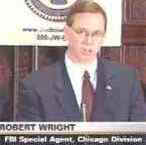 |
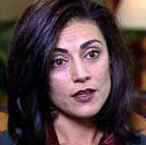 |
| John O'Neill - FBI (Dead) |
John Pistole - FBI (Alive) |
Robert
Wright - FBI (Alive) |
Sibel Edmonds - FBI (Alive) |
|
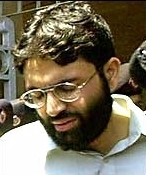 |
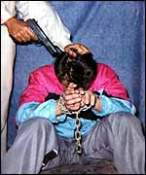 |
 |
| Lt General Mahmoud - ISI (Alive) |
Omar Sheikh - ISI (Death Sentence) |
Daniel Pearl - WSJ (Dead) |
Robert Baer - Ex CIA (Alive) |
NLPWESSEX,
natural law publishing |